
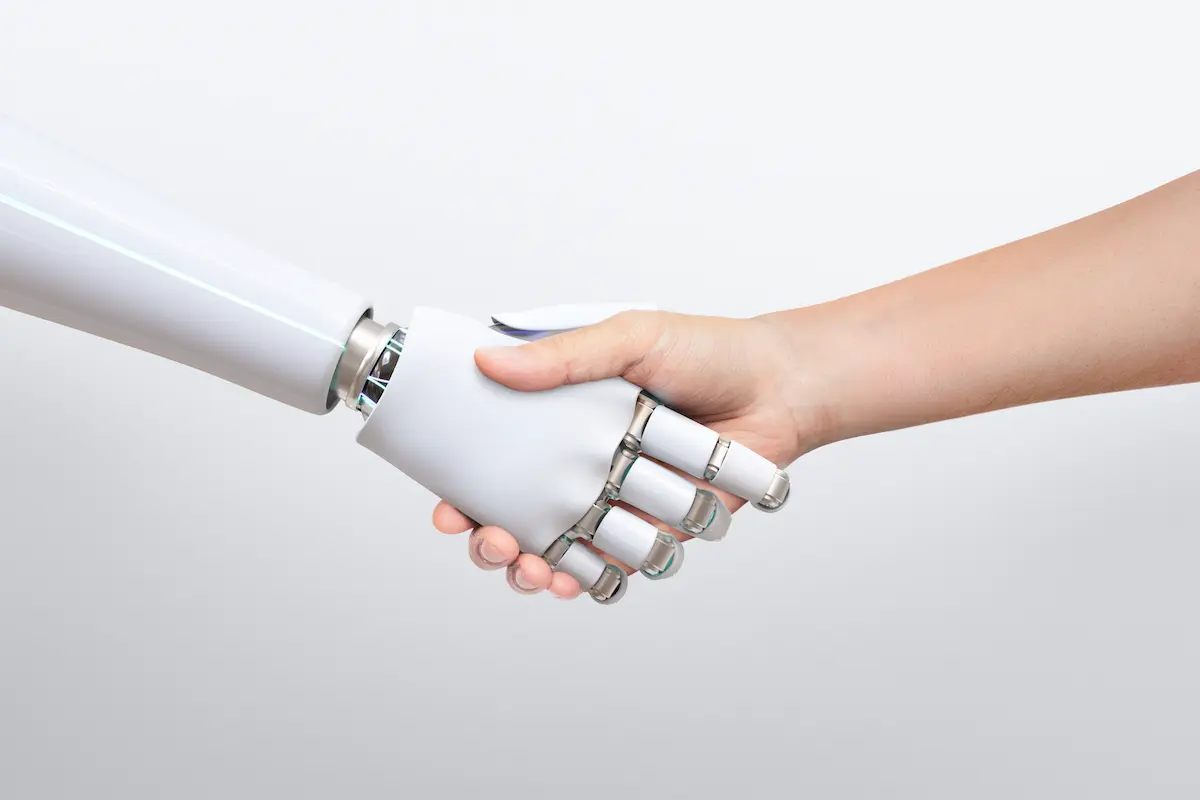
Artificial intelligence is a key piece of the new global energy model. From optimizing wind farm production to predicting how much energy a solar installation will generate based on the weather, AI is transforming from top to bottom how we produce, distribute and consume electricity.
The interesting thing about this advance is that it not only improves efficiency, it also accelerates the transition towards a cleaner, more stable and profitable energy system. More and more companies are betting on integrating algorithms into their operations, and the results are surprising: fewer breakdowns, more performance, less energy waste and an unprecedented capacity to anticipate grid behavior with millimeter precision.
How is artificial intelligence used in renewable energies?
There are thousands and thousands of data that describe what happens every minute inside an energy system. AI can process that information to make decisions in real time, improve production, avoid failures and, ultimately, make management smarter. And that changes everything. Below, we break down the four main fronts where artificial intelligence is making a difference.
Optimization of generation and the electrical grid
AI is especially powerful when we talk about intelligent prediction and consumption optimization. This means it can anticipate energy production and adjust the grid so it works as stably as possible. It achieves this like this:
- Predicting the weather with advanced precision. Solar and wind energy depend on the weather. An AI model can anticipate solar radiation, wind speed or cloudiness more reliably than traditional methods. Result: it is known how much energy will reach the grid in the next few hours.
- Adjusting production in real time. When installations generate more energy than expected, AI can redirect that excess to batteries, substations or industrial consumers. If they produce less, it can adjust loads to avoid instabilities.
- Detecting consumption patterns. Algorithms analyze when we consume more energy, which sectors demand specific peaks and how to take advantage of moments of lower use. This contributes to stabilizing the grid and maximizing available renewable energy.
Maintenance and efficiency
A wind turbine or a solar panel may seem like simple equipment from the outside, but internally it is full of components that degrade over time. AI allows for predictive maintenance, which is one of the greatest revolutions in the sector.
Instead of waiting for a failure to appear, algorithms detect very subtle signals such as unusual vibrations, overheating, noise, performance changes… and recommend intervening just before the breakdown occurs.
Storage and distribution
Energy storage is one of the great challenges of the renewable transition. Having clean energy is fine, but if we cannot store it when there is excess or distribute it when there is a shortage, the system becomes unstable. Here artificial intelligence applied to renewable energies is used to:
- Decide when to charge and discharge batteries automatically, without having to intervene.
- Optimize the use of domestic and industrial batteries to extend their useful life and avoid unnecessary cycles.
- Calculate what part of the energy to send to the grid and what to store, minimizing losses and maximizing economic performance.
- Manage smart microgrids (smart grids), where energy flows dynamically between producers, consumers and batteries.
Research and development
AI is accelerating innovation at a pace that was previously unthinkable. Today, an algorithm can analyze thousands of potential materials to create cheaper panels, more efficient batteries or lighter turbines, all in a matter of hours. In research:
- AI simulates the behavior of new solar materials.
- Identifies more aerodynamic wind turbine designs.
- Helps develop batteries with higher energy density.
- Allows virtually testing thousands of configurations before manufacturing them.
The role of AI in the energy transition

The role of AI in the energy transition is not secondary, it is structural. Without artificial intelligence, the transition to a 100% renewable system would be much slower, more expensive and more complex. It is very important for 5 reasons.
Why is it so important?
1. Allows integrating large amounts of renewable energy without the grid collapsing
Renewables are intermittent, a sunny day is nothing like a cloudy day. AI smooths that variability.
2. Reduces operational costs
Fewer failures, less wear, fewer stops. More efficiency, more profitability.
3. Facilitates decision making
With real time data, there is no need to guess what is happening on the grid; it is known exactly.
4. Gives stability to the system
Something fundamental in a future where there will be more and more electric cars, self consumption and energy communities.
5. Increases prediction capacity
From consumption prediction to wind and sun estimation. Everything is anticipated.
How does AI work in solar panels?
AI in solar panels is one of the areas where we are seeing the most advances, because it combines sensors, meteorological data, grid information and everything that happens inside each installation. In practical terms:
- Analyzes solar radiation in real time. It knows how much light each panel is receiving and how it should behave.
- Detects performance losses. Dirt, shadows, microcracks, degradation… AI can identify problems that a human would not see with the naked eye.
- Optimizes the angle of the panels (if they are mobile). In installations with solar trackers, the algorithm calculates the perfect angle every minute of the day.
- Predicts energy production. It knows how much it will generate tomorrow, next week and even within an hour. This allows better planning of battery use and the relationship with the electrical grid.
- Integrates surplus energy in self consumption systems. It relates panel production with appliance expense, household consumption and electric vehicle charging.
With all this it decides which is the most efficient flow. Thanks to these functions, many solar installations work better, last longer and save more money than they could without AI.
Summarizing AI applied to renewable energies
Artificial intelligence is already essential within the new energy model. Its role is not limited to improving efficiency, it delimits the way we produce, store, distribute and consume energy. If we had to summarize the most important:
- AI in renewable energy is key to making the energy transition possible and sustainable.
- Allows optimizing electrical grids, avoiding failures and improving the useful life of equipment.
- Makes intelligent prediction and consumption optimization possible, something essential in systems based on variable sources such as the sun or wind.
- The role of AI in the energy transition is much deeper than we imagine, since it provides stability, economic savings and data based decisions.
- AI in solar panels improves production, reduces costs and maximizes self consumption performance.
What is clear is that we are only at the beginning. As AI continues to advance and renewable systems become more complex, we will see energy that is increasingly smart, clean and perfectly adapted to our needs.


