
Energy savings at home begins with understanding where energy is spent, how we use resources and what small changes can generate a very significant cumulative impact. From climate control to lighting, through water use or the choice of electricity rate, everything adds up. We are going to see step by step the practical keys to save energy at home with tips applicable in any home, for your day to day.
Steps to save energy at home
1. Climate control
Climate control is, by far, the highest energy consumption in a home. Heating in winter and air conditioning in summer can represent more than 40% of the total expense. To save energy at home with climate control you must:
- Adjust the temperature in winter between 19 and 21ºC
- Adjust it in summer between 24 and 26ºC
- Each extra or less degree can increase consumption between 7% and 10%.
- Use programmable thermostats to avoid climate control when you are not at home.
- Ventilate at the right times (early in the morning or at night in summer).
2. Insulation
A poorly insulated home will lose heat in winter or overheat in summer, forcing your climate control systems to work longer. We recommend that you implement some simple improvements, such as sealing windows and doors with weatherstripping, checking blind boxes well, using thermal curtains and if you can, using double windows. Insulation not only reduces energy consumption, it also significantly improves comfort.
3. Appliances and phantom consumption
Appliances are responsible for an important part of electrical consumption, especially if they are old or inefficient. These are the keys to save energy at home at this point:
- Choose appliances with an efficient energy label, A or B.
- Use the washing machine and dishwasher with a full load.
- Prioritize eco programs and low temperatures.
- Avoid the dryer whenever you can.
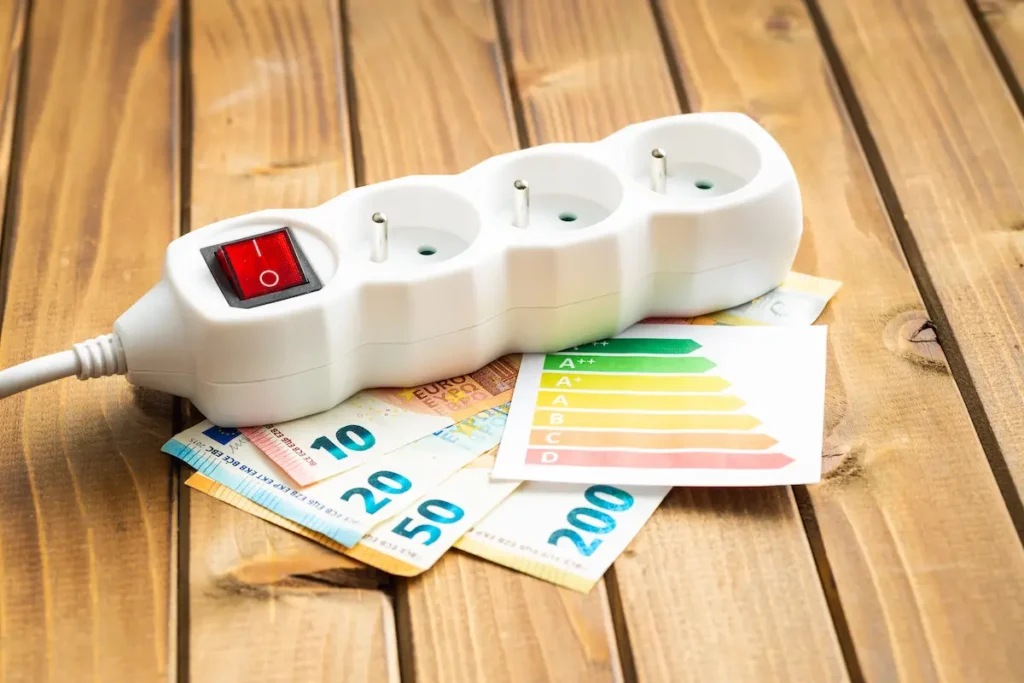
And beware of phantom consumption: televisions, routers, microwaves or plugged in chargers continue to consume energy even if you do not use them. Turning them off completely or using power strips with a switch can mean constant savings.
4. Lighting
Lighting is one of the easiest and fastest changes to implement. Here are basic tips that can help you a lot, such as simply replacing your traditional bulbs with LEDs (LED bulbs consume up to 80% less and last much longer), making the most of natural light or turning off the lights in empty rooms. You can also paint the walls in light colors because it will help you reflect light better.
5. Water
Although we do not always associate it directly, the use of water also implies energy consumption, especially when it is heated. To improve energy savings at home related to water you will have to reduce your shower time, adjust the domestic hot water if you have it, use aerators on taps and repair leaks as soon as possible. Heating water requires energy, so any reduction in its use has a direct impact on the bill.
6. Electricity rates
Not everything depends on how much you consume, but also on how and when you consume. Many homes pay more than necessary simply for having an oversized power, so check your electricity rate well:
- Check if you have time discrimination.
- Shift consumption to the cheapest hours.
- Adjust the contracted power to your real needs.
7. Maintenance of boilers and climate control systems
A poorly maintained equipment consumes more energy to offer the same result. Therefore, you have to carry out periodic reviews and give it a minimum maintenance, because it will improve efficiency, you will have fewer breakdowns and the useful life will be longer. Proper maintenance is one of the most effective and least visible ways to save energy at home in the medium and long term.
Which uses more energy, turning the light on and off or leaving it on?
With current lighting, especially with LED bulbs, it consumes more to leave the light on than to turn it off and on again, even for short periods.
The consumption peak when turning on an LED bulb is minimal and does not significantly affect consumption or its useful life. Therefore, our recommendation is clear: if you do not need the light, turn it off. This habit, repeated daily, has a real impact on energy savings at home.
Why the use of green energy is important to save
To save energy at home you not only have to consume less, but also consume better. The use of green energy:
- Reduces the carbon footprint.
- Decreases dependence on fossil fuels.
- Bets on a more sustainable energy model.
- There are increasingly more 100% renewable green energy marketers, self consumption with solar panels and much more efficient systems, such as aerothermal energy.
It is clear that the combination of energy efficiency and renewable energy is the most solid formula to reduce energy expenditure in the long term.
Our final tips to save energy at home
To close, here are our best final tips to save energy at home:
- Do not try to do everything at once: start with small changes.
- Prioritize actions with the greatest impact, in this case, climate control and insulation.
- Review your habits before investing in new equipment.
- Track your consumption to detect improvements.
- Think long term, the accumulated savings are huge.
Energy savings at home is not a fad or an obligation, it is a smart way to consume, take care of the planet and improve your domestic economy. And best of all is that it is available to anyone, so you can start applying it in your home now.


