
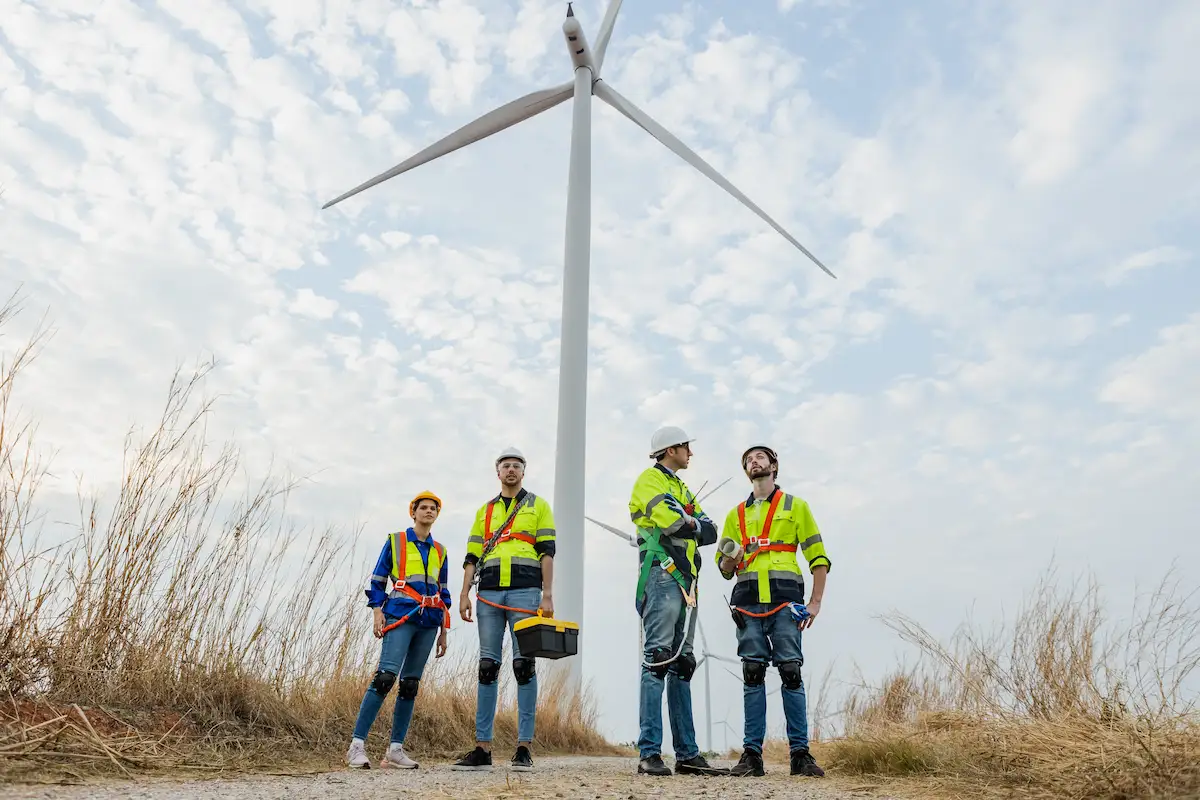
Offshore wind energy has gained a lot of visibility in recent years due to its huge potential, its technological innovation and its capacity to generate large amounts of electricity. At the same time, onshore wind energy remains one of the fundamental pillars of the electrical system in many countries, especially in Spain.
Comparing them is not as simple as choosing one and discarding the other. Each has different advantages, limitations and applications. We are going to deeply analyze offshore wind energy versus onshore, their strong points, their drawbacks and which may be more suitable depending on the context, especially in Spain.
Advantages and disadvantages of offshore wind energy
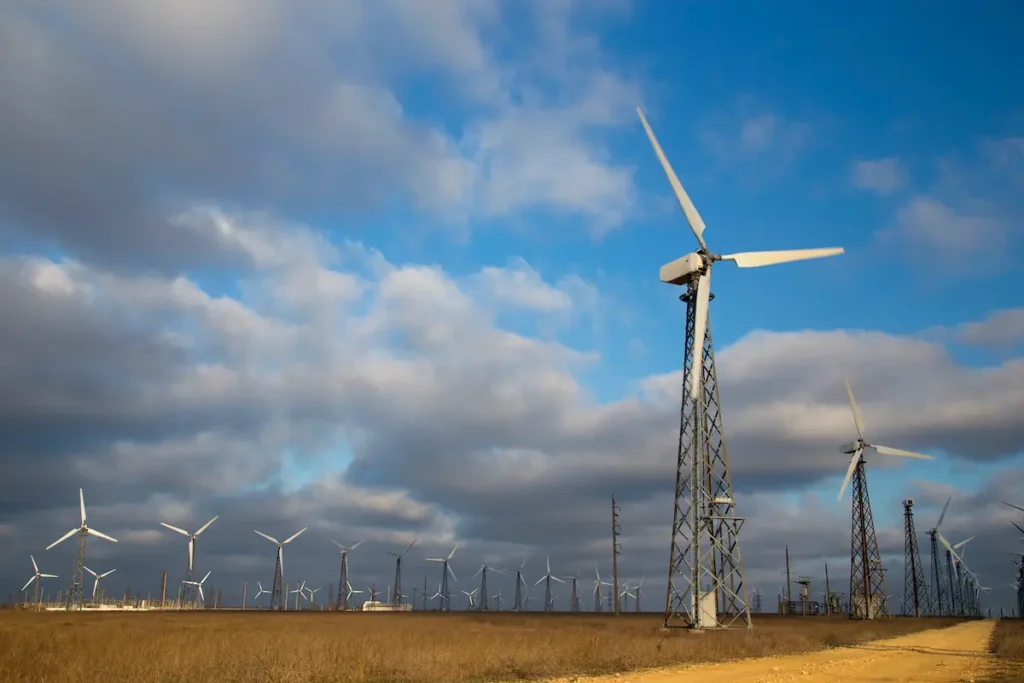
Offshore wind energy, also known as offshore, consists of installing wind turbines at sea, usually several kilometers from the coast. Although it is a more recent technology than onshore, its development has accelerated remarkably in the last decade.
Advantages
One of the main advantages of offshore wind energy is the higher quality and constancy of the wind. On the high seas, winds are usually stronger, more stable and less turbulent than on land. This translates into higher and more predictable electricity production.
Another key advantage is the higher power of the wind turbines. Offshore windmills can be much larger than onshore ones, since they do not have the same limitations of space, transport or visual impact. This allows installing state of the art machines capable of producing huge amounts of energy with fewer units.
From a social and territorial point of view, offshore wind presents an important benefit, since it reduces conflicts with the local population. Being far from urban centers, usual problems of onshore wind such as direct visual impact, noise or the occupation of agricultural land are avoided.
In addition, offshore wind energy has a huge growth potential. Seas and oceans offer large available surfaces, which allows planning large scale wind farms without the territorial fragmentation that occurs on land.
Finally, its role in decarbonization must be highlighted. Offshore wind can produce large volumes of renewable electricity near industrial and coastal areas, facilitating the electrification of sectors such as heavy industry or green hydrogen.
Disadvantages
Despite its potential, offshore wind energy also presents significant disadvantages. The main one is the high initial investment cost. Installing wind turbines at sea is technically complex: it requires special foundations, floating platforms in deep areas, submarine cables and maintenance operations that are much more expensive than on land.
Maintenance and repairs are also more difficult and expensive. Marine conditions, saline corrosion and difficulty of access mean that any technical intervention requires complex planning and specialized equipment.
Another aspect to consider is the marine environmental impact. Although it is clean energy, the installation of wind farms can affect marine ecosystems, birds, migratory routes or activities such as fishing. Therefore, environmental impact studies are especially demanding. Coasts with sufficient wind, adequate depth and a port and electrical infrastructure capable of supporting these projects are also needed.
Advantages and disadvantages of onshore wind
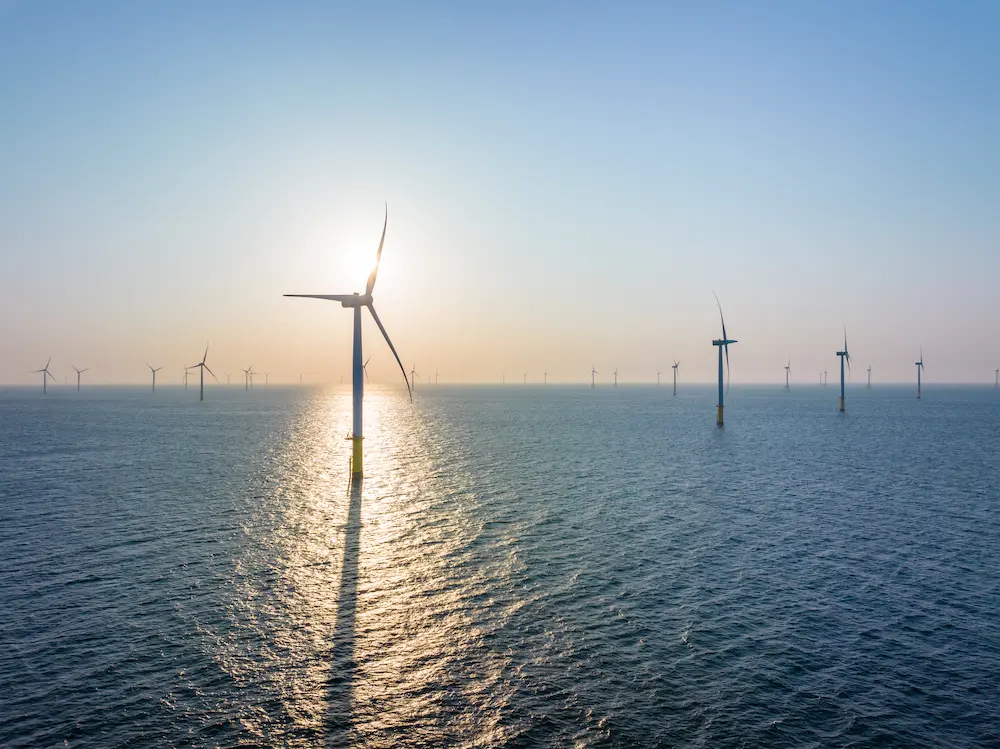
Onshore wind energy is a mature technology, widely implemented and known. In countries like Spain, it has been one of the main sources of renewable generation for decades.
Advantages
The great advantage of onshore wind energy is its lower cost compared to offshore. The technology is more than proven, installation processes are optimized and maintenance is much simpler and cheaper.
Another important advantage is the speed of installation. An onshore wind farm can be launched in less time than an offshore one, since it does not require complex infrastructures at sea or such sophisticated logistical operations.
Furthermore, onshore wind contributes to rural development. Many farms are installed in unpopulated areas or with low economic activity, generating employment, income for city councils and rents for landowners.
From an environmental point of view, its carbon footprint throughout the life cycle is very low, and the impact on the soil is usually compatible with other activities such as agriculture or livestock.
Disadvantages
One of its best known limitations is the visual and landscape impact. Wind turbines are large and visible structures, which generates social rejection in some areas, especially in protected or tourist natural environments.
The noise and shadow effect of the blades can be annoying if the farms are located too close to homes, which forces minimum distances to be respected and limits available locations. Another disadvantage is the wind variability on land. Although Spain has excellent wind resources, onshore wind is more irregular than offshore, which can affect production stability.
In addition, the availability of suitable land is not infinite. As more farms are developed, finding optimal locations without environmental or social conflicts becomes increasingly complex.
Is onshore or offshore wind energy better for Spain?
Spain is one of the European countries with the best onshore wind resource, especially in areas such as Castilla y Leon, Aragon, Galicia or Andalusia. Thanks to this, onshore wind energy has been, and will continue to be, a fundamental pillar of the Spanish electrical system. In this context, onshore wind remains more profitable, faster to deploy and more accessible than offshore. In addition, there is a highly consolidated national industry, with experience, employment and its own supply chain.
However, Spain also has a particularity: its coasts are deep. This makes it difficult to install traditional offshore wind turbines anchored to the bottom, but it opens the door to an emerging technology, which is floating offshore wind, which can become a great opportunity for Spain in the medium and long term, especially to:
- Develop advanced technological industry
- Produce energy near large industrial hubs
- Complement onshore generation when the onshore resource is saturated
Probably, what will end up happening is that onshore and offshore wind energy will be combined, it is the most logical and balanced strategy.
Summarizing the key differences between onshore and offshore wind energy
To close this analysis, we want you to keep a clear idea: onshore wind energy and offshore wind energy do not compete, they complement each other.
On the one hand, onshore wind stands out for a lower cost, mature technology, rapid implementation and a great weight in the current electrical system. On the other hand, offshore wind stands out for a higher production per wind turbine, more stable winds, a lower direct visual impact and its great potential for future growth.
In the energy transition scenario in which we find ourselves, both technologies are necessary. Onshore will continue to be the base, while offshore will play an increasingly relevant role as technology advances and costs are reduced.
If anything is clear it is that, together, they form one of the most powerful tools to advance towards a cleaner, more sustainable energy model that is less dependent on fossil fuels.


