
In recent years, graphene has gone from being an unknown material to becoming one of the most studied substances in science and technology. Many experts consider it the “material of the future”, capable of transforming entire industries thanks to its versatility.
But what exactly is graphene? What properties make it so unique? And how could it change the way we generate energy, build infrastructure or even treat diseases? Let us explore it in detail.
What Is Graphene?
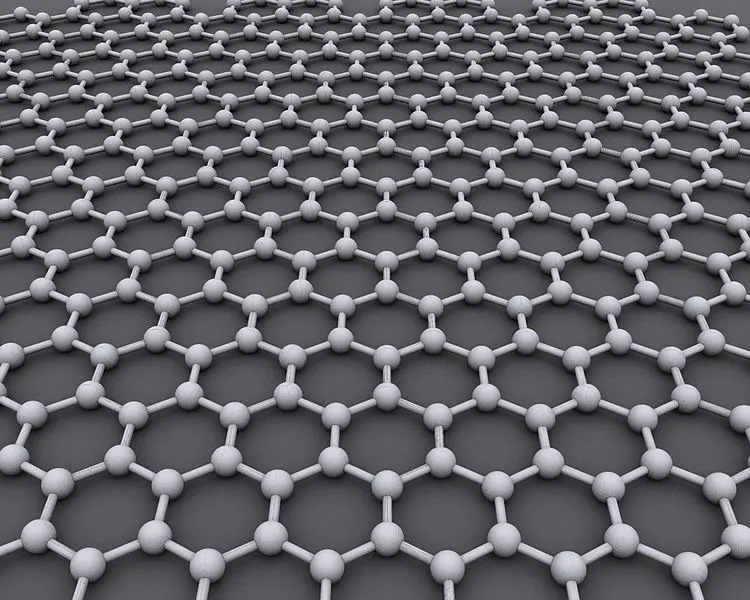
Graphene is a material made from a single layer of carbon atoms arranged in a hexagonal honeycomb structure. In simple terms, it is like an ultra thin sheet, only one atom thick, yet incredibly strong.
Graphene was first isolated in 2004 by scientists Andre Geim and Konstantin Novoselov, who later received the Nobel Prize in Physics in 2010 for their discovery.
The discovery caused enormous interest because graphene combines strength, lightness, flexibility and conductivity in a way no other known material does. For this reason, it is widely regarded as a revolutionary material for both science and industry.
Properties of Graphene
Graphene has several remarkable properties that make it suitable for a wide range of applications, from electronics and energy to healthcare and construction.
- Strength: Graphene is around 200 times stronger than steel while being significantly lighter.
- Flexibility: It can bend without breaking, making it highly adaptable.
- Electrical conductivity: Electrons move extremely quickly through its structure, making it more conductive than copper.
- Thermal conductivity: It transfers heat more efficiently than most known materials.
- Transparency: Despite its strength, graphene is almost transparent, making it suitable for screens and solar panels.
- Lightweight structure: Being only one atom thick makes it extremely light.
How Graphene Is Produced
There are several methods used to produce graphene, some more advanced and costly than others. The most common production techniques include:
- Mechanical Exfoliation. This was the original method used to isolate graphene. It involves separating layers of graphite using adhesive tape. Although groundbreaking in laboratory research, it is not practical for large scale industrial production.
- Chemical Vapour Deposition (CVD). This method deposits carbon atoms onto metal surfaces to create graphene sheets. It is currently one of the most widely used techniques for industrial production.
- Reduction of Graphene Oxide. Graphene can also be produced from graphite oxide, resulting in a material that closely resembles graphene, although with slightly different properties.
- Electrochemical Production. This is one of the newest production methods, developed to reduce costs and improve scalability.
The main challenge is not producing graphene in laboratory conditions, but manufacturing it efficiently, economically and in large quantities suitable for industrial applications.
Where Is Graphene Found in Nature?
Graphene does not naturally appear in isolated form. Instead, it exists as part of graphite, a very common material found in mines and even used in everyday pencils.
Graphite consists of multiple layers of graphene stacked on top of each other. When these layers are separated, the individual graphene sheets display extraordinary properties that graphite does not show in bulk form.
Therefore, graphene exists in nature but must be extracted or produced from graphite to utilise its unique characteristics.
Applications and Uses of Graphene
The potential uses of graphene are extremely diverse. Although many applications are still under research and development, the possibilities are vast.
Energy Sector
Graphene is mainly being explored in two major energy related areas:
- Solar Panels. Due to its transparency and conductivity, graphene can improve solar panel efficiency, allowing greater energy production from the same surface area.
- Energy Storage and Climate Systems. Researchers are studying graphene for use in batteries, supercapacitors and more efficient heating and cooling systems. It is expected to significantly increase battery capacity while reducing charging times.
Healthcare and Medicine
Graphene is generating strong interest in medical research, particularly in regenerative medicine. Its structure supports cell growth, which could be used in prosthetics and artificial tissues.
Other promising applications include:
- Biomedical sensors capable of detecting diseases at very early stages
- Drug delivery systems that transport medication directly to affected cells
There is still ongoing research regarding the impact of graphene on the human body. Some studies suggest that certain forms and quantities could be toxic. For this reason, scientists are proceeding cautiously to ensure safety before widespread medical use. At the same time, there is growing interest in using graphene in cancer treatment research.
Automotive, Electronics and Construction
Graphene has the potential to transform traditional industries as well.
- Automotive Industry. It could enable lighter and stronger vehicles, with batteries that charge in minutes instead of hours.
- Electronics. Graphene may lead to flexible displays, ultra thin smartphones and faster, more durable electronic devices.
- Construction. It can be incorporated into cement and concrete to improve strength and sustainability.
What Are the Disadvantages of Graphene?
Despite its promising properties, graphene also presents several challenges and limitations.
- High Production Costs. Producing high quality graphene remains expensive and technically complex.
- Scalability Challenges. Transitioning from small laboratory samples to large scale industrial production is still difficult.
- Potential Toxicity. The long term effects of graphene exposure on the human body are not yet fully understood. While it is generally safe to touch, inhaling graphene nanoparticles may pose risks to lung health.
- Lack of Regulation. There is currently no fully established regulatory framework governing graphene production, handling and use.
- Expectations Versus Reality. Although graphene has extraordinary properties, many of its potential applications are still in experimental stages. This creates high expectations that may take years to become commercially viable.
Why Graphene Is Considered the Material of the Future
Graphene is a fascinating material with unique characteristics. It is strong, lightweight, conductive and flexible. Understanding what graphene is, how it is produced and its potential applications helps explain why it is considered one of the most promising materials for future technologies.
Its potential uses range from energy and medicine to automotive engineering and construction. However, graphene development is still in its early stages, and it may take years before large scale industrial and commercial applications become widespread.
What is certain is that once graphene can be produced economically and at scale, it has the potential to transform many of the technologies we rely on today.


