

Choosing between aerothermal or natural gas can be quite complicated and, on top of that, they are very different in terms of energy efficiency, comfort and monthly expenses. Both systems have their advantages and disadvantages and, therefore, we are going to make a comparison between aerothermal and natural gas. We will discuss the most key aspects: safety, sustainability, efficiency, maintenance, service life and the price per calorific kWh. In addition, we will analyze in which cases one or the other is more advisable, so that you can make a more informed decision adapted to what you really need. Let’s get started!
Comparison between aerothermal and natural gas
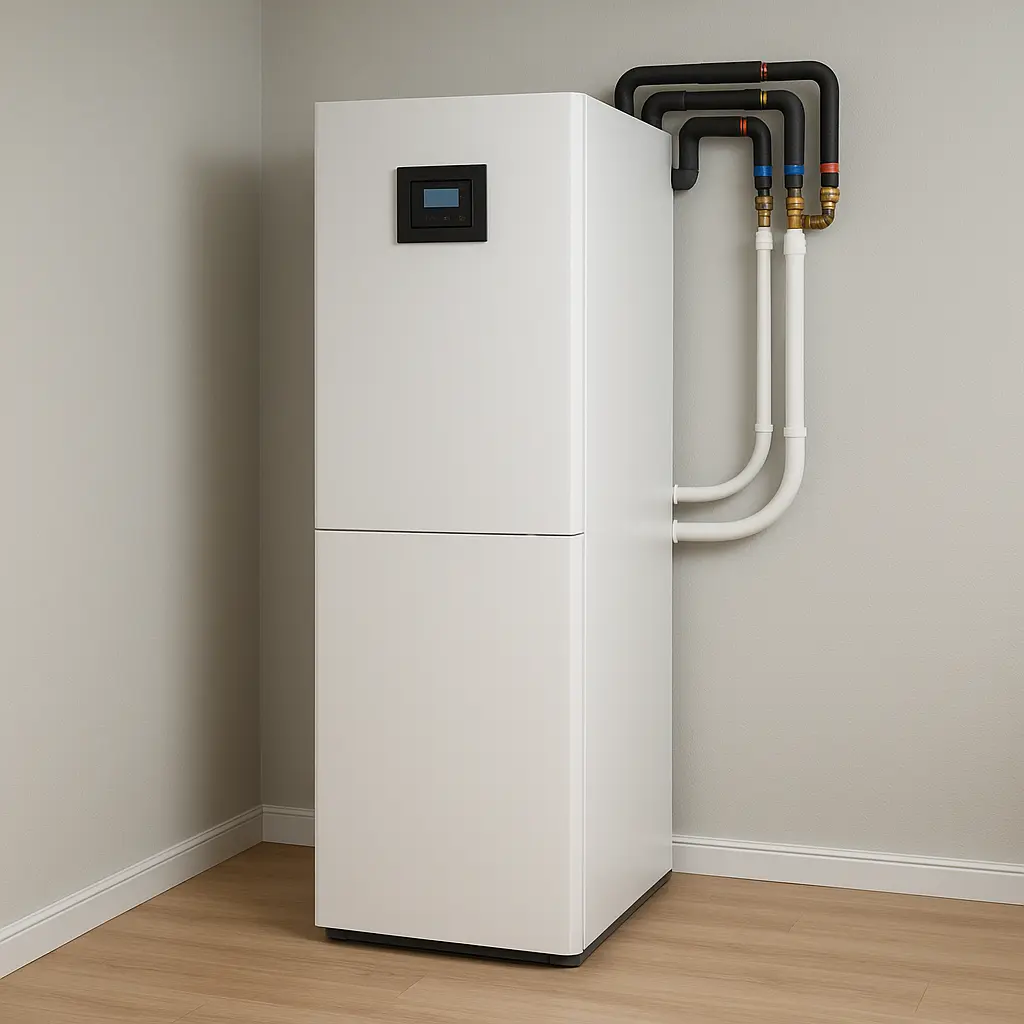
To understand the difference between the two systems, it is useful to explain briefly what each one consists of. Aerothermal energy is a system that uses an air-water heat pump to extract thermal energy from the outside air, even in cold conditions, and transfer it to the inside of the house to heat water or power heating systems. It is an electrical technology, but very efficient, as it can generate up to 4 kWh of thermal energy for every 1 kWh of electrical energy consumed.
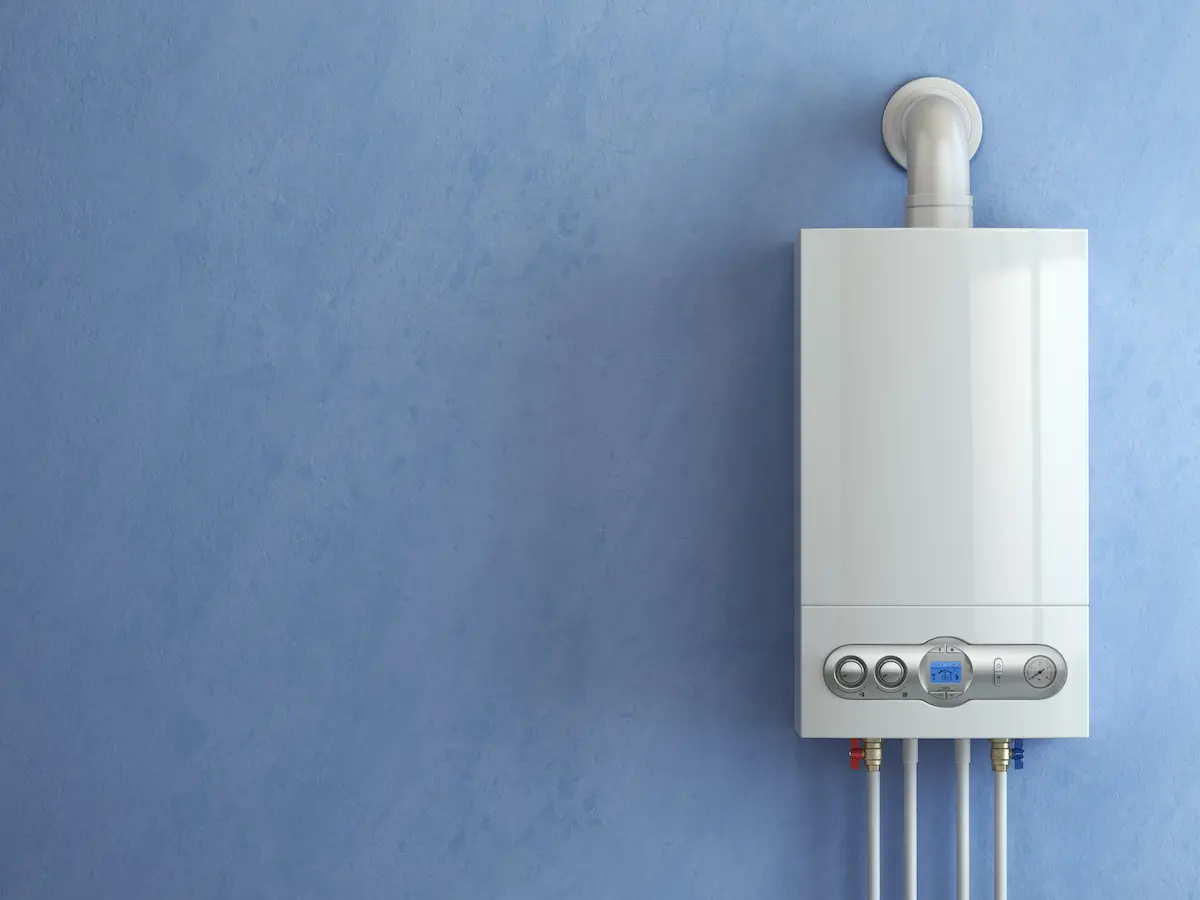
Natural gas, on the other hand, is a fossil fuel that is burned in a boiler to generate heat. It is most commonly used in cities, and has been used for decades as a source of heating and domestic hot water. Both systems can be used for radiator heating, underfloor heating or domestic hot water. However, they are very different in their operation, efficiency and sustainability.
Which system is more secure?
In terms of safety, aerothermal energy has a clear advantage. As it does not use fossil fuels or generate combustion, it eliminates the risk of carbon monoxide poisoning or explosions, something that can occur with a gas boiler, especially if it is not properly maintained.
Natural gas is a reliable system, but it requires more safety controls, periodic inspections and good ventilation to avoid incidents. Therefore, aerothermics wins in terms of safety.
Sustainability
One of the most key factors considering that European governments are pushing policies to replace gas with efficient electric systems such as heat pumps. Aerothermal heat pumps are powered by electricity, which can come from renewable sources. Its environmental impact is very low, and since it does not burn any fuel, it does not emit CO₂ at the point of use.
Natural gas, although cleaner than other fossil fuels such as diesel, is still a fossil fuel. Its use generates greenhouse gas emissions and contributes to climate change. The winner in sustainability is also aerothermal energy.
3. Efficiency
Energy efficiency measures the ability of a system to convert energy into useful heat:
- Aerothermal energy has a very high coefficient of performance (COP). For each kWh of electricity consumed, it can generate between 3 and 4 kWh of thermal energy. In other words, it can have an efficiency of 300% or 400%.
- Natural gas has a maximum efficiency of 90-95% in condensing boilers. This means that for every kWh of gas consumed, between 0.9 and 0.95 kWh of heat is obtained.
The aerothermal is much more efficient, but be careful if it is not well dimensioned, because its performance can be greatly affected.
4. Maintenance
As for aerothermics, it requires a minimum preventive maintenance: filter cleaning, electrical components revision and refrigerant gas pressure check. Natural gas requires mandatory periodic inspections, smoke control, circuit purging, combustion verification and inspection of chimneys or gas outlets.
Thus, aerothermal is generally easier to maintain and more economical in this respect.
5. Lifetime
The lifetime of an air conditioning system is also important in terms of long-term profitability. Aerothermal heat pumps usually have a useful life of between 15 and 25 years, depending on the manufacturer and use, and this is very important because your investment is amortized in the first 5-10 years. Natural gas boilers usually have a shorter useful life, around 10-15 years, although if they have been very well maintained, they can last a couple of years more.
In addition, aerothermal systems are more prepared for future environmental regulations, while gas tends to be more constrained.
Price per heating kWh of aerothermal and natural gas
Another aspect that is also much debated is the real price of the heat generated by each system. To make a realistic comparison, we must consider the cost per kWh of the supply (electricity or gas) and the efficiency of the system. Let us assume the following reference values:
- Electricity price: 0.20 €/kWh
- Natural gas price: 0.07 €/kWh
- Aerothermal efficiency: COP of 4
- Natural gas efficiency: 90%.
Calculating the cost per useful kWh, it would be as follows:
- Aerothermal: 0.20 € / 4 = 0.05 €/kWh heating
- Natural gas: 0.07 € / 0.90 = 0.077 €/calorific kWh
Although electricity is more expensive than gas, the superior efficiency of aerothermal makes it a more economical option per kWh of heat produced.
Aerothermal and natural gas applications
In general, both systems can be applied in any building, business or any other installation, although there are some nuances. For aerothermal:
- New or rehabilitated single-family houses with good insulation.
- Buildings that are committed to energy efficiency and sustainability.
- Installations with underfloor heating, which takes full advantage of its performance.
- Homes that combine aerothermal energy with solar panels for self-consumption.
- Areas with temperate or moderate climate.
For natural gas, the most common uses are:
- Older or poorly insulated homes where it is not feasible to install aerothermal energy.
- Apartments in buildings with centralized gas installation.
- Users who do not want to change technology and prefer to stick with a familiar system.
- Urban areas with good gas distribution network.
Of course, you also have the possibility of combining aerothermal with natural gas as a hybrid system by combining a heat pump with a back-up boiler in cold climates. However, keep in mind that, although this is a good option, it loses some of the efficiency and sustainability of a pure aerothermal installation.
Comparative table between aerothermal and natural gas and conclusions
Finally, we leave you a summary table with the main differences between aerothermal and natural gas, to help you decide better.
| Criteria | Aerothermal | Natural Gas |
|---|---|---|
| Safety | No combustion, no risk of explosion or toxic gases. | Requires inspections and ventilation; risk of leakage or combustion exists |
| Sustainability | Very high. No direct emissions | It is a fossil fuel, with CO₂ emissions. |
| Efficiency | Very high (COP 3-4) | Moderate (90-95%) |
| Maintenance | Minimum annual review | Annual periodic revisions |
| Shelf life | 15 to 25 years | 10 to 15 years |
| Price per useful kWh | 0.05 €/kWh (approx.) | 0.077 €/kWh (approx.) |
Aerothermal energy clearly wins in most areas: it is more efficient, safer, more sustainable and has a lower cost per kWh. It is therefore a more interesting option for those looking for a solution for the future. However, natural gas can still be a valid alternative in homes already connected to the gas network, in apartments with centralized boilers or in cases where a high initial investment is not possible.
If you are considering switching from natural gas to aerothermal, remember that, although the initial investment may be higher, the long-term savings and positive impact on our planet far outweigh it.


