
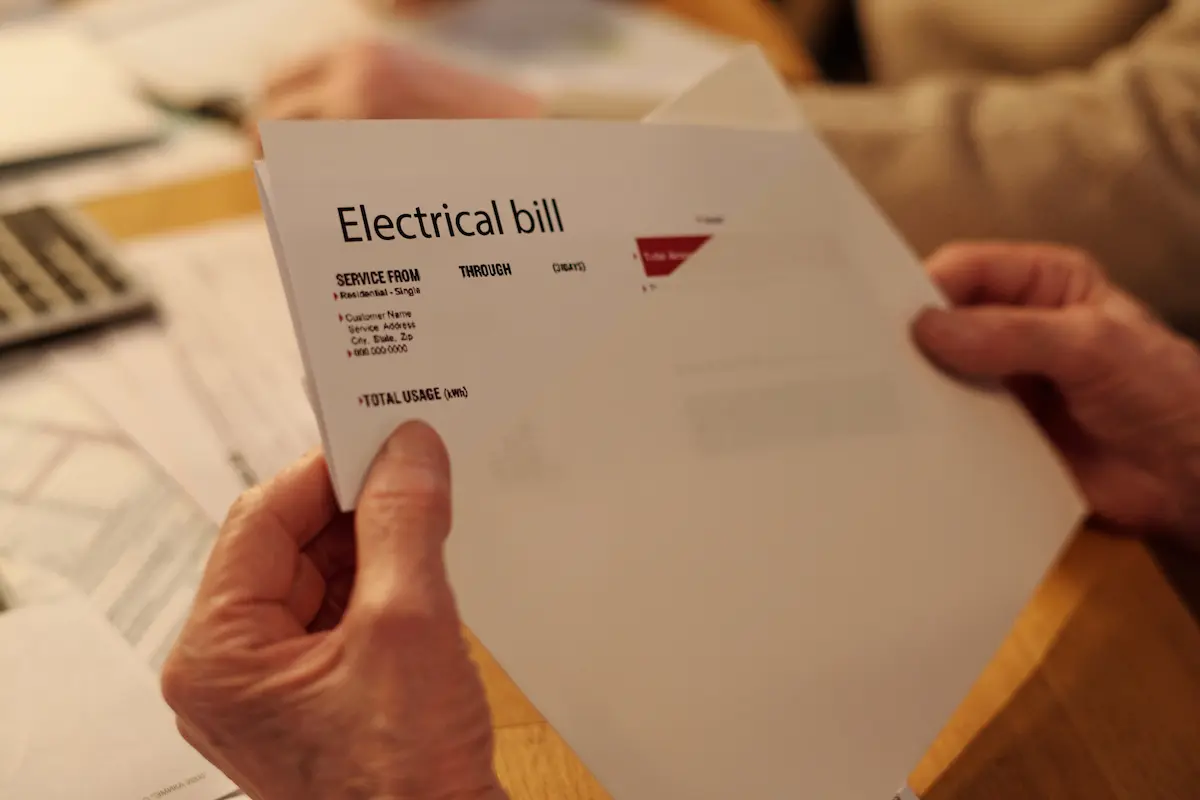
Do you feel overwhelmed every time the electric bill arrives? You’re not alone. For many, it’s a document full of technical terms and figures that seem designed to confuse. However, behind that apparent complexity lies a powerful tool for understanding and controlling your energy spending.
In this guide, we’ll show you how to read your electricity bill step-by-step, breaking down each section so you understand what each item means. You will learn how to understand your electricity bill and, more importantly, how to identify clear opportunities to reduce your consumption and save money month after month. Our goal is that, upon completion, you will be able to interpret your electricity bill with complete confidence and take control of your electricity consumption.
Key Sections to Understand Your Electric Bill
To unravel the mysteries of your bill, it is essential that you know its main sections. Each of them contains vital information that will help you understand the total amount due.
Owner and Contract Details
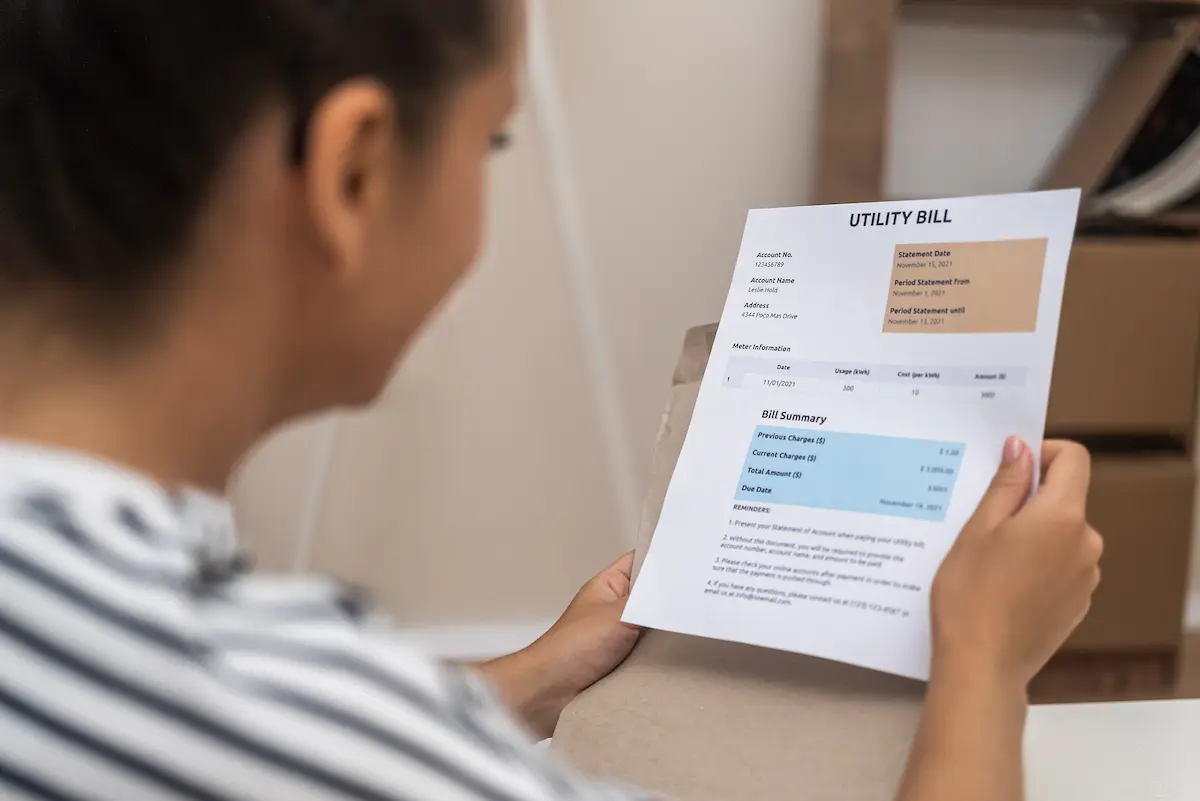
This first section is your energy cover letter. It details who you are to the company and the essential details of your supply.
- Personal information of the holder: You will see your name, surname and your DNI/NIF. It is crucial that this information is correct.
- Supply point data: Here you will find the address where the electricity is consumed and, most importantly, the CUPS (Unified Supply Point Code). The CUPS is like the DNI of your electricity supply point, a unique and invariable code that identifies your installation. You will need it for any procedure, change of company or management with the distributor.
- Type of contract and tariff: This specifies whether you have a regulated tariff (Voluntary Price for the Small Consumer or PVPC) or if you are on the free market. The difference is key:
- In the regulated market (PVPC), the kWh price changes every hour according to supply and demand. It is an option for those who can adapt their consumption to the cheapest times of the day.
- In the free market, the price is set by your commercialization company and is usually a stable price for a period of time, or indexed to the market with a fixed margin. It allows more flexibility in offers and additional services.
- Contracted power: This is the maximum amount of energy you can use at the same time in your home. It is measured in kilowatts (kW). Later on, we will see why it is so important.
- Issue date and billing period: Indicate when the bill was issued and the exact dates of the consumption being charged.
The Basis of your Invoice
This is where you detail how much you spend on electricity and how it is calculated. It is the heart of your bill and often the section with the biggest impact on the final amount.
- Meter readings: You will see the current reading (the one at the end of the billing period) and the previous reading (the one at the beginning). The difference between the two is your actual consumption. For example, if the current reading is 10,000 kWh and the previous reading was 9,500 kWh, your consumption is 500 kWh.
- Total consumption in kWh: This is the result of subtracting the readings and represents the energy you have consumed during the period. A kWh (kilowatt-hour) is the unit that measures electrical energy consumption. It is the equivalent of having a 1,000 watt appliance on for one hour. Understanding it is the first step to reducing it!
- Breakdown by periods (if applicable): If your tariff has hourly discrimination (very common in the regulated market and in some free market offers), you will see your consumption divided into:
- Peak: Most expensive hours, generally during the day and evening (e.g., from 10:00 am to 2:00 pm and from 6:00 pm to 10:00 pm on weekdays).
- Flat: Intermediate hours (e.g. from 8 am to 10 am, from 2 pm to 6 pm and from 10 pm to midnight on weekdays).
- Valley: Cheapest hours, usually nights, early mornings and weekends/holidays (e.g. from 00h to 8h and all day on Saturdays, Sundays and holidays). [here will be an image representing a bar graph showing the energy consumption by periods (peak, flat, valley) and with such alt text: Graph of electricity consumption by periods].
- Consumption graphs: Many bills include graphs that show the evolution of your consumption over time (monthly or yearly). These graphs are an excellent visual tool for identifying unexpected consumption patterns and spikes. If you see a sudden increase, it could be due to a new appliance, a change of habit or even an installation problem.
Fixed costs
In addition to consumption, there are a number of costs that you will pay no matter what, even if you do not consume a single kWh.
- Power term: This is a fixed cost that you pay for having the right to use a certain simultaneous power in your home. It is calculated by multiplying the contracted power (in kW) by a fixed price established by the distributor and the number of days in the billing period (euros/kW and day). It is an immovable cost each month that represents the maintenance of the network and supply capacity. Optimizing this term can generate significant savings if you have more power than you really need.
- Energy term (without taxes): This is the cost of the kWh you have consumed, before taxes are applied. This is the component that fluctuates directly with your consumption and the kWh price of your tariff.
- Metering equipment rental fee: If you are not the owner of your electricity meter (most common), the company will charge you a small rental fee. It is a fixed monthly cost.
Taxes and other items
Once the power and energy costs have been calculated, taxes and other items are added to round up the total to be paid.
- Electricity Tax: A percentage levied on the sum of the power term and the energy term. It is a state tax.
- VAT (Value Added Tax): The best known tax, which is levied on the total bill (power + energy + electricity tax + meter rental). The VAT rate may vary depending on government regulations.
- Social vouchers and discounts: If you are a beneficiary of any type of social aid (such as the Bono Social eléctrico, aimed at vulnerable consumers) or have any promotion contracted with your marketer, it will be reflected here as a discount.
How to Interpret Electricity Bills to Reduce Costs
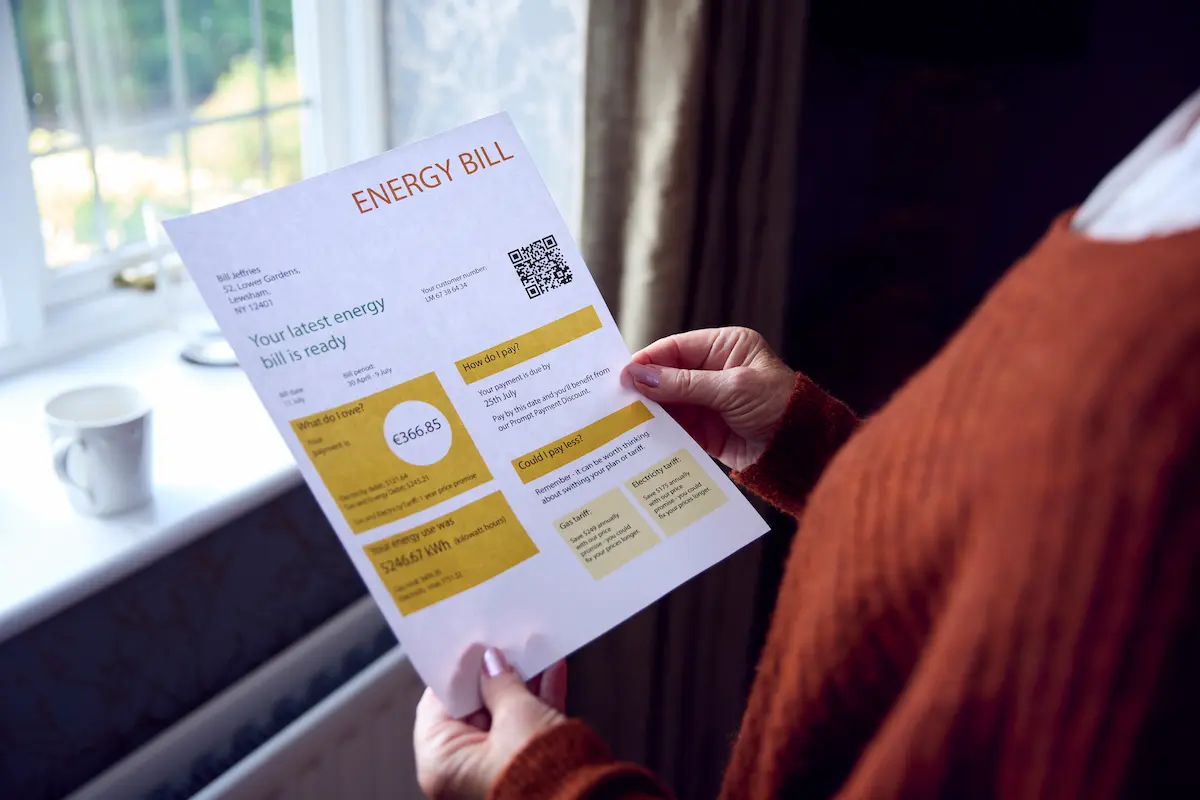
Once you know how to understand your electricity bill, the next step is to use this information to your advantage to identify savings opportunities.
Identifies Peak Consumption and Inefficient Habits
The consumption graphs and the breakdown by periods are your best allies to analyze how to interpret the electricity bill and your habits.
- Analysis of consumption graphs: Observe if there are months or time slots in which your consumption skyrockets. Ask yourself: What were you doing at those times? Was it the use of heating/air conditioning? A new appliance? If you have time discrimination, do you concentrate the use of high consumption appliances during peak hours?
- Tips to reduce consumption at peak hours (if time discriminating):
- Program your appliances: Washing machine, dishwasher and dryer can be programmed to operate during off-peak hours (evenings or weekends).
- Charge devices at night: cell phones, tablets, laptops.
- Avoid simultaneous use: Do not turn on the hob, oven and washing machine at the same time during peak hours.
Examples of inefficient habits and alternatives:
| Inefficient Habit |
Efficient Alternative
|
| Heating or A/C at extreme temperatures |
Adjust the temperature to reasonable levels (20-21°C in winter, 24-25°C in summer).
|
| Leaving lights on in empty rooms |
Turning off lights when leaving a room
|
| Stand-by mode of household appliances |
Unplug appliances or use power strips with circuit breakers
|
| Use the oven for small portions |
Opting for microwave or air fryer for small foods
|
Optimize your Contracted Power: Too Much or Too Little?
As we have already seen, the power term is a fixed cost. Adjusting it correctly is the key to saving money. To know how to read your electricity bill to identify the right power, pay attention to the jumps of the Power Control Switch (ICP) or the “Maximum demand” message on your digital meter.
- How do you know if your power is adequate?
- If your meter jumps frequently (the light goes out) when you connect several appliances at the same time, you probably have too little contracted power.
- If, on the other hand, your meter never trips, it is very likely that you have too much power and are overpaying. Your bill may show you the “maximum power demanded”, which is the highest peak you have reached. If this value is consistently lower than your contracted power, you could lower it.
- Impact of power on your fixed bill: Every extra kilowatt you have contracted and do not use translates into an unnecessary fixed cost on your monthly bill.
- Steps to adjust the contracted power: Contact your electric company. They will advise you and make the change. Keep in mind that you can only make one power change per year, so it is important to make an informed decision.
Choosing the Right Tariff: Regulated vs. Free Market
How to understand my electricity bill to choose a tariff is fundamental to maximize savings. There is no single answer, the best option depends on your consumption habits.
Pros and cons of each market:
| Feature | Regulated Market (PVPC) | Free Market |
| Price kWh | Varies hourly (dynamic pricing) |
Fixed or indexed price (more stable, or with a fixed margin)
|
| Offers and services | Nil, only the regulated price |
Variety of offers, discounts and additional services
|
| Type of contract | Standard, no extras |
Customizable with maintenance services, etc.
|
| Social Voucher | Only accessible through this marketplace |
Not eligible for the Bono Social
|
| Complexity | It requires being attentive to the cheapest times of the day |
It may be simpler if you have a fixed rate
|
Factors to consider when choosing a tariff:
- Your consumption habits: If you can concentrate your consumption on nights and weekends, the regulated tariff with hourly discrimination could be very profitable. If you consume more constantly or during the day, a stable free market tariff could be more convenient.
- Offers and promotions: Compare different free market offers. They often include discounts or additional services that can compensate for a slightly higher kWh price.
- Preference for stability or flexibility: Do you prefer an unchanging price or are you comfortable adapting your consumption to hourly prices?
Frequently Asked Questions When Reading Electricity Bills
What does each acronym on the invoice mean?
- CUPS: Unified Supply Point Code.
- PVPC: Voluntary Price for the Small Consumer (regulated tariff).
- kW: Kilowatt (unit of power).
- kWh: Kilowatt-hour (unit of energy consumption).
- ICP: Power Control Switch.
- DNI/NIF: National Identity Document/Tax Identification Number.
- VAT: Value Added Tax.
Why is my bill so high this month?
It may be due to several factors: an increase in consumption (perhaps due to the use of heating/air conditioning, a new appliance, more people at home), a change in the price of kWh (especially in PVPC), an adjustment in the contracted power or the application of taxes or temporary surcharges. Check the consumption graphs and the price breakdown.
Where can I find my contract or CUPS number?
Both pieces of information are key and will always appear on the first page or in the “Owner and Contract Information” section of your bill. The CUPS is usually a long alphanumeric code starting with “ES”.
Now that you know how to read your electricity bill and understand each of its components, you are in control. It is no longer an incomprehensible document, but a roadmap for your energy consumption. Use this knowledge to understand your electricity bill in depth and make informed decisions about your consumption habits, the power you need and the most suitable tariff for you.


