
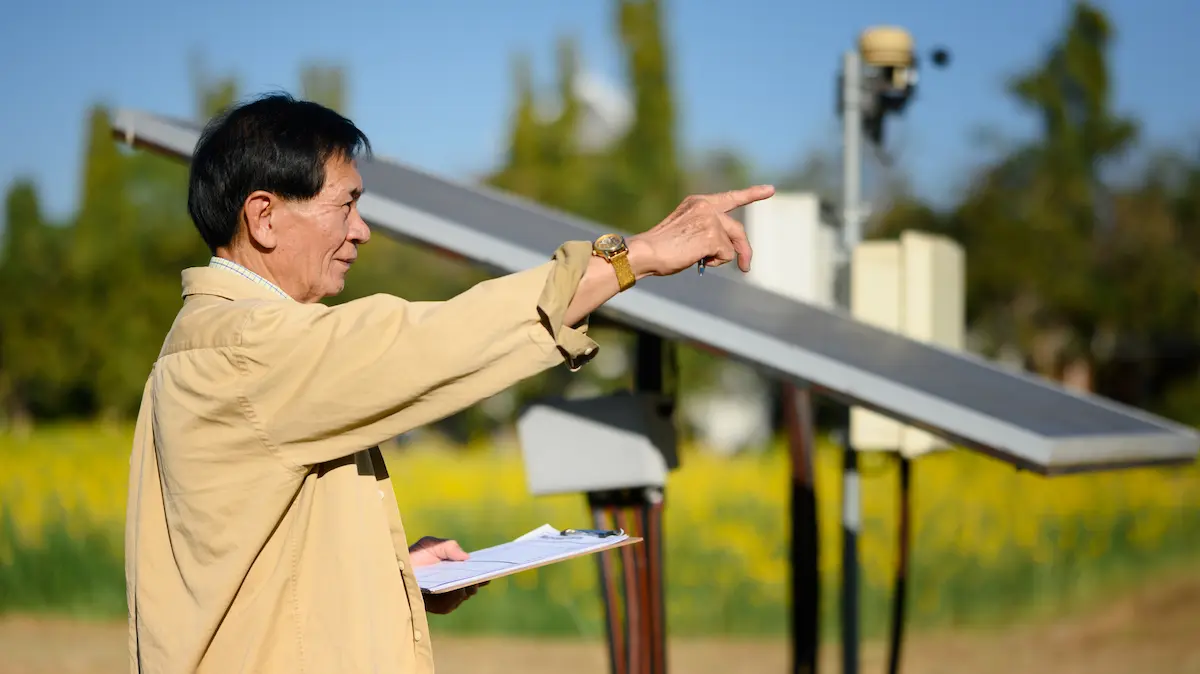
Every detail matters when it comes to increasing efficiency and making the most of solar radiation. Solar panels on their own are already an excellent solution for generating clean electricity. However, their performance can be significantly improved with an additional component: the solar tracker.
This device allows solar panels to automatically follow the sun throughout the day, increasing the amount of energy captured and, therefore, overall electricity production. Let us explore what solar trackers are and how they work.
What Are Solar Trackers?
A solar tracker is a mechanical system that moves solar panels so they remain correctly oriented towards the sun at all times. While a fixed solar installation keeps panels in a static position, solar trackers adjust both the tilt angle and orientation dynamically.
By maintaining a more direct exposure to sunlight, solar panels can generate more electricity throughout the day.
Solar trackers are mainly used in large scale photovoltaic installations such as solar farms, although they are gradually being introduced into residential and commercial projects as well.
Types of Solar Trackers
Single Axis Solar Trackers
Single axis solar trackers allow panels to move in one direction. They typically follow the sun from east to west throughout the day.
Their main advantage is that they are more affordable and easier to install compared to dual axis systems. They can increase energy production by approximately 15 percent to 25 percent compared to fixed solar installations.
Single axis trackers are commonly used in large solar power plants, particularly in locations with wide open land.
Dual Axis Solar Trackers
Dual axis solar trackers allow panels to move both horizontally and vertically. This means they can track the sun more precisely throughout the day and across different seasons.
They maximise solar capture at any time of year and can increase energy production by up to 35 percent compared to fixed systems.
Dual axis trackers are especially beneficial in installations where maximum efficiency is a priority.
Passive Solar Trackers
Passive solar trackers do not rely on electrical or electronic systems. Instead, they operate using materials that react to solar radiation or heat.
They usually contain a liquid with a low boiling point. When exposed to sunlight, the liquid evaporates, causing the panels to tilt naturally towards the sun.
There is also a fourth type known as manual solar trackers. However, these are not practical, as they require manual adjustment throughout the day to follow the sun.
Advantages of Solar Trackers
Solar trackers offer several important benefits for photovoltaic installations:
- Higher energy production, generating between 15 percent and 35 percent more electricity compared to fixed solar panels
- Better land use, producing more energy from the same installation area
- Seasonal adaptability, automatically adjusting panel angles during both summer and winter to maintain efficiency
- Improved long term profitability, as increased energy output can reduce the system payback period despite higher initial costs
- Enhanced sustainability, since greater efficiency reduces the need for installing additional panels to achieve the same energy output
Disadvantages of Solar Trackers
Despite their benefits, solar trackers also present certain drawbacks that must be considered:
- Higher initial investment, including both equipment and installation costs
- More complex maintenance, due to the presence of motors, sensors and moving parts that require regular servicing
- Additional energy consumption, as some tracker models require electricity to operate, slightly reducing net energy gains
- Reduced durability compared to fixed systems, since moving components and wind exposure may shorten lifespan if not properly maintained
- Additional space requirements, as panels must be spaced further apart to prevent shading, potentially increasing installation size
Can Solar Trackers Be Installed in Existing Solar Systems?
Yes, solar trackers can be added to existing photovoltaic installations. However, in smaller residential or commercial systems, converting fixed panels into mobile structures can be technically challenging and expensive.
In larger solar plants, it is more feasible to introduce solar trackers at later stages, although this may still require partial dismantling of the installation and redesigning the layout.
As an intermediate solution, some manufacturers offer retrofit kits that allow fixed mounting systems to be converted into single axis trackers. However, these solutions do not always achieve the same efficiency as systems designed with trackers from the beginning.
For this reason, it is generally recommended to plan for solar trackers during the initial design phase. This helps optimise costs and ensures maximum energy performance.
Are Solar Trackers Worth It?
Solar trackers are one of the most effective technologies for improving photovoltaic system efficiency. Their ability to continuously orient solar panels towards the sun leads to higher energy production, improved return on investment and more efficient use of available space.
However, they also involve higher upfront costs and more demanding maintenance requirements. The decision to install solar trackers should therefore be based on project characteristics, available budget and long term energy goals.
What is clear is that solar trackers will continue to play an important role in both residential installations and large solar farms, supporting the transition towards a cleaner, more efficient and more sustainable energy model.


