
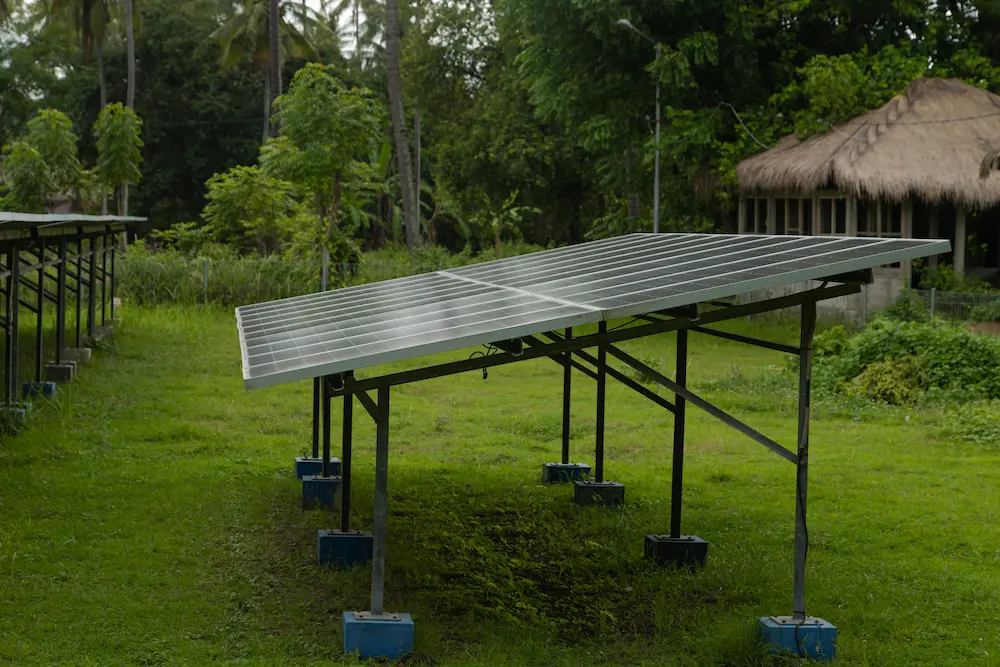
If you look closely, you will notice that solar energy has very few drawbacks. One of the main ones to consider is shading. Tall trees, chimneys, nearby buildings or antennas can cast shadows that reduce electricity production.
However, having solar panels on a shaded roof does not mean you cannot benefit from solar energy. Today there are several technologies and design strategies that minimise losses and allow your installation to remain profitable. The key is understanding how shading affects solar panels and which solutions can prevent it from limiting your self consumption. Lets take a look.
Do Solar Panels Work in the Shade?
Yes, they do work, but they produce less energy.
Solar panels generate electricity from the solar radiation they receive. When a panel is fully shaded, its production drops significantly. When shading is partial, efficiency is reduced but not eliminated.
The main issue appears in traditional installations with a central inverter. If part of one panel is shaded, it can affect the entire string and reduce the output of all connected panels. This happens because panels connected in series operate at the level of the weakest one. If one panel underperforms, the whole string does too. Fortunately, modern technologies allow shading on one panel to have minimal impact on the rest of the system. Optimisers, microinverters and specially designed panels are the key solutions for shaded roofs.
Solutions for Shading on Solar Panels
Shading optimisation devices allow each panel to operate more independently, preventing shaded modules from dragging down the performance of the entire system. There are several solutions available, each suited to different situations.
Microinverters
Microinverters convert direct current to alternating current directly at each panel. This means every module works independently.
If one panel is shaded, it does not affect the others. This makes microinverters an ideal solution for roofs with partial shading or multiple orientations. They also allow individual panel monitoring, making it easier to detect faults or performance issues.
Power Optimisers
Power optimisers sit between each panel and a central inverter. Their job is to adjust the voltage and current of each module so it operates as efficiently as possible, even under shading conditions.
Unlike microinverters, they do not convert power to AC at the panel level. However, they ensure that a shaded panel does not reduce the performance of the rest of the string.
High Efficiency Solar Panels
Another option for shaded roofs is high efficiency solar panels. These panels generate more electricity per square metre and make better use of diffuse radiation, which is the light that reaches the panels on cloudy days or when direct sunlight is partially blocked.
Manufacturers such as SunPower and REC produce modules that maintain good performance even in less favourable conditions.
Panels with Bypass Diodes
Most modern solar panels include bypass diodes. These components divert the current when part of a panel is shaded, allowing the rest of the cells to continue producing electricity. In practice, bypass diodes divide the panel into several independent sections. If one section is shaded, the others can still operate.
Half Cut or Split Cell Panels
Half cell panels are an evolution of standard bypass diode technology. Instead of one single set of cells, the panel is electrically divided into two independent halves. If one half is shaded, the other half continues generating electricity. This significantly reduces energy losses caused by partial shading.
Bifacial Solar Panels
Bifacial panels generate electricity from both the front and rear sides. They are especially useful on roofs where reflected light from bright surfaces, terraces or nearby structures can compensate for partial shading.
Although more common in ground mounted systems, bifacial panels can also be used on residential roofs with proper design.
How Does a Shading Optimiser Work?
Shading optimisers act as electronic regulators between the panel and the inverter. Their goal is to ensure that each module operates at its maximum power point, known as Maximum Power Point Tracking or MPPT.
Without an optimiser, a shaded panel lowers the voltage of the entire string. With an optimiser, each panel works independently. The shaded module produces less, but the rest continue operating at full capacity. In simple terms, optimisers:
- Measure panel performance in real time
- Adjust output voltage and current
- Ensure the inverter receives the most efficient energy possible
- Prevent large energy losses caused by partial or temporary shading
What Should You Install If a Solar Panel Receives Shade?
The best solution depends on how much shading you have, how long it lasts each day and your budget. Our general recommendations are:
- For occasional or minor shading, such as from a chimney or antenna, power optimisers or panels with bypass diodes are usually sufficient
- For frequent shading across different roof areas, microinverters maximise production panel by panel
- For small roofs with limited space, high efficiency panels are a good choice
- For heavy shading during many hours, bifacial panels or relocating the installation may be worth considering
In many cases, combining solutions works best. For example, half cell panels with optimisers, or high efficiency panels with microinverters. This ensures optimal performance even under challenging shading conditions.
How to Perform a Shading Analysis
Before installing solar panels on a shaded roof, it is essential to carry out a proper shading analysis. This allows correct system sizing and prevents unpleasant surprises later. There are several ways to do this:
- Solar studies using specialised software such as PV SOL, Helioscope or SketchUp to simulate sun paths and 3D shading throughout the year
- On site measurement using solarimeters or heliographs that record real solar radiation
- Manual calculations using online tools where you enter location and obstacle heights to estimate sun hours
- Professional assessment by an experienced installer who can analyse your roof and propose the most suitable solution
A good shading analysis not only determines whether solar panels are worthwhile, but also helps decide which technology to use. Central inverter, microinverters, optimisers, panel type, orientation and tilt all depend on it.
Final Thoughts on Solar Panels for Shaded Roofs
If your roof has obstacles that create shade, do not be discouraged. There are multiple solutions that make solar panels on shaded roofs both efficient and profitable.
The key is a proper site analysis, choosing the right technology and working with experienced professionals. With modern panels, optimisers and microinverters, shading is no longer a deal breaker but a challenge that can be successfully overcome on the path towards cleaner and more sustainable energy.


