
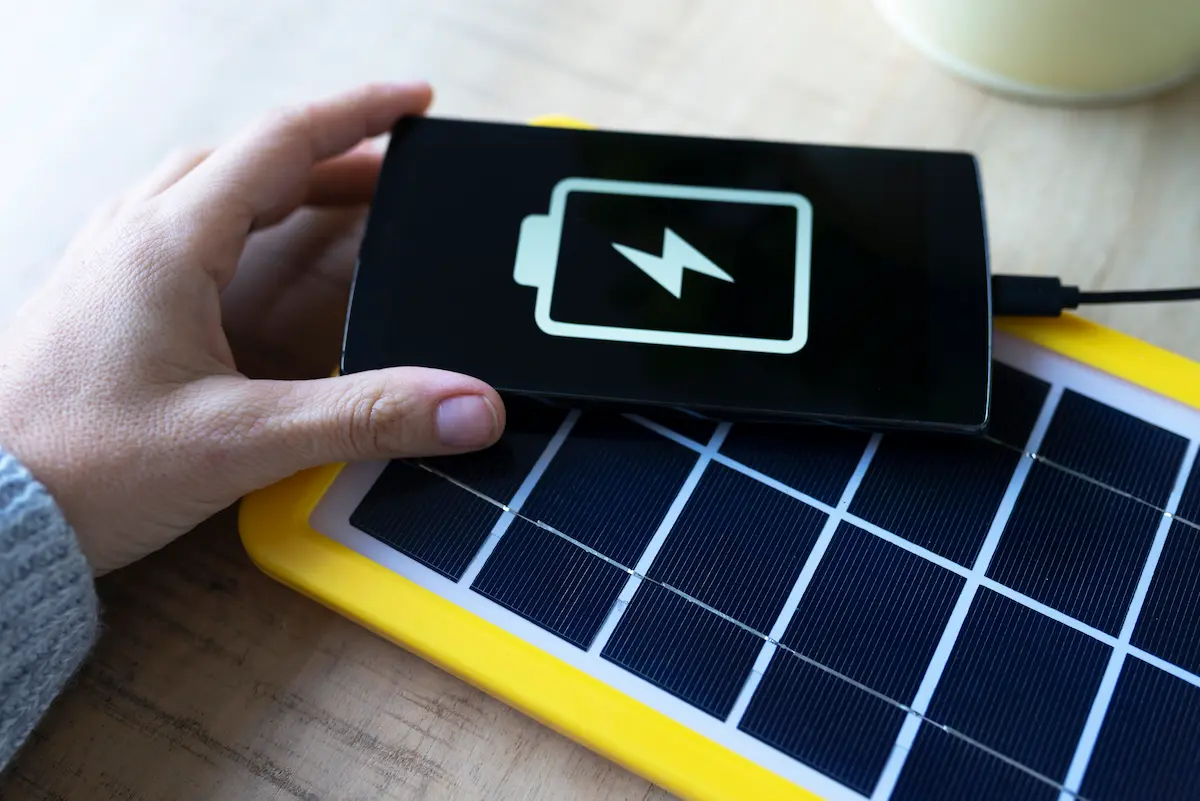
How can we maximize the use of this clean, free energy? The answer lies in storage. If you already own solar panels, you know that energy is produced when the sun shines, but what happens when it gets dark or on cloudy days? This is where the solar battery comes in, a key part of achieving true energy independence and optimal self-consumption. Choosing the best portable or fixed solar battery to complement your system can seem like a complex task, given the variety of options and technologies available. This article is your ultimate guide. You will learn about the different types of batteries, the crucial factors to consider before your purchase, the benefits of integrating a battery into your home and, ultimately, how to make an informed decision that will lead to more efficient and economical energy management.
Why do you need a solar battery for your panels?
Integrating a battery into your solar panel system goes beyond simply storing energy. It is a decision that allows you to take control of your consumption and optimize your investment.
- Energy storage: Batteries allow you to store the surplus energy generated by your panels during peak solar production hours. This energy, instead of being discharged to the grid or lost, is available for when you need it most.
- Energy independence: By storing your own energy, you drastically reduce your dependence on the conventional electricity grid. This gives you greater autonomy and resilience to fluctuations in electricity prices or supply problems.
- Optimized self-consumption: The battery allows you to maximize the use of the energy generated by your own panels. Instead of buying energy from the grid at night, you consume the energy you have stored, increasing your self-consumption rate and reducing your bill.
- Power outage backup: In the event of a power outage, a solar battery acts as a critical backup system. Your home will continue to have power, ensuring the operation of your essential appliances and lighting.
- Long-term financial savings: Although the initial investment may be considerable, optimizing self-consumption and reducing dependence on the grid translates into significant savings on your electricity bill over the years. The battery allows you to make the most of the sun’s free energy.
Types of solar batteries

The choice of battery type is critical and will depend on your needs, budget and performance expectations. Although the search for “the best portable solar battery” may lead you to consider compact solutions, it is crucial to also understand the fixed options to complement your existing installation.
Lead-acid batteries
Lead-acid batteries have long been the standard choice for solar energy storage due to their lower initial cost.
- Characteristics: They are the oldest and have proven and reliable technology. They are usually larger and heavier than other options.
- Advantages: They are reliable and, compared to other technologies, relatively inexpensive in their initial acquisition cost.
- Disadvantages: They have limited life cycles (fewer recharges before their performance decreases), require regular maintenance (topping up with distilled water) and their efficiency is lower compared to other modern batteries, which means that more energy is lost during charging and discharging.
Lithium-ion batteries
Lithium-ion batteries have revolutionized solar energy storage, becoming the preferred choice for new installations and upgrades.
- Characteristics: They are distinguished by their high energy density, which means they can store more energy in a smaller space, and a long service life.
- Advantages: They are virtually maintenance-free, offer high efficiency (minimal energy losses) and have long life cycles, resulting in many years of optimal operation.
- Disadvantages: Its main barrier is a higher initial cost compared to lead-acid batteries.
Relevant subtypes
Among lithium-ion batteries, lithium-ferrophosphate (LiFePO4) batteries stand out as one of the best options. They offer excellent safety (less risk of overheating or fire) and exceptional durability, making them a solid long-term investment.
New technologies and considerations
The field of solar energy storage is constantly evolving. Other emerging technologies, such as flow batteries (which separate power from energy) or molten salt batteries (which use abundant materials), show great future potential for specific applications, although they are not yet as widespread in the domestic arena.
Key factors for choosing the best portable (or stationary) solar battery
Choosing the best portable solar battery or stationary solution for your home requires consideration of several technical and economic aspects. It’s not just about finding “the best portable solar charger” if your goal is to power an entire home; the key is compatibility and the right capacity for your system.
| Key Factor | Description |
Important Consideration
|
| Capacity (kWh) | Amount of energy the battery can store. |
You must calculate how much energy you need to store based on your daily consumption and the production of your panels.
|
| Life Cycles | Number of times the battery can be fully charged and discharged. |
A higher number of cycles indicates greater durability. Lithium batteries far outperform lead-acid batteries.
|
| Efficiency | Percentage of energy recovered during discharge. |
Look for batteries with high efficiency (typically >90% lithium) to minimize energy losses.
|
| Power (kW) | Capacity of the battery to deliver energy at a given time. |
Make sure that the continuous power of the battery can simultaneously power your most demanding devices.
|
| Compatibility | Interaction between the battery and your solar inverter. |
It is crucial that the battery be compatible with the existing inverter or the one you plan to purchase.
|
| Warranty | Coverage and duration offered by the manufacturer. |
A solid warranty (e.g. 10 years or X cycles) is an indicator of the manufacturer’s confidence in its product.
|
| Initial cost | Battery purchase price. |
He believes that a higher initial investment in lithium technology can translate into long-term savings.
|
Capacity (kWh): How much energy do you need to store?
This is perhaps the most important factor. To determine the required capacity, you must analyze your daily energy consumption (kWh/day) and the amount of energy your panels produce. If your goal is total independence, you will need a capacity that covers several days of consumption without sun. For self-consumption, it will be sufficient to store the surplus for the nights.
Life Cycles
Life cycles refer to how many times a battery can be fully charged and discharged before its capacity decreases significantly. Lithium batteries offer thousands of cycles (between 4,000 and 10,000), which translates into a lifetime of 10 to 20 years. Lead-acid batteries, on the other hand, typically have between 500 and 1,500 cycles, with a shorter life.
Loading and unloading efficiency
Efficiency indicates the amount of energy lost during the storage process. A battery with an efficiency of 95% means that, for every 100 kWh that goes in, 95 kWh comes out. Lithium batteries are notably more efficient (generally >90%) than lead-acid batteries (60-80%), which means better use of your solar energy.
Power output (kW): How many devices can you power simultaneously?
Power refers to the battery’s ability to deliver energy instantaneously. It is vital to know how many appliances you can use at the same time. Distinguish between continuous power (the power it can deliver on a sustained basis) and peak power (the power it can deliver for a brief period to start motor-driven appliances).
Compatibility with your inverter
A battery must be compatible with the inverter that runs your solar system. Some inverters are hybrids and are designed to work with batteries out of the box, while others may require an additional inverter or an upgrade. Be sure to check the technical specifications.
Manufacturer’s warranty
A solid warranty is a reflection of the manufacturer’s confidence in their product. Look for batteries with warranties of at least 8 to 10 years, or that specify a guaranteed number of cycles (e.g., 6,000 cycles at 80% capacity).
Initial cost vs. long-term cost
While lithium batteries have a higher initial cost, their higher efficiency, longer life and lower maintenance typically result in a lower long-term total cost of ownership (TCO) compared to lead-acid batteries. The smart investment is not the cheapest, but the one that offers the best return and performance over time.
The best solar battery for your needs

The choice of the ideal battery depends largely on the purpose and environment of use.
For domestic self-consumption with existing solar panels
If your primary goal is to maximize self-consumption and reduce your electricity bill in a grid-connected home, you will be looking for high-capacity, high-efficiency batteries. Lithium-ion batteries (especially LiFePO4) are the dominant choice here because of their performance, durability and low maintenance. Their integration with a hybrid inverter is critical to intelligently manage power flows.
For isolated or rural systems
In off-grid installations, the battery is the heart of the system, as it is the only source of energy when the sun is not shining. Here, reliability and storage capacity are paramount to ensure supply over extended periods without solar production. Lithium solutions are becoming increasingly popular for their efficiency, although in some cases deep-cycle lead-acid batteries are still chosen for their robustness and lower initial cost in large-scale systems.
The best portable solar battery for camping, vans or as emergency backup
This is where the concept of “the best portable solar battery” makes the most sense. These batteries are designed for mobility and versatility, ideal for those seeking off-grid power or backup for small devices.
- Key features: They are usually lightweight, compact and offer adequate capacity to charge electronic devices, small appliances or lights. Often include multiple output ports (USB, AC, DC).
- Best solar chargers and the best portable solar charger to complement these batteries: To recharge these portable batteries, portable solar chargers are the perfect complement. They are smaller folding or rigid solar panels that can be connected directly to the battery. They allow you to recharge it anywhere where there is sun, increasing your autonomy.
- Examples of popular models of portable solar chargers: Brands such as Goal Zero, Jackery, Anker or Bluetti offer excellent options in this segment, with different powers and sizes to suit different needs.
Maintenance and lifetime of your solar battery
The care of your solar battery directly influences its performance and durability.
- Lithium batteries: One of their great advantages is low or no maintenance. Internal battery management systems (BMS) take care of optimizing charging, discharging and cell balancing. They only require occasional cleaning and connection verification.
- Lead-acid batteries: These batteries do require regular maintenance. It is necessary to periodically check the electrolyte level and top up with distilled water, in addition to cleaning the terminals to avoid corrosion.
Tips for extending the life of any type of battery
- Avoid deep discharges: Do not discharge the battery below the limits recommended by the manufacturer. For lithium batteries, an 80% discharge cycle is healthier than 100%.
- Maintain proper temperature: Extreme temperatures (too high or too low) can reduce the efficiency and life of the battery. Ideally, they should be installed in a cool, dry place.
- Avoiding overcharging and over-discharging: Modern battery management systems (BMS) in lithium batteries, and charge regulators in both types, are crucial to prevent such damage.
- Professional installation: Make sure that the installation is performed by qualified professionals to ensure that all components are properly configured and protected.
As you can see, the battery not only allows you to maximize the self-consumption of the energy generated by your own solar panels, but also gives you valuable independence from the grid and the peace of mind of having a backup in case of interruptions. In the long run, this optimization translates into significant financial savings on your electricity bill. See you next time!


