
Have you ever wondered if it is possible to install solar panels in your neighborhood community to save on your electricity bill and contribute to the environment? More and more people are looking for sustainable energy alternatives, and solar energy is a fantastic option. In this article, we will explore in depth whether it is feasible to install solar panels in a community of neighbors, what steps to follow and what benefits it can bring for everyone. Get ready to discover how solar energy can transform the way your community consumes energy.
Benefits of Installing Solar Panels in Neighborhood Communities
Opting for solar energy in a community of neighbors is a smart decision that offers a multitude of advantages. Not only does it contribute to the sustainability of the planet, but it also brings tangible economic benefits in the short and long term.
- Significant economic savings: The main attraction of solar panels is the drastic reduction in electricity bills. This reduction not only applies to common areas (stairs, elevators, garages), but, with the right systems, it can also be extended to the individual consumption of each neighbor. Imagine the relief of seeing how the cost of electricity is reduced month after month.
- Sustainability and the environment: By generating your own clean energy, your community will be actively contributing to a reduced carbon footprint. This encourages a greener lifestyle and demonstrates a real commitment to protecting the environment, which is increasingly valued.
- Increased property value: Buildings with renewable energy installations are perceived as more modern and efficient. This not only makes them more attractive in the real estate market, but can also translate into a direct increase in property values.
- Energy independence: By relying less on the conventional electricity grid, your community will be less dependent on energy price fluctuations. This provides greater stability and predictability in energy costs over time.
- Subsidies and grants: The good news is that there are numerous tax incentives and subsidies available at the state, regional and municipal levels to encourage the installation of solar panels in neighborhood communities. These programs can significantly reduce the initial investment, making the project even more profitable.
Regulations for the Installation of Solar Panels in Neighborhood Communities
The installation of solar panels in a community of neighbors, although very beneficial, requires knowledge of and compliance with a series of regulations. It is essential to understand the current legislation so that the process goes smoothly and without setbacks.
Horizontal Property Law and solar panels
The Horizontal Property Law (HPL) is the legal pillar that regulates life in the communities of neighbors in Spain. In recent years, it has undergone significant changes to facilitate the installation of renewable energies, including solar panels.
- Recent changes in the law to facilitate installation: Previously, a stricter qualified majority was required. However, with the recent modifications, the aim is to streamline these processes. For the installation of collective self-consumption systems, the approval of the Neighborhood Council now requires a simple majority, i.e., the favorable vote of the majority of the owners attending the meeting and representing the majority of the participation quotas. This has greatly simplified the path to solar energy in buildings.
- Majority required for approval at a neighborhood meeting: It is crucial that an Owners’ Meeting be called with this item specifically on the agenda. As mentioned, a simple majority is sufficient to approve the installation.
- What happens if a neighbor disagrees?If a neighbor does not agree, the installation can still be carried out if the required majority is obtained. However, it is important to note that the costs of the installation can only be passed on to the neighbors who voted in favor of the installation. Those who oppose or do not participate in the vote will not be obliged to contribute financially, although they will not be able to benefit from the self-consumption generated by the system.
Permit community individual solar panels
It is common for doubts to arise as to whether a single neighbor can install solar panels on his property (for example, on his balcony or an area of private use) without the permission of the community.
- Is it possible for a single neighbor to install plates?Yes, it is possible, but with nuances. If the installation affects common elements of the building (such as the facade or the roof), the approval of the community is required. However, if the installation is made in an area of private use and does not affect the structure or aesthetics of the building in a substantial way, an express authorization may not be necessary. However, it is always advisable to inform the community to avoid future conflicts.
- Rights and responsibilities in this case: The neighbor performing the installation shall be solely responsible for the costs, maintenance and any incidents that may arise.
Regulations for the installation of solar panels in condominiums
In addition to the LPH, there are other regulations to consider for the installation of solar panels.
- Technical and legal requirements: These may vary depending on the power of the installation and the type of grid connection. It is essential that the installation complies with the Low Voltage Electrotechnical Regulation (REBT) and the specific regulations for self-consumption.
- Urban planning permits and licenses required: Generally, a Building Permit or a Prior Communication to the corresponding City Council will be required, depending on the size of the project. An Environmental Impact Assessment Report may also be required if the installation is large or located in protected areas.
- Role of the electricity distribution company: Once the installation has been completed, it will be necessary to register it with the electricity distribution company and the Directorate General of Industry of the autonomous community. This step is crucial in order to be able to feed surplus energy into the grid and benefit from simplified compensation.
It is vital to consult specific regional and municipal legislation, as regulations may vary slightly from one region to another and from one municipality to another. A professional installer or a specialized energy manager will be able to guide you through all these procedures, ensuring that the project complies with all legal requirements.
Key Steps to Installing Solar Panels in your Community
Embarking on the project of installing solar panels in your community may seem complex, but broken down into clear steps, it becomes a manageable process. Here’s a practical guide to help your community make the leap to solar power.
Information and initial proposal
The first step is research and preparation. A solid, well-informed proposal will increase the chances of success at the Neighborhood Council.
- Gather information on installation companies: Search for several companies specializing in photovoltaic installations for communities. Request detailed quotes, compare previous experiences and verify their credentials and certifications.
- Cost and savings estimates: Installation companies should provide you with a feasibility study that includes a clear estimate of the initial investment, the projected annual savings on the electricity bill and the payback time. This study is essential to present to your neighbors.
- Presentation of the proposal to the community: Once you have all the information, prepare a concise and clear presentation for the neighbors, highlighting the economic and environmental benefits.
Notice of Meeting for Property Owners
This is the decisive step, where the community will make the decision.
- Specific agenda for the installation of solar panels on the roof of my community: Make sure that the notice of the meeting of owners explicitly includes the item “Installation of solar panels for collective self-consumption” or similar. This ensures that all the neighbors are informed about the topic to be discussed.
- Documentation required for voting: During the meeting, present the feasibility study, company budgets, information on available subsidies and any other relevant information that will help neighbors make an informed decision.
Obtaining permits and licenses
Once the installation has been approved, it is time for the administrative formalities.
- Administrative procedures with the city council and the electricity company: This includes requesting the Building Permit or Prior Communication to the City Council and the grid connection to the distribution company.
- Role of an energy manager: Having an energy manager or having the installation company itself take care of these procedures can greatly speed up the process and ensure that all legal and technical requirements are met.
Installation and start-up
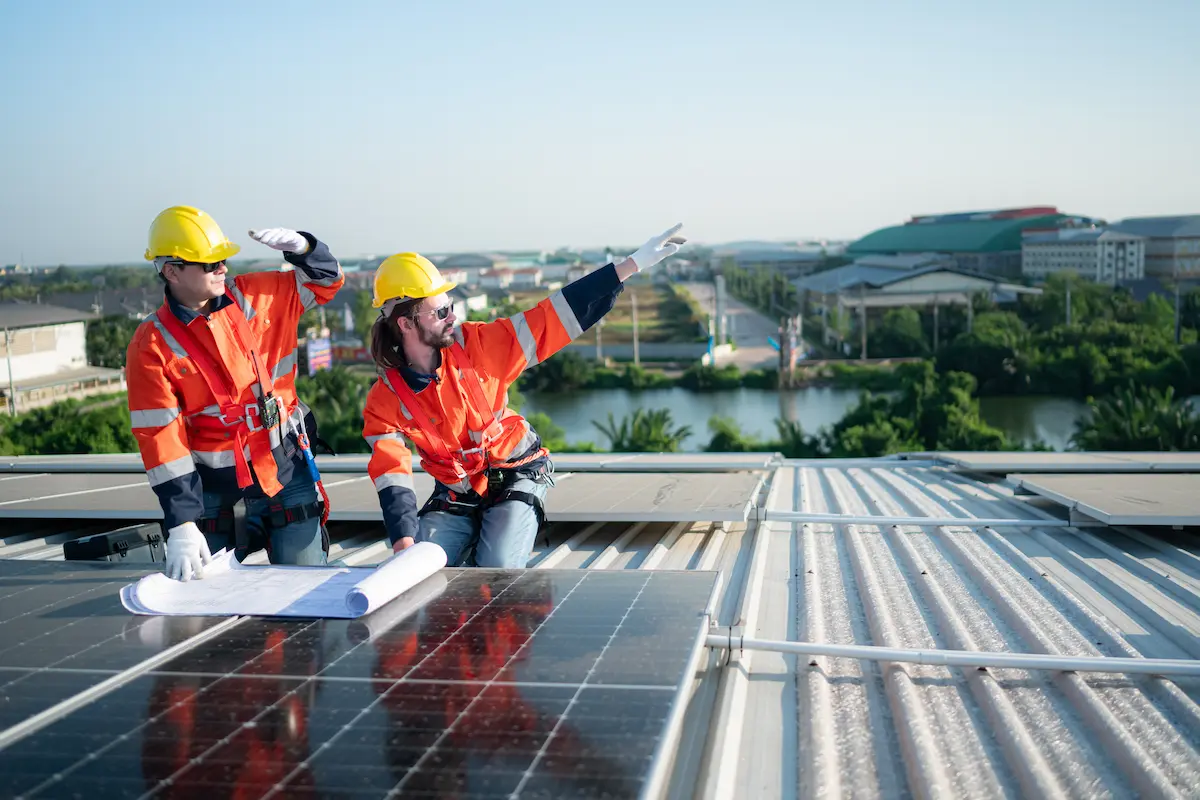
Finally, the project execution phase.
- Selection of the installation company: Choose the company that offers the best combination of experience, quality, price and after-sales service.
- Installation phases: Installation typically includes assembly of the structures, placement of the solar panels, connection of the inverters and the necessary wiring.
- Grid connection: Once installed, the panels will be connected to the building’s electrical grid. After inspection and registration, the system is ready to start generating clean energy.
Common Challenges and How to Overcome Them
While the benefits of community solar panels are undeniable, it is true that some challenges can arise during the process. With good planning and communication, most of these obstacles are easily overcome.
Financing
Initial investment may be a concern for some communities.
- Financing options for the community: There are several options. In addition to public subsidies and grants, some banks offer specific loans for communities of neighbors with favorable conditions for renewable energy projects. A leasing or PPA (Power Purchase Agreement) model can also be considered, where a company invests and maintains the installation, and the community pays for the energy generated.
- Cost sharing models: The most common way is that the costs are shared among the neighbors who decide to participate, generally according to their participation quotas. However, customized agreements can be established, for example, neighbors who want individual self-consumption to pay a higher proportional share.
Agreements between neighbors
Achieving consensus in a community can be challenging, but it is key to the success of the project.
- How to achieve consensus: The key is transparency and information. Present a complete feasibility study, resolve all doubts and highlight the clear benefits for all. Holding informative sessions before the Owners’ Meeting can be very useful for the neighbors to arrive with all the necessary information.
- Mediation in the event of disagreements: If disagreements persist, the board may consider the option of an outside mediator or a property manager with experience in these projects who can help find common ground and equitable solutions.
Maintenance of solar panels
Once installed, solar panels will require maintenance to ensure optimal performance.
- Responsibility and costs: Generally, the maintenance of the solar panels on the roof of my community falls on the community of neighbors as a whole. The costs will be added to the common expenses. It is advisable to contract a maintenance contract with the installation company or a specialized company.
- Benefits of good maintenance: Proper maintenance (periodic cleaning, checking connections and components) ensures maximum energy efficiency of the panels, prolongs their useful life and ensures return on investment over time. Solar panels are robust and require relatively low maintenance, which makes them a very convenient option.
As we have seen, installing solar panels in a community of neighbors is not only possible, but it is an excellent long-term investment that benefits both your pocket and the planet. Although it may seem like a process with a lot of red tape, the benefits in savings and sustainability make it worth the effort. If you are thinking about going solar, we encourage you to talk to your neighbors, get informed and take the first step towards a greener, more efficient future. Solar is the future and your community can be a part of it!


