
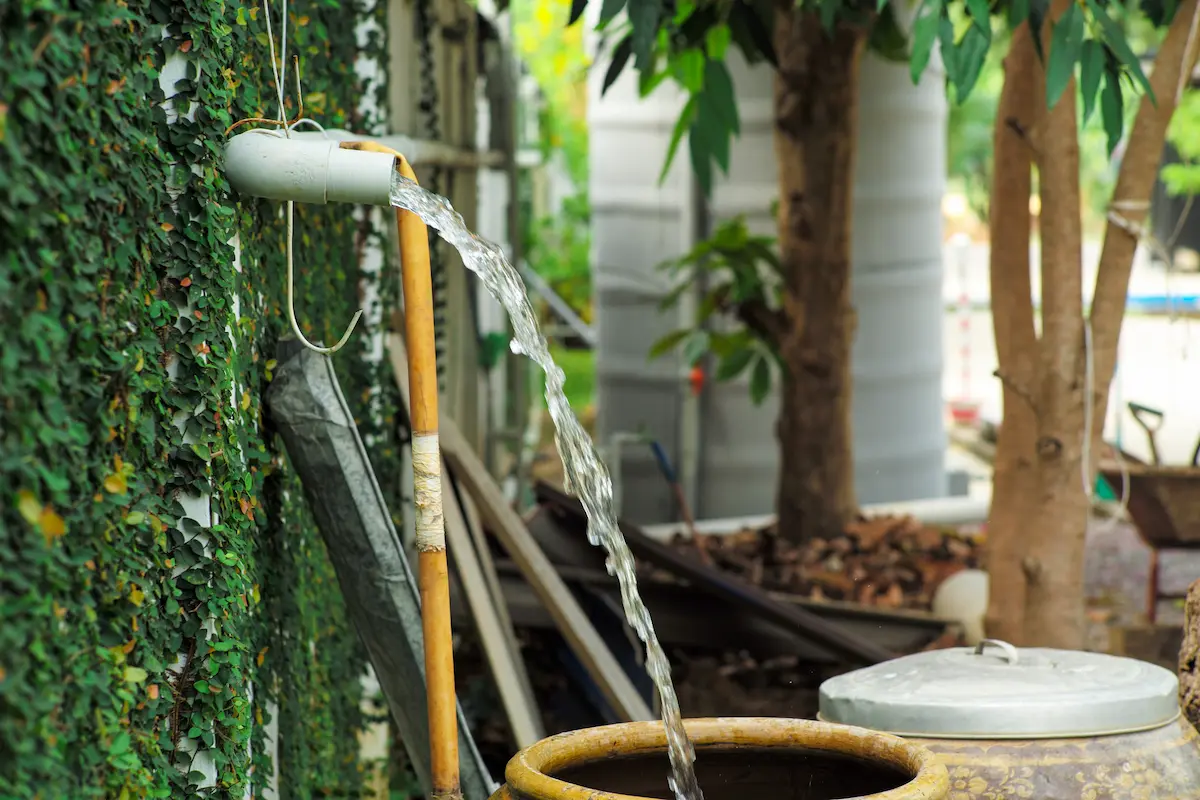
What if we told you that you have a free, high-quality water source right above your head? We’re talking about rainwater. In this guide, we’ll explore how a rainwater harvesting system can transform the way you water your landscape, allowing you to reuse rainwater for irrigation efficiently and sustainably. Discover the environmental and economic benefits of implementing a rainwater harvesting system and how you can contribute to a greener future.
Why Reuse Rainwater for Irrigation? Benefits and Sustainability
The decision to reuse rainwater for irrigation is not just a fad, it is a smart investment in the future of your home and the planet. The benefits are multiple and tangible:
- Financial savings: By drastically reducing your drinking water consumption, you will see a significant decrease in your monthly bill. Imagine what you could do with that extra money.
- Environmental sustainability: Every drop of rainwater you capture is one drop less that is extracted from natural sources or treated in water purification plants. This decreases your water footprint and promotes responsible use of resources.
- Superior quality for plants: Unlike tap water, which often contains chlorine, fluoride and other chemicals, rainwater is naturally soft and free of additives. Your plants, especially the more delicate ones such as orchids or ferns, will thrive thanks to this pure “elixir”.
- Water autonomy: In times of drought or water restrictions, having your own rainwater harvesting system provides you with invaluable independence. You will never again worry about the state of your garden due to shortages.
- Community impact: By adopting this practice, you become a role model. You contribute to water conservation locally and globally, inspiring others to take similar action.
Key Components of a Rainwater Harvesting System
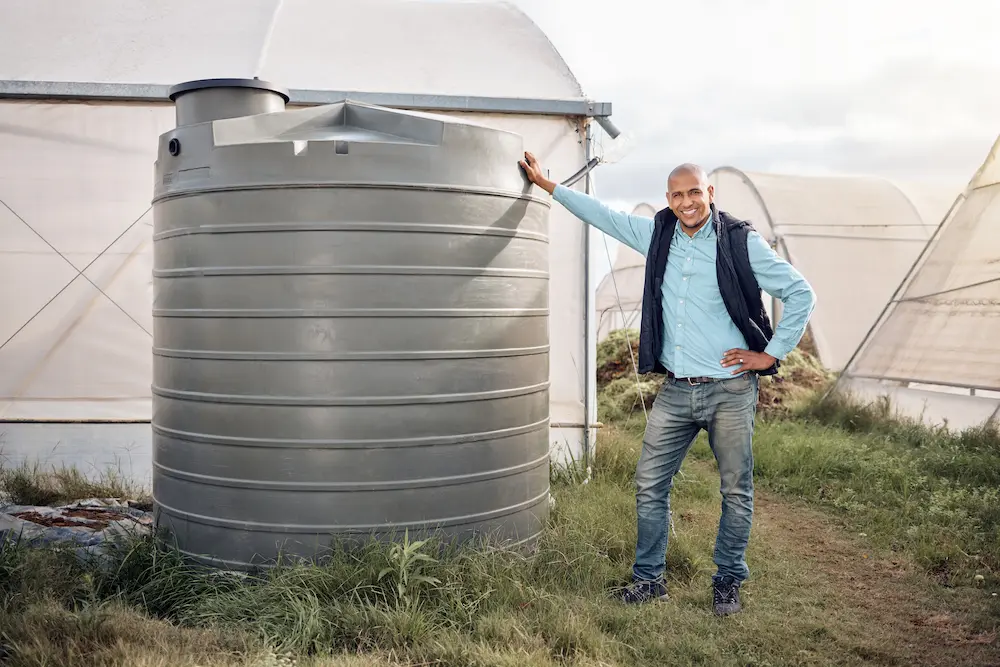
For a rainwater harvesting system to work optimally, it is essential to know and understand its main components:
- Roof and gutters: These are the primary catchment surface. The size and material of your roof will directly influence the quantity and quality of water collected. A tile or metal roof is ideal, while a roof with moss or asbestos may require additional considerations. Proper maintenance of the gutters is crucial, cleaning them regularly to ensure that water flows unobstructed and does not carry leaves or dirt into the system.
- Leaf and first flush filters: These elements are essential to guarantee the quality of the collected water.
- Leaf filters are installed in the downspout of the gutters and prevent leaves, branches and other large debris from entering the tank, thus preventing clogging and the decomposition of organic matter in the water.
- The first flush diverter is an ingenious device that diverts the first few liters of rainwater. This “first flush” usually contains the highest concentration of roof pollutants (dust, pollen, bird droppings, etc.), ensuring that only the cleanest water reaches the tank.
- Tank or cistern: It is the heart of the system, where the water is stored.
- You can find tanks made of various materials, such as plastic (high density polyethylene), concrete or even metal. Each has its advantages in terms of durability, cost and aesthetics.
- The size of the reservoir is a critical consideration. It should be based on your estimated irrigation water consumption and precipitation patterns in your area. A general rule of thumb is to calculate your roof area and multiply by the average annual rainfall.
- The ideal location for the rainwater reclaimer is a shady spot to prevent algae growth, on a level and firm base to support the weight of the water, and close to where you will be using the water.
- Pumping system (optional): If you need to distribute water under pressure, such as for sprinklers or complex drip systems, a pump will be necessary.
- There are manual pumps, ideal for small systems or for watering with a watering can, and electric pumps, which are more powerful and suitable for a more complex rainwater harvesting system for domestic use or for watering large areas.
- Consider the power of the pump according to the flow rate and pressure you need.
- Irrigation distribution system: Once you have water in storage, you need a way to get it to your plants. This can be as simple as a hose connected to a faucet in the reservoir, or as sophisticated as a sprinkler system or drip lines that distribute the water evenly and efficiently.
Steps to Install Your Own Rainwater Harvester
Installing a rainwater harvesting system will be much faster if you follow these steps, and you’ll be ready to start reusing rainwater for irrigation in no time:
- Initial planning: Before you buy anything, assess your irrigation needs. How big is your garden? What kind of plants do you have? Research the average rainfall in your area to calculate the water harvesting potential of your roof (roof area in m² x annual rainfall in mm = liters of water). This will help you select the right size tank.
- Component selection: With your needs clear, choose the elements that best fit your budget and requirements. Consider the quality of materials and ease of installation.
- Site Preparation: The base of your tank must be completely level and able to support a lot of weight. You can use a concrete slab, pavers or a compacted gravel base. A stable base is crucial to the safety and longevity of the system.
- Gutter and Filter Connections: Install leaf filters on gutter downspouts and first flush diverter per manufacturer’s instructions. Make sure all connections are watertight to prevent leaks.
- Tank Installation: Position the rainwater reclaimer on the prepared base. Connect it to the gutter downspout and cleaning elements. Secure the tank if necessary, especially in windy areas.
- Distribution system connection: If using a pump, install as directed. Connect hoses, sprinklers or drip system to the tank or pump outlet. Make sure the pipes are tightly sealed and leak-free.
- Maintenance and precautions: Once installed, the system needs regular maintenance. Clean the leaf filters and gutters every few months, and empty the first-flush diverter. In winter, if you live in an area with frost, drain the system or take steps to protect it from freezing.
Optimization of the Rainwater Harvesting System for Domestic Use

A rainwater harvesting system for domestic use can go beyond simple irrigation and become an integral part of your home’s water management.
- Integration with existing irrigation systems: If you already have an automatic irrigation system, you can connect your new rainwater harvesting system to the main inlet, using a three-way valve that allows you to alternate between rainwater and the public mains if the reservoir runs out of water.
- Water treatment and quality: To ensure optimal water for irrigation, or even for other domestic uses, you can add basic filtration and purification methods.
- Additional filters for sediment and fine particles can be installed after the tank, before the pump or the point of use.
- For disinfection, especially if you consider other household uses, you can explore options such as UV (ultraviolet) lamps that kill bacteria and viruses, or the use of purification tablets in the tank.
- Monitoring and automation: Technology can take your system to the next level. Level sensors can tell you how much water is left in your reservoir. Coupled with smart irrigation systems, they can automatically schedule watering based on rainwater availability and weather conditions.
- Additional uses: A rainwater harvesting system for domestic use need not be limited to the garden. Rainwater, once filtered, is excellent for washing cars, refilling swimming pools (check local regulations!), or even flushing toilets (requires a separate plumbing system). These additional uses magnify savings and sustainability.
Solutions to rainwater reuse challenges
Like any system, rainwater harvesting can present some challenges. Fortunately, most have simple solutions:
- Maintenance: The main challenge is the regular cleaning of filters and gutters.
- Solution: Establish a maintenance schedule, e.g., every 3-6 months, or after heavy rains or leaf fall seasons.
- Storage: Concerns about algae and mosquito growth in the tank are common.
- Solution: Make sure the tank is opaque and completely sealed to prevent light (which promotes algae growth) and mosquitoes. Use fine mesh on ventilation openings.
- Freezing: In cold climates, water in the system may freeze and cause damage.
- Solution: Drain the system before winter frosts or install an automatic emergency drainage system. Consider burying the tank underground, where the temperature is more stable.
- Water quality: Address potential roof contaminants, such as debris from building materials or air pollution.
- Solution: The use of a first flush diverter and sediment filters is critical. If roof quality is a concern, you may consider activated carbon filters or UV purification systems.
Myths and Facts About Rainwater
It is important to dispel some common misconceptions:
- “Rainwater is always pure”: False. Although it is naturally soft, it can carry contaminants from the roof and the atmosphere. That is why good filtration and, if the use is very specific (such as for drinking), advanced purification is vital.
- “Installation is too complex”: False. While large systems may require professional help, a basic rainwater reclaimer for landscape irrigation is a totally do-it-yourself project for most people.
Your Commitment to Water Sustainability
Reusing rainwater for irrigation is much more than just a way to save money; it is a simple and effective practice to contribute to a more sustainable future and build greater water resilience in your home. By implementing a rainwater harvesting system, you not only lower your water bill and care for your landscape with a superior resource, but you also protect a vital resource for everyone.
We encourage you to take the plunge and start taking advantage of this natural resource. Whether it’s a simple rain barrel or a more advanced rainwater harvesting system for home use, every drop counts – start building your own rainwater harvest ing system today and make a difference! If you have questions or need guidance on specific products, feel free to explore our detailed guides.


