
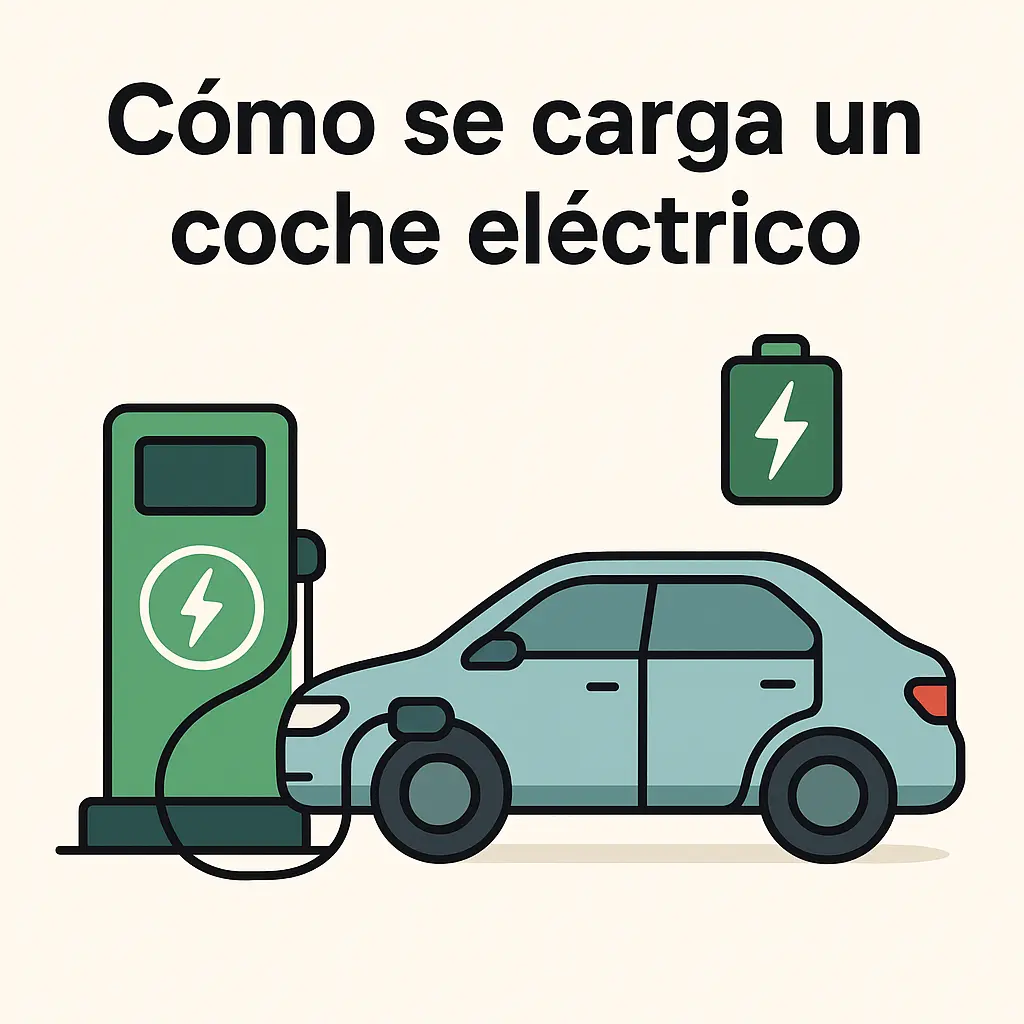
If you are thinking of changing your car for an electric one, or you already have one, you may be wondering how to charge an electric car. The truth is that it is becoming easier, safer and more convenient. You just need to know the steps, the types of charging and the options available both at home and in public points, and here we explain them to you. Keep reading!
How to charge an electric car step by step
Each electric model has slight variations, but the charging process is usually quite similar or even the same. Therefore, here is a step-by-step guide on how to charge your electric car correctly and safely.
Turn off the engine
The first thing to do is to turn the car off completely and park it properly, with the handbrake on if necessary. Some models actually require that, or that you block the wheels to allow the charging port to open. Make sure the car is parked properly, especially if you are in a public station.
2. Prepare the charging cable
Depending on the charging point, you can use your own cable or one that is already built into the station. In either case, simply unwind the cable completely before connecting it. This is very important so that it does not overheat or generate interference.
Also take a look and check the cable for any damage. If you charge at home, it is common to use your own cable. At fast or highway charging stations, you will usually find one built into the charger.
3. Activate the charging station
If you are at home, you can skip this step, just plug it in. At public charging points, before plugging in the vehicle, you will need to activate the charger. This can be done in several ways:
- Through a mobile app (e.g. Electromaps, Chargemap or the charger network’s own app).
- With a customer RFID card.
- On the touch panel of the charging point itself if it has one.
4. Connect the cable to the station and to the car.
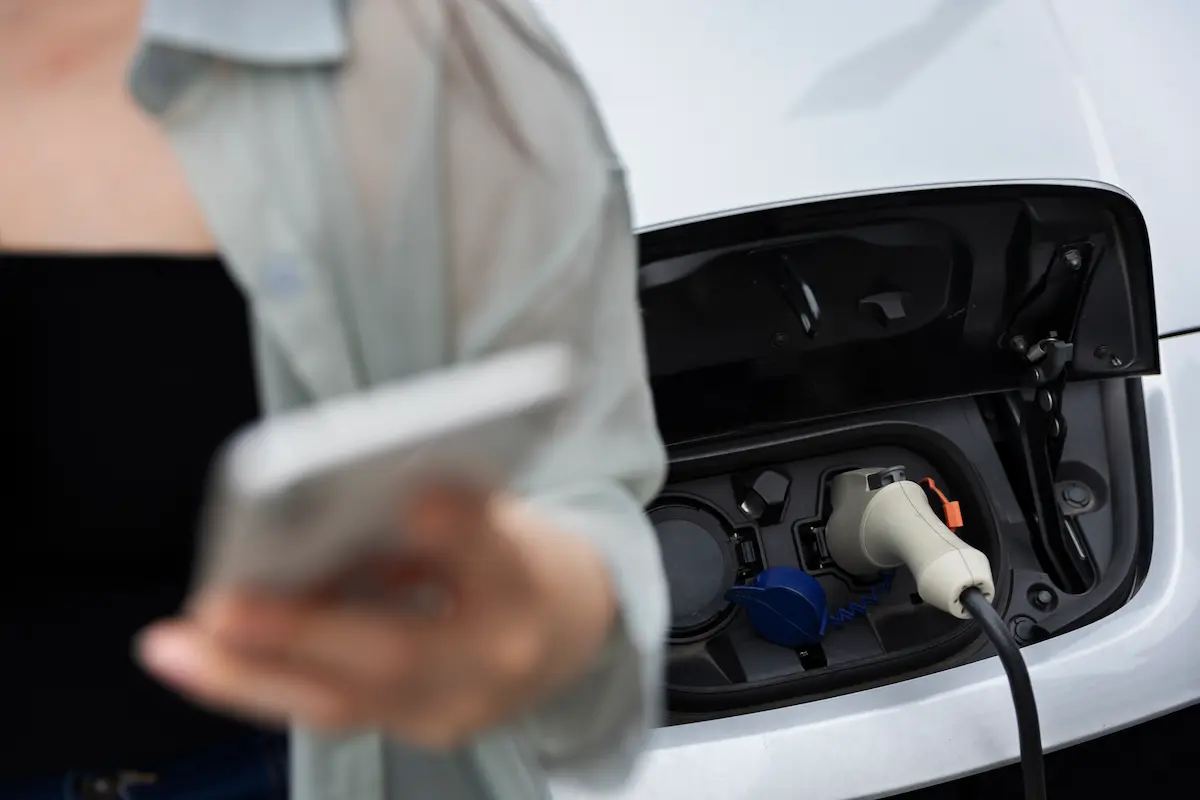
Once the charger is activated, you just have to, first, connect the cable to the station if necessary, because many times it already is and, second, insert the other end into the car’s charging port. This port is usually on the front, side or rear, depending on the vehicle model.
You will hear a“click” or see a light indicating a successful connection. Some cars automatically lock the cable during charging to prevent theft or accidental disconnection.
5. Wait for charging and disconnect at the end
Once everything is connected, the charging process will start automatically. On the car’s dashboard or in the station’s app you will be able to check:
- Battery level
- The time remaining for a full charge
- Cost of the recharge. This does not have to appear, because sometimes it is free.
When finished, unlock the cable from the app or the car, disconnect it first from the vehicle and then from the station. Coil the cable correctly so as not to damage it, and you’re done.
Types of vehicle charges
There are different types of charging for an electric car. Choosing one or another will depend on your needs, the time available and the infrastructure available to you. The main types are slow, fast and ultra-fast charging.
Slow charging (AC)
- Power: between 2.3 and 7.4 kW
- Estimated time: 6-12 hours
- Where it is used: at home or in private garages
Slow charging is best for overnight use. It is the one that best preserves the health of the battery, as you avoid overheating or voltage spike. Perfect for charging your car at night and if you don’t need it already, urgently.
Fast charge (DC)
- Power: between 22 and 50 kW
- Estimated time: 1-2 hours
- Where it is used: public stations, parking lots, shopping malls, etc.
This option is faster but may generate a little more wear on the battery if used on a daily basis. Ideal for intermediate recharges or if you make long trips and need to “refuel” faster.
Ultra-fast charging (DC)
- Power: 100 kW or more (some stations up to 350 kW)
- Estimated time: 15-30 minutes for 80%.
- Where it is used: highways, networks such as IONITY or Tesla Superchargers.
Perfect for long trips. However, it should not be abused on a daily basis, as it can accelerate battery degradation if used on a regular basis.
Where to charge your electric car
You can charge it either at home or at a public charging station, each with its own advantages.
At home
- Greater convenience, you can charge it while you sleep or are at home.
- Lower cost, because you can take advantage of night or hourly rates.
- Total control. You can program the load to maximize savings.
- You can install a Wallbox type charging point.
In public places
- Useful if you do not have a parking space.
- Access to fast and ultra-fast charging.
- There are more and more chargers in shopping malls, supermarkets, gas stations and public parking lots.
- They usually require an app or card for identification and payment.
If you are wondering where to charge your electric car near home or work, there are apps that show you in real time the available points and their status. Some of the best known, to give you an example, are Electromaps, PlugShare, Chargemap or Google Maps with the filter “charging station for electric vehicles”.
How do you pay for charging an electric car?
Well, it depends on where you recharge them. At home, the cost is added to your regular electricity bill. This is very good because you can reduce it if you hire a tariff with hourly discrimination, charging at night at a lower price. The average cost per 100 km is around 1.5 to 2.5 €, much lower than gasoline. We recommend that, if you choose a tariff with time discrimination, you always charge in off-peak hours, which is the cheapest. Otherwise, in the flat rate, which is the intermediate one, and never in peak rate.
In public stations, you have mobile applications, where you register, activate the charging point and pay from the app with a bank card. You also have RFID cards (some vendors offer prepaid or subscriber cards). Some stations also allow you to pay directly by card, but not all of them.
Then, the price varies according to the power, location and company. We advise you, if you often charge in the street, to contract a monthly flat rate or a subscription in networks such as Iberdrola, to see an average, we leave you this table.
| Type of load | Estimated price per kWh | Cost per 100 km approx. |
|---|---|---|
| At home (off-peak rate) | 0,12 – 0,16 €/kWh | 1,5 – 2,5 € |
| Public (AC) | 0.25 – 0.35 €/kWh | 4 – 5 € |
| Public (DC fast) | 0,35 – 0,50 €/kWh | 5 – 7 € |
| Ultra-fast (DC) | 0.45 – 0.79 €/kWh | 6 – 10 € |
Now that you know how to charge an electric car, you’re sure to see that it’s not as complicated as it seemed at first. You just need to know the steps, the types of charging and the options available to you.


