
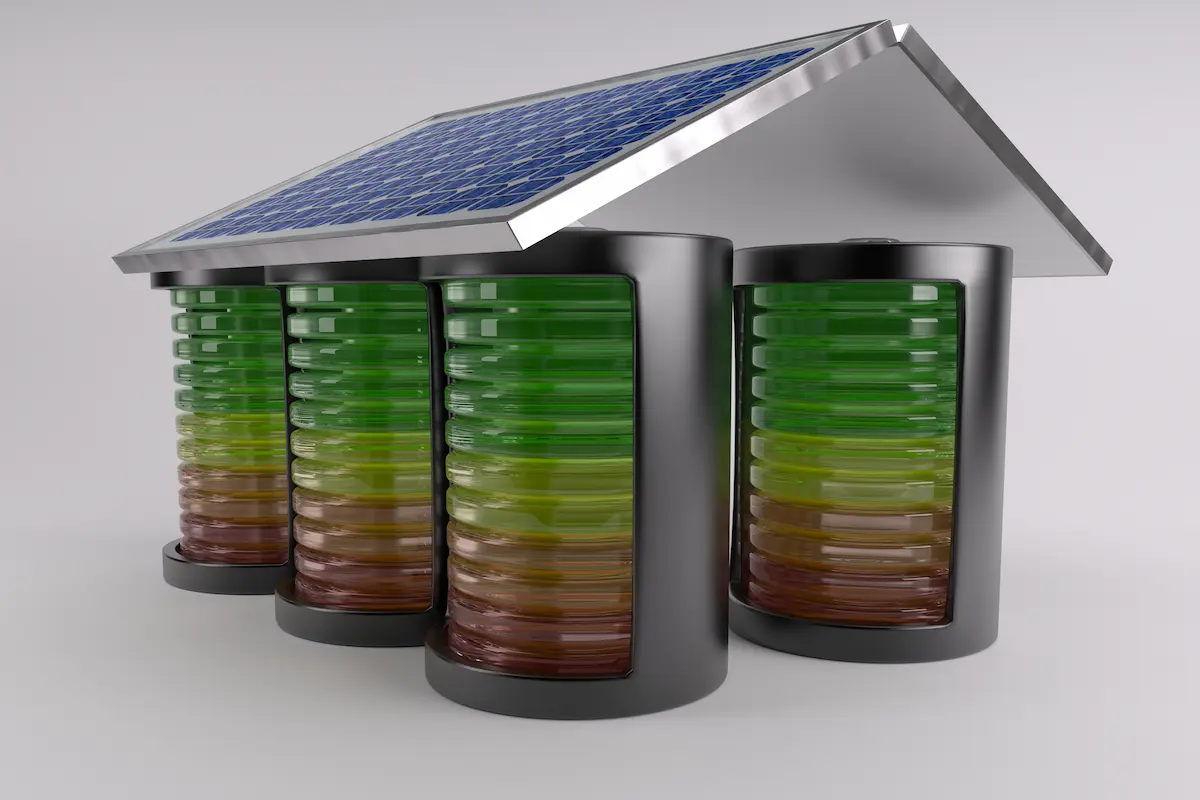
When a home installs photovoltaic energy, it is normal to want to know whether a battery for solar panels is worth it, because after all it is an investment that has to be made. Solar batteries make it possible to store the electricity generated by the panels during the day so that it can be used later, for example at night or at times when the home’s consumption is greater than solar production.
In theory, this sounds ideal: producing your own energy and using it whenever you want. However, in practice, the decision to install batteries depends on several factors such as the home’s electricity consumption, the price of electricity and the cost of the batteries themselves. For this reason, many people also wonder whether installing solar batteries is profitable or whether it is better to simply have solar panels without storage.
Types of solar batteries
Before analysing whether a battery for solar panels is worth it, it is important to know the different types of batteries currently used in photovoltaic installations, with lithium batteries being the most common. On the other hand, lead acid batteries and gel or AGM batteries were widely used in the past.
Lithium batteries
Lithium ion batteries are the most widely used in modern domestic installations. Their main characteristics are:
- High charging and discharging efficiency
- Longer service life
- Compact size
- Lower maintenance
- In addition, they allow more charge and discharge cycles than other types of batteries.
For this reason, they are currently the most recommended option in most solar installations.
Lead acid batteries
Lead acid batteries were used for many years in solar systems, especially in off grid installations. They had some advantages, such as a lower price for a well known technology, but their shorter service life, which required more maintenance due to lower efficiency, has meant that they are used less and less in homes connected to the grid.
Gel or AGM batteries
They are an evolution of traditional lead acid batteries. They have some improvements such as:
- Greater safety
- Lower maintenance
- Better performance in deep discharges
Even so, they still have a shorter service life than lithium batteries.
When is it profitable to install solar batteries?
It is not always financially worthwhile, and it mainly depends on how energy is consumed in the home. If the installation of batteries for solar panels is professional, it will be more profitable in the following cases:
- Homes with high night time consumption. If a house consumes a lot of electricity at night, for example due to the use of electric heating, cooking or charging electric vehicles, batteries make it possible to use the energy generated during the day instead of buying it from the grid. This increases the level of solar self consumption.
- Homes with little consumption during the day. If the home is empty during the day, for example because the residents work away from home, a large part of the solar energy is exported to the grid. With a battery, that energy can be stored for use later.
- Places with expensive electricity. The higher the price of electricity, the more attractive it becomes to store your own energy instead of buying it from the grid, so in countries with high electricity tariffs, batteries can pay for themselves more quickly.
- Large solar installations. The greater the production of the photovoltaic installation, the greater the energy surplus that can be stored, which improves the profitability of the system.
Why install batteries for solar panels
Although profitability depends on each case, there are several reasons why many people decide to install batteries in their photovoltaic system.
Greater self consumption
Batteries make it possible to increase the percentage of solar energy used directly in the home. Without a battery, self consumption is usually between 30% and 50%, whereas with a battery it can reach 70% or even 90%.
Less dependence on the electricity grid
By storing solar energy, the home depends less on the electricity grid and on increases in the price of electricity, providing greater energy independence.
Energy available at night
Without a battery, when the sun goes down the home becomes completely dependent on the electricity grid again, but if you have batteries you can continue using solar energy even when the panels are no longer producing electricity.
Protection against blackouts
Some systems with batteries include energy backup functions, which make it possible to continue having electricity at home during a power cut, which can be especially useful for powering essential equipment.
Example of savings with solar batteries
To better understand whether a battery for solar panels is worth it, we can look at a simple example. Let us imagine a home with:
- A 5 kW solar installation
- Annual production of 7,500 kWh
- Annual consumption of 6,000 kWh
Without a battery
Without a storage system, the home could directly consume around 2,500 kWh of the energy produced, and the rest would be fed into the electricity grid.
With a battery
If a domestic battery of approximately 5 kWh is installed, part of the solar surplus can be stored for later use. In this case, self consumption could increase to 4,500 or 5,000 kWh per year, greatly reducing the amount of electricity bought from the grid.
The exact savings would depend on the price of electricity at that time and on the size of the installed battery, but as you can see, much less would be spent in the long term.
How many years do solar panel batteries last?
Another important aspect when assessing whether installing solar batteries is profitable is their service life, and although modern batteries usually last quite a long time, it will depend on the type of technology you choose. The approximate service life is:
- 10 to 20 years or more for lithium batteries.
- 5 to 15 years for lead acid batteries.
In technical terms, batteries are measured by charge and discharge cycles. Many domestic lithium batteries can exceed 6,000 cycles, which is roughly equivalent to more than a decade of normal use. In addition, most manufacturers offer warranties of 10 years or more, although that depends on who you buy them from.
So what is better, solar panels with a battery or without a battery?
After analysing all the factors, the answer to whether a battery for solar panels is worth it depends on each particular situation.
| Solar panels without a battery | Solar panels with a battery |
|---|---|
| Lower initial investment | Greater energy independence |
| Faster return on investment | Greater solar self consumption |
| Ideal if there is high daytime consumption | Possibility of having electricity during blackouts |
| It may not take full advantage of all the energy produced | Better use of the energy produced |
In many cases, the most common strategy is to install solar panels without a battery first and add the storage system later if the home’s consumption justifies it. In this way, the real behaviour of the installation can be evaluated and it can then be decided whether installing solar batteries is profitable.
In short, solar batteries are not essential to take advantage of photovoltaic energy, but they can significantly improve the efficiency and energy autonomy of a home when they are used in the right context.


