
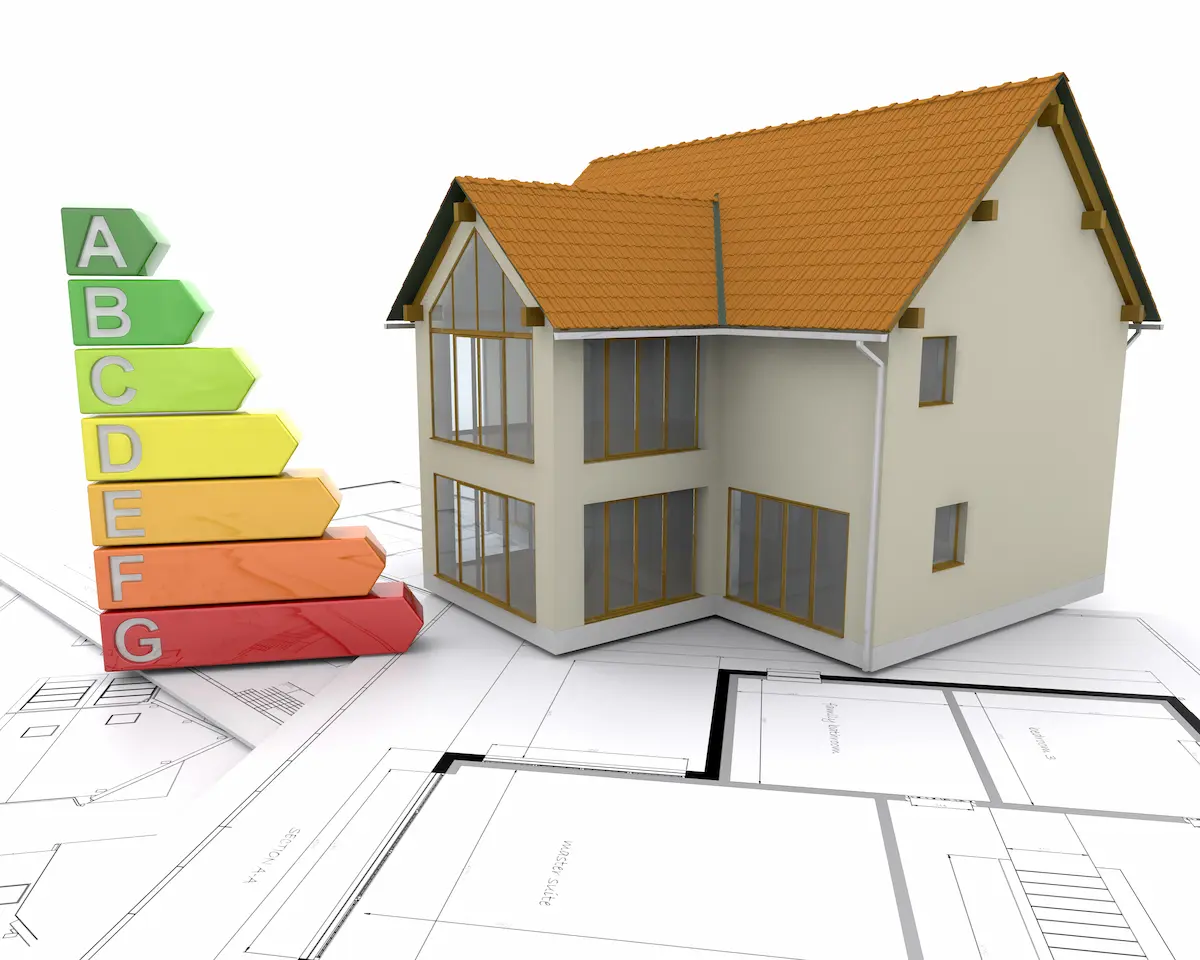
Passive solar energy is one of the simplest, smartest and most efficient ways to make use of the sun’s energy. Unlike other solar technologies, it does not need photovoltaic panels, inverters or complex mechanical systems to work. Its aim is to use the design of the building to capture, store and distribute solar heat naturally.
Although it may sound like a technical concept, it is actually very present in traditional architecture. A well oriented home, with good windows, walls capable of retaining heat and shading elements to avoid overheating in summer, is already applying the principles of passive solar energy. It not only reduces heating and cooling consumption, it also improves indoor comfort and helps design buildings that are better adapted to the climate.
Passive solar energy is not about adding machines to the building, but about thinking more carefully about how it is built, how it is renovated and how the available natural resources are used.
What passive solar energy is
Passive solar energy is the direct use of solar radiation through the architectural design of a building. Its main function is to capture the heat from the sun, retain it when useful and avoid it when it may become excessive.
In other words, it is based on using elements such as orientation, windows, materials, insulation, natural ventilation and shading systems to improve the thermal behaviour of a home or building. The difference compared with other solar systems is that it does not depend on active equipment to transform energy. It does not convert sunlight into electricity, as photovoltaic panels do, nor does it use pumps or storage tanks like some solar thermal systems. Instead, it works through the building’s own design.
A very simple example would be a house with large south facing windows in winter. During the day, the sun enters through those windows and warms the interior. If the home has good insulation and materials with thermal mass, part of that heat is stored and released gradually when the temperature drops.
The result is a building that needs less heating in winter and, if it is well designed, less cooling in summer.
Differences between passive and active solar energy
Passive solar energy and active solar energy have the same origin: the sun. However, the way they make use of it is very different.
Active solar energy uses technological equipment to capture, transform or transport solar energy. This is the case with photovoltaic panels, which generate electricity, or solar thermal panels, which heat water through a circuit.
Passive solar energy, on the other hand, does not require complex devices. It relies on the architecture, orientation and materials of the building to make use of heat and natural light.
Below, we show you a simple comparison table:
| Aspect | Passive solar energy | Active solar energy |
|---|---|---|
| Operation | Makes use of solar radiation through building design, orientation, materials and the distribution of spaces. | Uses technological equipment and systems to capture, transform or transport the sun’s energy. |
| Technology required | It does not need panels, inverters, pumps or complex mechanical systems. | It requires solar panels, inverters, storage tanks, pumps or circuits, depending on the type of installation. |
| Main objective | To reduce the building’s energy demand and improve indoor thermal comfort. | To generate electricity, produce hot water or support climate control systems. |
| Maintenance | Very low, as it depends mainly on the architectural design and the materials used. | It needs periodic checks, cleaning, component monitoring and technical maintenance. |
| Examples of application | Solar orientation, efficient windows, thermal insulation, thermal mass, natural ventilation and shading systems. | Photovoltaic panels, solar thermal panels, self consumption systems and solar storage tanks. |
In addition, both solutions can be combined. In fact, an efficient home can use passive solar energy to reduce its climate control demand and, at the same time, install solar panels to generate electricity.
How passive solar technology works
The operation of passive solar energy is based on a very simple idea: make use of the sun when it is useful and protect against it when it can create excess heat.
To achieve this, several elements of the building design must be taken into account. It is not enough to install lots of windows or use insulating materials. The key is to combine orientation, glazing, insulation, thermal mass and shading in a coherent way.
Orientation and location
Orientation is one of the most important factors in passive solar energy. In the northern hemisphere, south facing façades receive more solar radiation during winter, when the sun is lower. This allows heat to be captured naturally during the colder months.
By contrast, east and west facing façades can receive a lot of sun in summer, especially in the morning and afternoon. If they are not properly controlled, they can cause overheating.
That is why a home designed using passive principles usually seeks good solar exposure in winter, protection from heat in summer and an internal layout adapted to the path of the sun. Location also matters. Building in a cold mountain area is not the same as building in a warm southern area. Climate, prevailing winds, vegetation, the slope of the land and nearby buildings all influence the design.
Glazing
Windows are one of the key points of passive solar energy. They allow natural light and solar radiation to enter, but they can also become a route for heat loss if they are not well designed. Good glazing must allow the sun in when useful and reduce thermal losses. To do this, double or triple glazing, air gaps, low emissivity treatments and frames with thermal breaks can be used.
The size and location of the windows are also important. A large window in the wrong orientation can cause more problems than benefits. By contrast, a well placed glazed surface can help heat the home naturally during winter.
Thermal insulation and thermal mass
Thermal insulation prevents heat from escaping in winter and from entering excessively during summer. It is one of the most important elements for making a home efficient. Without good insulation, the solar energy captured during the day is quickly lost. That is why walls, roofs, floors, windows and construction junctions must be properly resolved.
Thermal mass, on the other hand, is the ability of certain materials to store heat and release it slowly. Materials such as stone, concrete, brick or some ceramic floors can absorb heat during the day and release it when the temperature drops. This combination is very useful in climates with temperature differences between day and night. The home warms up naturally during the sunny hours and maintains a more stable temperature during the afternoon or night.
Shade
Shading is essential to avoid overheating. A house designed to capture sun in winter must also protect itself from excess radiation in summer. This can be achieved through overhangs, shutters, louvres, awnings, pergolas, deciduous vegetation or architectural elements that block the high summer sun but allow the low winter sun to enter.
The aim is not to prevent light from entering, but to control when and how it enters. A good shading system can greatly improve indoor comfort and reduce the need for air conditioning.
Benefits of passive solar energy
Passive solar energy offers advantages both in new homes and in energy renovations. Its main attraction is that it reduces energy demand without relying on complex systems.
Among its most notable benefits are:
- It reduces energy consumption: by making better use of the sun, the home needs less heating and cooling.
- It improves indoor comfort: it helps maintain more stable temperatures throughout the year.
- It lowers energy bills: by requiring less energy for climate control, monthly costs can be reduced.
- It increases building efficiency: it improves the thermal behaviour of the home through the design itself.
- It has low maintenance: it does not depend on machines, pumps or electronic components.
- It reduces environmental footprint: by consuming less energy, associated emissions also fall.
- It provides more natural light: good passive design improves indoor lighting and the sense of spaciousness.
- It can be combined with other renewables: it works very well alongside photovoltaic solar panels, air source heat pumps or efficient ventilation systems.
These benefits do not depend on a single solution. Passive solar energy works best when it forms part of a global energy efficiency strategy.
Applications of passive solar energy
Passive solar energy can be applied in many types of buildings. Its most common use is in detached houses, residential buildings, offices, educational centres, public facilities and bioclimatic architecture projects.
In new builds, its application is simpler because the building can be designed from scratch. Orientation, the layout of spaces, window size, insulation and shading elements can all be decided before construction. In homes, for example, the most used rooms are usually placed in the areas with the best solar gain. Living rooms, dining rooms or work areas can be oriented towards sunnier areas, while garages, storage rooms or service areas can be placed in less favourable orientations.
It can also be applied in public buildings such as schools, libraries or health centres, which can benefit from good natural light, lower energy demand and greater comfort for users. Another interesting application is in greenhouses, glazed galleries and heat storage walls.
In energy renovation, passive solar energy can also play an important role. Improving windows, adding solar protection, reinforcing insulation or reorganising the use of certain spaces can make a notable difference.
Can passive solar energy be used in an already built house?
Yes, passive solar energy can be used in an already built house, although with some limitations, since in an existing home it is not always possible to change the orientation, modify the entire layout or open new window openings. However, many improvements can be applied. For example, you can replace old windows with more efficient glazing, improve the insulation of the building envelope, install awnings or louvres, make better use of natural light or incorporate materials with greater thermal mass in certain areas.
You can also review usage habits. Opening shutters during sunny hours in winter, ventilating at the right times or protecting windows in summer are simple actions that help make better use of passive solar energy.
In a renovation, the possibilities increase. If façades, roofs, joinery or interior layouts are going to be renovated, it is worth considering passive design principles from the beginning. Very often, small decisions can greatly improve the home’s energy behaviour.
Some common improvements in already built houses are:
- Replacing inefficient windows with joinery offering better performance.
- Installing external solar protection.
- Improving insulation in the roof, façade or floor.
- Reducing thermal bridges.
- Encouraging cross ventilation.
- Using suitable colours, flooring and materials according to the climate.
Passive solar energy does not require turning a house into an experimental project. In many cases, it simply means making smarter decisions so that the home works with the climate rather than against it.
In short, passive solar energy is a practical, sustainable and efficient way to make use of the sun. It does not replace other renewable technologies, but complements them, and it also reduces the energy a building needs to remain comfortable.


