

Aerothermal energy is one of the most efficient solutions to climatize your home, both in winter and in summer. In this article we tell you everything you need to know about how aerothermal energy works in winter, its advantages, and how to make the most of it to reduce energy consumption and keep your house warm without great costs.
The ideal temperature of aerothermal energy in winter
Keep in mind that aerothermal energy does not need extremely high temperatures to be effective. In fact, its performance is optimal when a comfort environment is maintained within a range of controlled temperatures.
In winter, the ideal temperature of aerothermal energy is between 19ºC to 21ºC during the day, and 17ºC to 18ºC at night. This range is perfect to enjoy a warm home without overloading the system or spending more than necessary. When choosing the type of heating system, it is recommended to use underfloor heating, since it works better with water temperatures of 30 to 35ºC, which is more efficient for aerothermal energy and generates a more pleasant heat.
How does aerothermal energy work in winter?
1. Capture of energy from the outside air
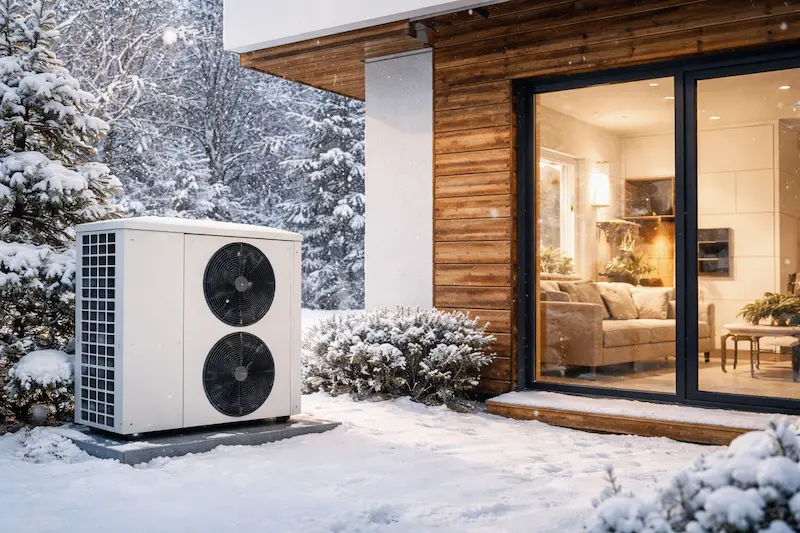
The first step for aerothermal energy to work is that the system captures the thermal energy from the outside air, even when temperatures are cold. Although it seems incredible, aerothermal energy can extract heat from the air even when outside temperatures are below zero, since this technology is designed to capture even the smallest amount of thermal energy present in the air.
2. Energy compression
Once the system has captured the heat from the outside air, this energy is compressed in an outdoor unit (similar to a heat pump). This process increases the temperature of the captured air to be able to transfer it efficiently to the heating system of your home.
3. Heat transfer to the heating system
The compressed heat is transferred to a water circuit that runs through the heating installation of the home, whether it is underfloor heating, radiators or fan coils. Aerothermal energy maintains the water temperature at an average of 35ºC to 45ºC, enough to heat the environment comfortably without the need for high temperatures.
4. Automatic defrost cycles
When outside temperatures are extremely cold, the outdoor unit of the aerothermal system performs automatic defrost cycles to prevent the system from blocking due to accumulated ice. These cycles remove the ice that may form on the heat exchanger, ensuring that the system continues to work efficiently throughout the winter.
How to use aerothermal energy in winter
The proper use of an aerothermal installation in winter is essential to make the most of its energy efficiency and keep your home comfortable without your energy bill skyrocketing. Here are some tips on how to use aerothermal energy during the cold months.
One of the most important recommendations for the use of aerothermal energy in this season is to keep the system turned on constantly during the day. While it is tempting to turn it off to save energy, the most efficient thing is to let the aerothermal system maintain a constant temperature, without having to repeatedly reheat the home. This approach optimizes its performance and avoids unnecessary consumption peaks.
If you prefer not to leave the heating on all day, you can program the aerothermal system to turn on starting at a certain time before arriving home. This way, you will have enough time for the system to heat up without needing to be running all day long.
Regarding water temperature, it is important to note that aerothermal energy works more efficiently with lower temperatures than gas boilers. To optimize energy consumption, the ideal water temperature should be between 35ºC and 45ºC, which is lower than in traditional heating systems and allows significant savings.
What advantages do you have with aerothermal energy if you use it in winter
1. Energy and economic savings
One of the main advantages of aerothermal energy in winter is energy savings. Thanks to the fact that it takes advantage of a renewable energy source such as air, the electricity consumption to heat the home is much lower than that of other traditional heating systems. This can translate into significant savings on your energy bills.
2. Low environmental impact
Being a renewable energy source, aerothermal energy has a low environmental impact. It reduces the carbon footprint, as it does not depend on fossil fuels to generate heat, which contributes to sustainability and the fight against climate change.
3. Constant thermal comfort
Aerothermal energy provides a constant and pleasant thermal comfort. The temperature it emits is uniform and soft, without the sudden changes in heat that sometimes occur with systems such as electric or gas radiators.
Does it have disadvantages?
Although it has many advantages, there is also a disadvantage to keep in mind. Its drawback is that its initial investment can be high due to the installation of the system. However, this cost is amortized over time thanks to the energy savings.
When does aerothermal energy consume more, in summer or winter?
Aerothermal energy has a different operation depending on the season of the year, and its energy consumption varies depending on whether it is used for heating or cooling. In winter, aerothermal energy consumes more energy compared to summer, since the system needs to capture heat from the outside air, which implies a greater effort when temperatures are very cold. However, its efficiency is higher than in other conventional heating systems. If you want to know more, here we leave you this article: how aerothermal energy works in summer.
In summer, the consumption of aerothermal energy decreases if it is used as an air conditioning system. Aerothermal energy in cooling mode is very efficient, as it also uses the outside air to cool the interior of the home. In this case, the system can consume less energy than a traditional air conditioner.


