
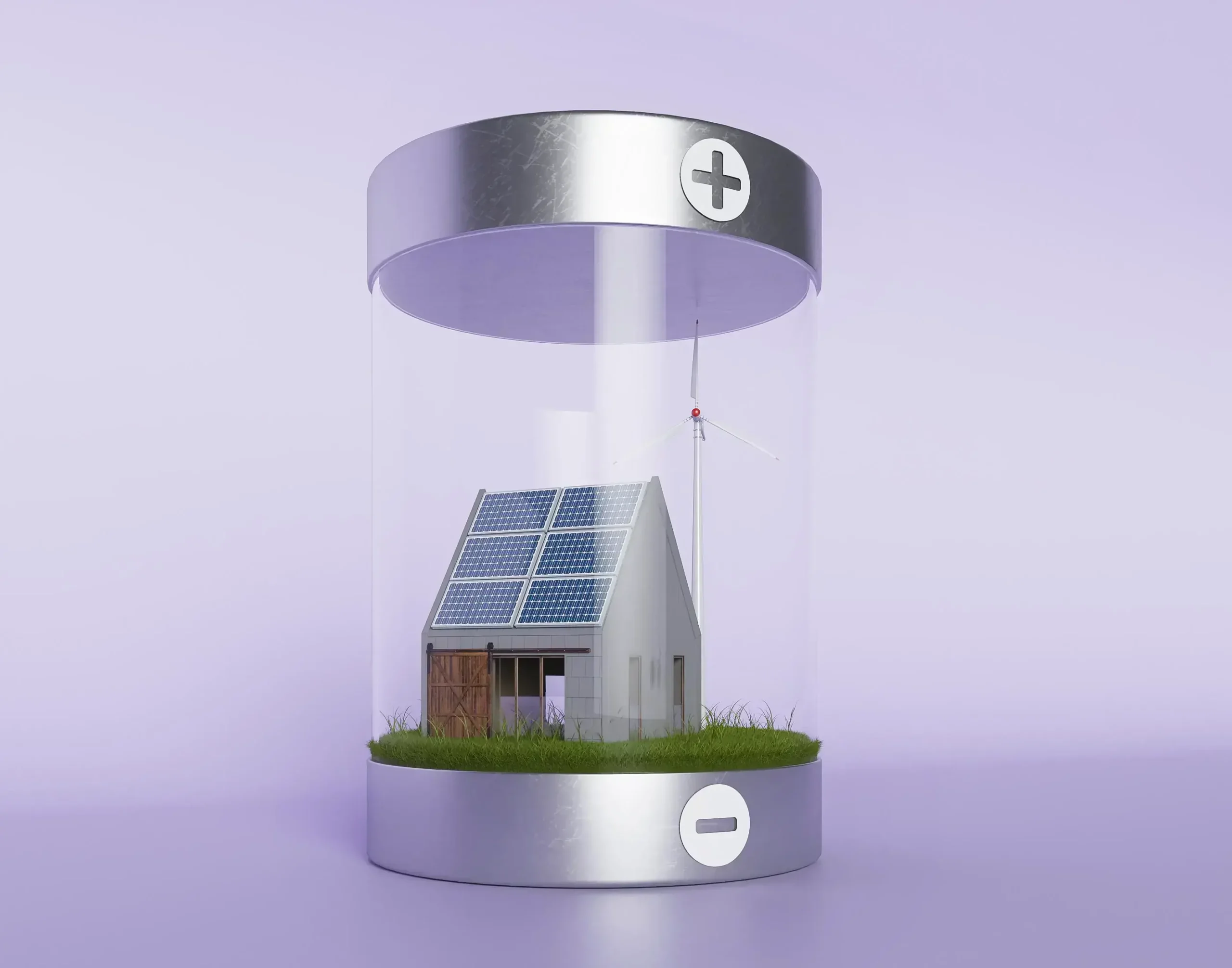
A physical or virtual battery for your photovoltaic installation? Choosing between the two depends on whether you are looking for complete independence during power cuts or prefer to avoid a large initial investment by accumulating the financial value of your surplus energy in the grid. To answer this question directly, you should know that a physical battery stores electricity independently in your home, while the digital ledger model transfers the value of surplus energy to your electricity bill so it can be deducted month by month.
Key differences between a virtual battery and a physical battery
To understand which technology best suits your daily consumption, it is worth breaking down the basic concepts of each storage system and how they compare within the same self consumption installation.
What is a virtual battery?
As we previously explained in our article on what a virtual battery is, it is not a physical device installed in your home, but a financial compensation service offered by the electricity supplier. The energy that your panels feed into the grid and that you do not consume immediately is not lost or paid for at a very low price. Instead, it is converted into virtual financial credit in your digital savings account, which you can use to reduce your monthly electricity bill to zero or even apply to a second home.
Advantages of a virtual battery
- No initial investment: There is no need to spend money on purchasing equipment or carrying out complex installation work in the meter room.
- Flexibility and no deterioration: As it is a purely digital service, it does not suffer physical degradation through use and allows you to transfer the accumulated credit to other properties registered in your name.
Disadvantages of a virtual battery
- Complete dependence on the grid: If there is a general power cut in your area, the virtual battery does not provide any form of backup power or protection against blackouts.
- Dependence on the electricity supplier: You are subject to the conditions, tariffs, possible maintenance fees or conversion costs established by the electricity company.
What is a physical battery?
A physical battery is an electrochemical storage device, usually lithium based, physically installed in your home alongside the photovoltaic inverter. Its main purpose is to store the surplus energy produced by your panels during daylight hours and release it at night or during periods of low production, avoiding the need to buy electricity from the grid during the most expensive periods.
Advantages of a physical battery
- Energy supply independence: It allows the home to operate as an isolated system or with backup capability during power cuts affecting the main electricity grid.
- Night time autonomy: All the energy you store during the central hours of the day can be used directly at night without depending on electricity supplier tariffs or grid charges.
Disadvantages of a physical battery
- High initial cost: It requires a considerable investment, usually ranging from €3,000 to €5,000 depending on the storage capacity required.
- Progressive degradation: As the battery cells undergo continuous charging and discharging cycles, their usable capacity decreases over the years.
To ensure you understand not only the differences in how both types of batteries are used, but also their practical differences, the following table summarises the structural differences and similarities between these two energy management systems:
| Technical variable | Physical battery (Lithium) | Virtual battery (Digital savings account) |
| Nature of storage | Physical (electricity storage device in the home) | Financial (credit accumulated on the electricity bill) |
| Dependence on the grid | Low or none (allows isolated operation) | Complete (requires connection to the electricity grid) |
| Installation and space | Requires physical space and installation work in the plant room | No installation work; managed through commercial software |
| Degradation through use | Yes, usable capacity decreases with charging cycles | None (as it is a digital compensation system) |
These differences create a fundamental distinction in the way users manage their energy. While the physical model acts as a local electricity reserve that protects the home against unexpected supply interruptions, the digital model effectively transfers storage to the electricity supplier’s market system.
Both systems pursue the same goal of optimisation, but they achieve it through completely different technological approaches. Choosing one or the other will affect both the initial expenditure on your photovoltaic project and the flexibility with which you make use of your surplus energy month by month.
Financial comparison: Which option recovers the investment sooner?
To make a decision based on actual figures, let us analyse the direct financial impact on an average family with a standard photovoltaic installation:
| Financial variable | Physical battery (Lithium) | Virtual battery |
| Initial investment | High (€3,000 to €5,000) | None (€0) |
| Use of surplus energy | Limited by the physical capacity of the battery | Unlimited according to the volume of surplus energy exported |
| Maintenance costs | Replacement of components in the long term | Possible monthly service fee charged by the electricity supplier |
| Geographical flexibility | Strictly limited to the property where it is installed | Allows credit to be deducted from electricity bills for second homes |
| Payback period | Slow (8 to 12 years due to the purchase cost) | Immediate (from the first month of compensation) |
These figures show that the financial barrier to entry is the most decisive factor for the average user. While the physical option ties up a significant amount of capital that takes around a decade to recover, the digital model delivers benefits in the short term from the very first billing cycle.
If you combine this financial comparison with the possibility of expanding your project by analysing specific storage models in our guide to the best solar battery, you will be able to determine precisely which infrastructure best suits the performance of your panels.
When it is worth investing in a physical battery for solar panels
If your absolute priority is independence from the electricity company and you are looking for maximum energy autonomy, installing a physical battery at home makes sense in scenarios with particularly demanding energy consumption.
- Frequent power cuts: If you live in an area with an unstable electricity grid, the battery acts as an emergency backup system, keeping essential household appliances running.
- High night time consumption: If most of your electricity consumption takes place at night, storing energy at home avoids having to purchase it at night time market rates.
However, particular care must be taken with the technical aspects of installation. Design mistakes are often made that cause performance problems, so it is vital to carefully assess the disadvantages of connecting batteries in parallel, such as uneven degradation or loss of efficiency if the modules are not perfectly matched, and to strictly respect the maximum distance between the inverter and battery recommended by the manufacturer to avoid DC voltage drops and thermal risks.
When to choose a virtual battery for solar panels to maximise savings
For the vast majority of detached houses, the real financial relief comes from avoiding the large initial investment required by lithium storage equipment.
If you have ever wondered whether it is worth replacing a mobile phone battery because of cell deterioration over the years, applying that same concern to a stationary system costing thousands of euros makes the digital model increasingly attractive. You can learn more about its technical operation in our specialised guide on what a virtual battery is. Its direct financial advantages are clear:
- Zero initial investment: There is no need to spend thousands of euros upfront or make complex modifications to the electrical consumer unit.
- Management of large amounts of surplus energy: Ideal if your panels generate much more energy than you consume during the day and you want to use that accumulated credit to reduce costs at a second home.
Can you use both types of battery together?
Yes, absolutely. In fact, combining both systems represents the most advanced energy optimisation strategy for residential installations with high power capacity or high energy consumption. These are the situations in which combining a physical and virtual battery is worthwhile:
- Installations with excess solar panel capacity: When your roof produces much more energy than your physical battery can store during the central hours of the day, the remaining surplus that exceeds the capacity of the physical battery can be channelled into the digital savings account.
- Seasonal consumption or second homes: If you have a primary residence with a physical battery to cover daily consumption and also own a holiday home, the combination allows local storage to cover 100% of the needs of your main home, while large summer surpluses are transferred through the virtual battery to reduce the electricity bill at your second property to zero.
The savings provided by combining both systems
- Complete optimisation of every kilowatt: By using the physical battery, you reduce peaks in daily night time consumption while recovering the financial value of every remaining surplus through the digital savings account.
- Balanced return on investment: Although the initial expenditure on the physical battery remains, integrating the virtual model maximises the financial performance of the installation, allowing the system to pay for itself much sooner by avoiding the waste of any energy generated by your panels.
Final decision: Physical or virtual battery for greater savings?
Choosing a physical or virtual battery, or even combining them, requires a careful analysis of each household’s consumption habits and available investment budget. If your absolute priority is protection against power cuts and you have the budget to cover a complex installation, local storage will give you the energy autonomy you are looking for.
However, if your main objective is to improve your household finances from day one, avoid high initial expenditure and make the most of every surplus kilowatt without having to deal with battery degradation, the digital model stands out as the most efficient option. Assessing your consumption peaks and actual surplus energy will allow you to choose the ideal infrastructure to get the maximum benefit from your self consumption installation.


