
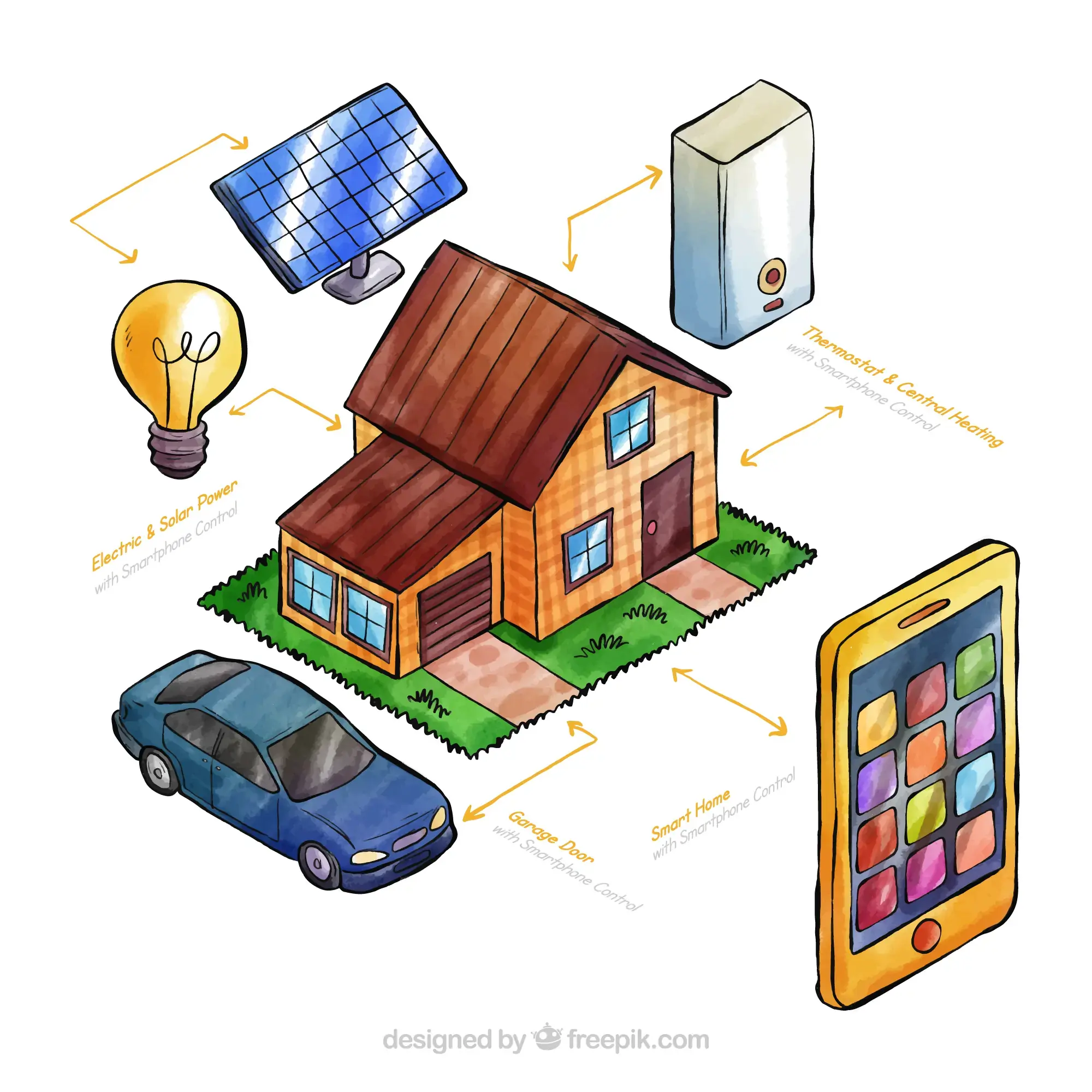
Solar home automation is the integration of smart automation systems with your photovoltaic installation, allowing household appliances and heating and cooling equipment to operate while always prioritising the use of energy generated by your solar panels. If your goal is to have a smart home, this technology reads inverter data in real time and activates household devices controlled by home automation during the hours of highest solar radiation. In this way, the system maximises self consumption and savings without you having to switch anything on, programme it or turn it off manually.
By combining your solar panels with a smart energy management system, you stop relying on fixed timers and start consuming energy according to your actual solar production curve.
When clarifying concepts, a common question is what a solar dome is and whether it is related to this topic. It is important not to confuse them. A solar dome or solar tube is a passive physical element that captures natural light from outside through lenses and channels it indoors to illuminate dark areas. Home automation, on the other hand, refers exclusively to the electronic hardware and software that control the energy management of the property.
Smart home devices and their impact
For a photovoltaic installation to operate dynamically, different home automation solutions must be deployed and connected to the same network, usually via WiFi, Zigbee or a direct Ethernet connection to the inverter. The most effective smart home devices include bidirectional meters, programmable plugs, relays and thermostats.
What devices can you install to make your home smart? The following table details the key devices and the direct impact they have on energy use:
| Home automation device | Function in the photovoltaic installation | Impact on self consumption |
| Smart Meter | Reads energy generated versus energy consumed in real time. | Acts as the central control element and is essential for diverting surplus energy. |
| Dry contact relay | Activates high power resistive loads such as water heaters and boilers. | Very high. Turns hot water into a thermal battery. |
| Smart thermostat | Controls heating and cooling according to surplus solar energy. | High. Adjusts the temperature by making use of peak solar production hours. |
| Dynamic EV charger | Adjusts vehicle charging to match the exact amount of surplus solar energy. | Very high. Avoids peaks in electricity consumption from the grid at night. |
| Smart Plug | Switches small household appliances or lights on and off. | Moderate. Ideal for small electrical loads and monitoring. |
As the table shows, the impact on savings depends directly on the device’s ability to manage large amounts of energy. While a smart plug is useful for controlling the individual consumption of a television or lamp, the real improvement in efficiency comes from thermal relays and electric vehicle chargers.
These high demand devices act as virtual batteries. By diverting large peaks of surplus solar energy to the water heater or car battery, you avoid having to buy that same energy from the electricity supplier at night, multiplying the profitability of your photovoltaic installation without any effort on your part.
A real example of solar home automation
To understand its impact, imagine an ordinary day when the whole family leaves home at 8:30 am. The system detects that nobody is home and switches off unnecessary electrical loads. At 11:00 am, the panels start producing 3 kW, but the house at rest only consumes 0.5 kW.
Instead of feeding that surplus 2.5 kW into the electricity grid for a few cents, the home automation controller makes decisions. First, it switches on the electric water heater or diverts the energy to the air source heat pump to preheat the house. If by 1:00 pm the water heater has already reached 60°C and there is still surplus energy, the system automatically activates the swimming pool filtration pump or electric car charger. When you return home in the afternoon, the water is hot and the house is at a comfortable temperature, with no electricity purchased from the grid for those tasks.
Savings comparison: the impact of solar home automation on your electricity bill
To understand the real cost of not optimising your energy consumption, there is nothing better than comparing the figures. If you have solar panels but no solar home automation, you are selling your energy cheaply during the day only to buy it back at a higher price at night.
The following table shows the financial difference of automatically managing a daily surplus of 5 kWh, the typical consumption required to heat water in an electric water heater or run a short air source heat pump cycle:
| Billing concept | Without automation (Exporting to the grid) | With solar home automation (Smart self consumption) |
| Value of your energy | You receive compensation of approximately €0.05/kWh | You avoid buying it at night for approximately €0.15/kWh |
| Daily balance (5 kWh) | You receive €0.25 per day | You save €0.75 per day by not consuming electricity from the grid |
| Monthly impact | You recover approximately €7.50 | You save approximately €22.50 |
| Estimated annual impact | You recover approximately €90 | You save more than €270 |
An important point to consider: If you add scheduled electric vehicle charging to this basic thermal consumption, the difference in annual savings increases exponentially.
In short, integrating solar home automation allows you to recover the real value of your energy. By no longer relying on the low surplus compensation rates offered by electricity suppliers, you reduce your bill to the technical minimum and recover your investment in smart devices much more quickly.
Advantages and disadvantages of automating your home
Once you understand how these devices interact with your photovoltaic inverter to absorb surplus energy, it is easy to see the potential of this technology. However, as with any technical installation, adopting home automation systems focused on photovoltaic energy has direct implications for everyday life that should be assessed objectively.
Advantages of solar home automation:
- Maximised self consumption: You avoid giving away energy to the grid by using your own surplus for heating or charging purposes.
- Effortless comfort: The house manages itself without you having to monitor the inverter app or manually switch devices on.
- Detailed monitoring: You can identify which household appliances generate standby consumption and switch them off remotely.
Disadvantages of solar home automation:
- Initial investment: It requires additional expenditure on top of the cost of the solar panels themselves.
- Dependence on the local network: If the WiFi router fails or there are coverage problems, wireless devices may temporarily lose their automation functions.
- Learning curve: You need to spend some time initially configuring automation rules and charging priorities.
To illustrate this, consider effortless comfort as one of the greatest advantages. You leave for work and, when you return, your house is at 22 degrees in the middle of July because the thermostat switched on the air conditioning using the midday peak in solar production. You gain quality of life at no additional electricity cost.
By contrast, dependence on the local network is often the most frustrating disadvantage. If your internet provider experiences a temporary outage or you change your router password and forget to reconfigure the energy manager, the devices will lose communication with each other and stop making use of surplus energy until you restore the connection.
Beyond smart plugs: predictive algorithms and the wholesale electricity market
Most basic installations are limited to switching on an appliance when surplus energy is available. However, the real improvement in modern home automation comes from integrating predictive algorithms based on weather forecasts.
Advanced Home Energy Management Systems (HEMS) connect to weather databases to find out whether it will rain or be sunny tomorrow. If the system knows that tomorrow will be cloudy and you are on a PVPC tariff, the regulated electricity price in Spain, it may decide to charge your physical or thermal batteries during the early hours of the morning when grid electricity is very cheap, anticipating the lack of sunshine. This intelligent interpretation of dynamic tariffs and weather forecasts is what really allows you to get the most out of your energy system. You can explore this further by reading about how to optimise heating and cooling with AI: Complete guide and applying other routines on how to save energy at home.
Procedures and investment required for solar home automation
Before automating your energy consumption, you must ensure that the generation system is legally registered. A common question is whether you can install solar panels on your house without permission. In Spain, you cannot install them without completing the necessary procedures. A major building permit is no longer required for rooftop installations, but you must submit prior notification to the local council, register the installation with the relevant Industry authority and obtain an Electrical Installation Certificate (CIE) to be able to interact with the grid.
Regarding the basic cost, how much does it cost to install solar panels on a 100 m² house? A standard installation of around 3 to 4 kWp usually requires an investment of between €4,500 and €6,000 before deductions. On top of this, how much does it cost to install home automation?
- Basic level (€200 to €400): Includes a smart meter and basic smart plugs or relays to divert surplus energy.
- Advanced level (€1,000 to €2,500): Integrates predictive HEMS controllers, multi zone thermostats and electric vehicle charger control.
Steps to take to introduce solar home automation into your home
If you are making the transition towards smart energy management and are not quite sure where to start, the order of implementation is essential to avoid duplicating expenses or making your life unnecessarily complicated:
- Central monitoring: Start with the basics. Install a smart meter compatible with your inverter. This device is placed in your main electrical consumer unit and is responsible for measuring how much energy you produce and how much you consume. This is the essential first step for the system to know when surplus energy is available.
- Prioritising heating and hot water: Before buying complex equipment, connect a smart relay or surplus energy controller to your electric water heater or air source heat pump. Heating water is one of the activities that consumes the most energy in a home, so diverting surplus solar energy here is the quickest and most effective way to notice savings.
- Electric mobility: If you have an electric vehicle or are thinking of buying one, install a charger with dynamic load balancing. This type of charger communicates directly with the inverter to send only the surplus energy into the car, without tripping your home’s circuit breakers.
- Small scale home automation: Once the major electrical loads are covered, add smart plugs for smaller appliances. These are very simple devices that plug directly into wall sockets and allow you to programme the operation of a dehumidifier or swimming pool filtration pump from your mobile phone, only during sunny hours.
- Centralising control: To avoid ending up with five different apps on your phone, bring all your devices together on a single platform, such as Home Assistant, Apple Home or your photovoltaic inverter’s own app. This allows you to create simple automations, such as switching on the air conditioning when there is a surplus of 2 kW.
By following this gradual approach, you do not need to make a huge investment from day one. You can start with the meter and water heater management, checking the actual savings month by month, and later add smart plugs or integrate the car charger as you become more familiar with managing your own energy.
The future of self consumption: towards independent energy management
The transition towards a smart home is not a temporary trend, but the construction and living standard of the coming decades. The concept of the passive electricity consumer is disappearing. As the complete electrification of the home advances, through air source heat pumps, electric vehicles and the elimination of gas, the need to coordinate photovoltaic generation and household energy demand becomes essential to avoid overloads and unnecessary peaks in electricity costs.
Investing in home automation solutions today not only protects your finances against volatility in electricity market prices, but also extends the service life of heating and cooling equipment by allowing it to operate in stable, optimised cycles. In the long term, a home with a well planned automation ecosystem is prepared to integrate future technologies seamlessly, such as solid state batteries or bidirectional Vehicle to Grid (V2G) systems, where the electric car will act as a backup battery for the house, achieving almost complete energy independence from the conventional grid.
Solar home automation as a driver of energy efficiency
Solar home automation applied to your property is no longer simply a technological luxury, but becomes the ultimate tool for improving profitability. Automating the use of your surplus energy means that every kilowatt generated translates into real savings for your pocket, drastically reducing your electricity bill and eliminating the need to watch the clock before putting on a load of washing. If you are ready to take the next step towards automated heating and electrical management, get in touch with us and we will design the ideal network architecture for your installation.


