
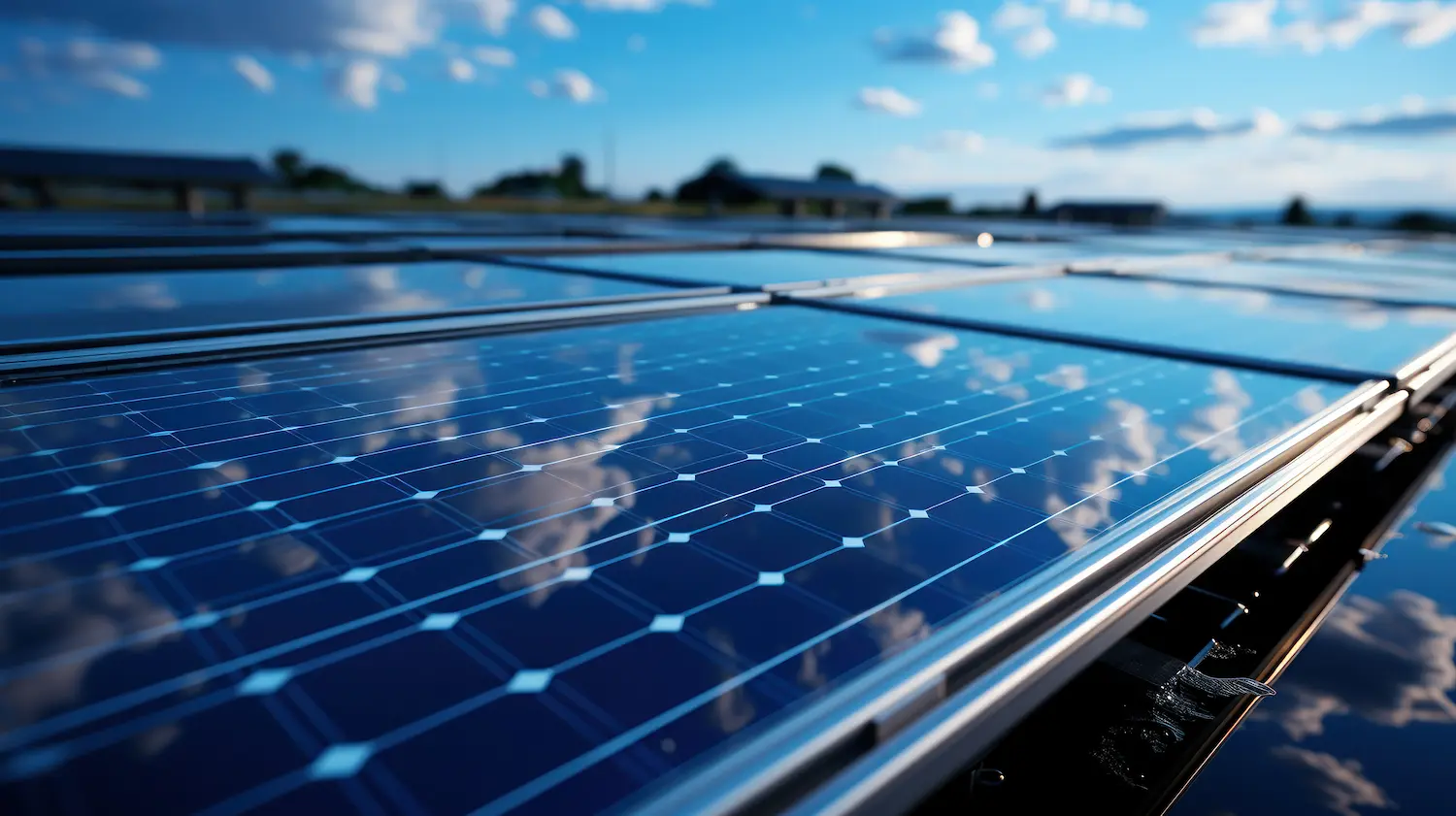
Solar energy is one of the most sustainable and cost-effective options for household electricity consumption. With rising electricity costs and a push towards cleaner energy sources, more people are considering installing solar panels in their homes. However, one of the most common questions when planning a solar system is: how many solar panels do I need? The answer to this question depends on factors such as your household’s energy consumption, the efficiency of the chosen panels, and the solar irradiance at your specific location.
This article will guide you through calculating the right solar power capacity to meet your household’s energy needs. We will explore how to determine your solar energy requirements, estimate the power output of solar panels, and understand the factors that influence solar production based on your geographic area. Additionally, we will review useful tools such as solar power calculators that can simplify the process. With this guide, you’ll have a clear understanding of the installation requirements to efficiently and sustainably cover your household’s electricity consumption.
We’ve also included a tremendously useful solar panel power calculator – keep reading!
How Many Solar Panels Do I Need for My Home?
Example: If your home consumes 300 kWh per month and each panel generates approximately 30 kWh per month, you would need around 10 solar panels. Keep in mind that this calculation may vary depending on the efficiency of the panels and the amount of sunlight available in your location.
How Do I Calculate How Much Solar Energy I Need?
To calculate your solar energy requirements, you first need to know your annual energy consumption. Once you have this value, divide it by the average number of sunlight hours in your area to determine the daily kWh your panels need to generate.
Steps to calculate:
- Check your annual energy consumption (in kWh): Sum up your monthly electricity usage over the past year.
- Determine the peak sunlight hours in your area: This varies by location and affects the daily energy output of your panels.
- Divide the total consumption by the annual sunlight hours to calculate the daily solar energy production you need.
This calculation helps you understand how many solar panels you’ll require to fully cover your energy needs.
Example Calculation:
If each panel has a power rating of 400 W and you plan to install 10 panels, the total system power would be 4,000 W (or 4 kW). Note that actual production will depend on factors like the panels’ orientation and angle, as well as the daily sunlight hours.

What Is the Solar Production Ratio in My Area?
The solar production ratio, or performance factor, is the percentage of energy a panel can generate based on the solar irradiance at your location. In Spain, for example, the solar production ratio varies by region: it is higher in the south than in the north due to greater sunlight exposure.
Factors to keep in mind:
- Geographic location: Areas closer to the equator receive more solar radiation.
- Local climate: Locations with consistently sunny days will have a higher production ratio.
- Panel tilt and orientation: Optimal tilt angles improve panel performance.
Solar Production Ratios in Spain
| Region | Solar Production (kWh/kW/year) |
|---|---|
| Andalucía | 1,600 – 1,800 |
| Comunidad Valenciana | 1,500 – 1,700 |
| Murcia | 1,500 – 1,700 |
| Castilla-La Mancha | 1,400 – 1,600 |
| Madrid | 1,300 – 1,500 |
| Cataluña | 1,300 – 1,500 |
| Galicia | 1,200 – 1,400 |
| País Vasco | 1,100 – 1,300 |
| Canarias | 1,800 – 2,000 |
Solar Production Ratios in Europe
| Region | Solar production (kWh/kW/year) |
|---|---|
| Sicilia, Italia | 1,600 – 1,800 |
| Algarve, Portugal | 1,500 – 1,700 |
| Marsella, Francia | 1,400 – 1,600 |
| Atenas, Grecia | 1,400 – 1,600 |
| Berlín, Alemania | 900 – 1,100 |
| Viena, Austria | 1,000 – 1,200 |
| Bruselas, Bélgica | 900 – 1,100 |
| Estocolmo, Suecia | 800 – 1,000 |
| Copenhague, Dinamarca | 800 – 1,000 |
Solar Production Ratios in the United States
| Region | Solar production (kWh/kW/year) |
|---|---|
| Phoenix, Arizona | 1,800 – 2,100 |
| Los Ángeles, California | 1,600 – 1,800 |
| Miami, Florida | 1,600 – 1,800 |
| Denver, Colorado | 1,400 – 1,600 |
| Austin, Texas | 1,400 – 1,600 |
| Nueva York, Nueva York | 1,200 – 1,400 |
| Chicago, Illinois | 1,100 – 1,300 |
| Seattle, Washington | 900 – 1,100 |
| Anchorage, Alaska | 800 – 1,000 |
Interpretation of Solar Production Ratio
These figures help estimate the potential for solar energy generation in each region. In areas like the Canary Islands or Phoenix, high solar irradiation ensures elevated production, maximising system efficiency. Conversely, in regions with lower irradiation, such as Stockholm or Seattle, solar production will be lower, meaning more panels are required to generate the same annual energy output.
You can also consult a solar calculator or solar irradiation map to obtain specific data on the production ratio in your area.
Calculator for Estimating Solar Panel Power Output
The calculator we’ve designed below computes the total daily power output in watt-hours:
Instructions
- Number of solar panels: The number of panels in your system.
- Panel power rating: Nominal power in watts (W) of each solar panel.
- Average daily sunlight hours: The average number of hours of direct sunlight your location receives daily.
Press the “Calculate Total Power” button to obtain the total daily power generated in watt-hours (Wh).
How Many Solar Panels Are Needed to Power a Home?
The number of panels required depends on the home’s monthly electricity consumption, the size and power of the panels, and the amount of sunlight the location receives. On average, a home in Spain consumes approximately 300 kWh per month, requiring about 10 to 14 solar panels of 400 W to cover that consumption.
If your household’s electricity consumption is higher or lower, adjust this figure accordingly. Consulting with a solar energy installer can help determine the exact number of panels you need.
How Many Solar Panels Are Needed for a 100 m² House?
The energy consumption of a 100 m² house varies depending on appliances, heating systems, and overall energy use. Assuming an average consumption of 250–300 kWh per month, you may need 8 to 12 solar panels of 400 W to power the house.
This calculation is an estimate, so conducting a consumption study for precise evaluation is recommended.
How Many Solar Panels Are Needed for a 230 m² House?
For a 230 m² house, the monthly energy consumption could be significantly higher, ranging from 500 to 800 kWh, depending on heating, cooling systems, and the number of residents.
Approximate calculation: With 400 W panels and an average consumption of 700 kWh, you might need 18 to 22 solar panels to meet the energy demands of a house of this size.
Is My Roof Suitable for Solar Panel Installation?
To install solar panels, your roof must meet specific structural and orientation requirements to ensure optimal performance:
- Tilt and orientation: South-facing roofs with a tilt angle between 15° and 40° provide the best performance for solar panels in the Northern Hemisphere.
- Adequate space: Ensure enough roof space to install the required number of panels. For a typical 4 kW system, around 20 m² of space is needed.
- Structural condition: Roofs should be in good structural condition to support the weight of the panels.
If you are unsure about your roof’s suitability, a solar energy technician can conduct a detailed assessment.
How Efficient Will My Solar Panels Be?
The efficiency of solar panels depends on their type, location, and installation conditions. Monocrystalline panels typically have an efficiency between 15% and 22%, while polycrystalline panels range from 13% to 17%.
Factors Affecting Efficiency
- Type of solar panel: High-end panels offer greater efficiency but are more expensive.
- Light and weather conditions: Regions with high annual solar irradiation produce more energy.
- Installation and maintenance: Proper maintenance and regular cleaning optimise panel performance.
Conclusion
Calculating the number of solar panels required for your home involves understanding your energy consumption, panel power ratings, and local sunlight conditions. Using online calculators and consulting solar energy experts can streamline the process and help design an efficient system. Consider factors like available roof space, orientation, and panel type, as they all influence energy production and potential savings. Installing solar panels is an excellent investment for reducing bills and contributing to a sustainable future.


