

Choosing materials with a low carbon footprint is one of the most effective actions we could take to reduce the climate impact of construction, refurbishment and, in general, of any project that wants or is able to align itself with sustainability.
In this case, we are referring to embodied carbon: all the greenhouse gas emissions associated with extracting raw materials, transforming them, transporting them, installing them and, at the end of their useful life, managing them through reuse, recycling or disposal. It is different from operational carbon, for example the carbon emitted by using heating, appliances and so on, but it is just as relevant.
There are increasingly more construction materials with a low carbon footprint and low environmental impact construction materials capable of offering top level technical performance. To assess this properly, it helps to rely on three ideas:
- Functional unit and service life. It makes no sense to compare 1 kg of one material with 1 kg of another by eye. Equivalent solutions are compared for a specific function, for example 1 m2 of roofing with a 60 year service life, and factors such as durability, maintenance and replacements come into play.
- Life Cycle Assessment and Environmental Product Declarations. These are the data sheets and methodologies that make it possible to evaluate impacts transparently. If you can, choose products with Environmental Product Declarations.
- Transport distance and the availability of labour and maintenance matter. An excellent material in theory can lose its advantage if it travels thousands of kilometres or if it requires frequent replacement.
Types of materials with a low carbon footprint
Biobased origin
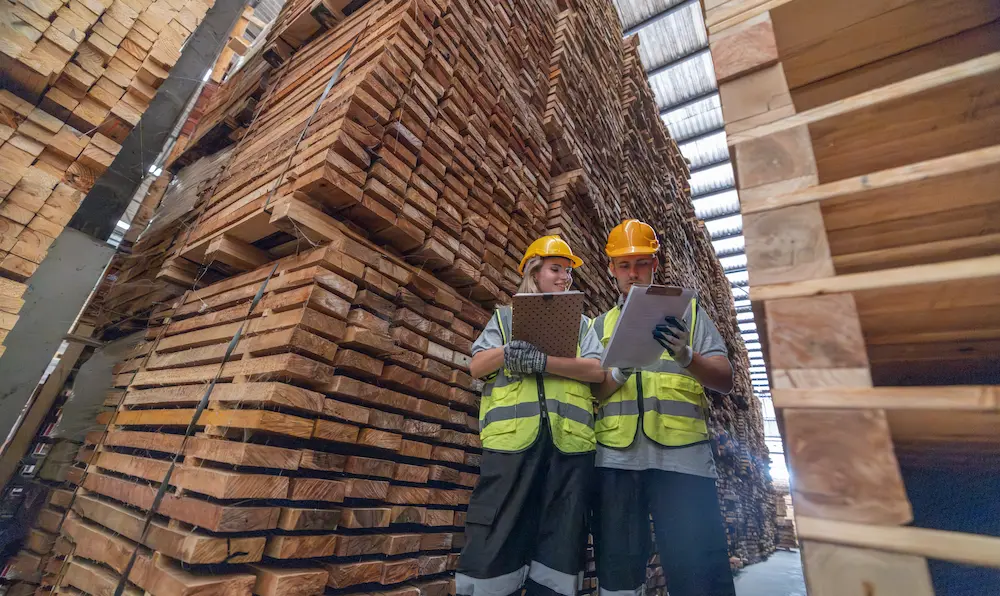
The first thing to bear in mind is that less industrial processing and more circularity usually translate into lower emissions. In terms of biobased origin, we have certified timber, bamboo, cork, plant fibres and wool.
Biogenic materials come from renewable resources which also store atmospheric carbon during their useful life. When they are well managed, they combine a low footprint with hygrothermal comfort and a warm aesthetic. As for certified timber FSC/PEFC:
- Trees capture CO2 as they grow. Sawn timber and engineered wood products such as laminated timber, CLT, LVL and boards require less transformation energy than steel or conventional concrete.
- It requires certification FSC/PEFC to guarantee responsible forest management, so prioritise local suppliers so that transport is reduced as well.
- Excellent strength to weight ratio, good thermal performance, and fast dry installation.
- You have to watch protection against moisture, UV rays and insects, along with construction detailing and planned maintenance. Adhesives and resins in engineered products can influence both the footprint and indoor air quality, so look for low VOC emissions and clear Environmental Product Declarations.
Bamboo is valuable because it grows very quickly, so it is a high performance renewable resource. It is perfect for cladding, decking, furniture and structural elements in laminated form. Like timber, its balance improves with efficient manufacturing processes and adhesive control.
As for cork, extracting it does not involve felling the tree, as the bark is stripped only every 9 to 12 years. It is especially suitable for thermal and acoustic insulation. Its advantages are very low process energy, great elasticity, fire resistance without halogens and the ability to absorb vibrations. In addition, cork oak woodland is an ecosystem with high ecological value.
As for plant fibres such as hemp, flax, kenaf and cellulose, plant fibre panels and blankets, or blown cellulose made from recycled paper, offer an excellent carbon footprint and good hygroscopic behaviour as they regulate humidity. The important thing here is to verify that they are fire resistant and provide some protection against damp. Do not forget to ask for the Environmental Product Declaration and the technical data sheet.
Sheep wool is a natural insulation material with low embodied energy, the ability to adsorb pollutants such as formaldehyde and good acoustic performance. What you should consider are moth treatments, preferably without problematic biocides, and careful moisture control.
Recycled and reclaimed
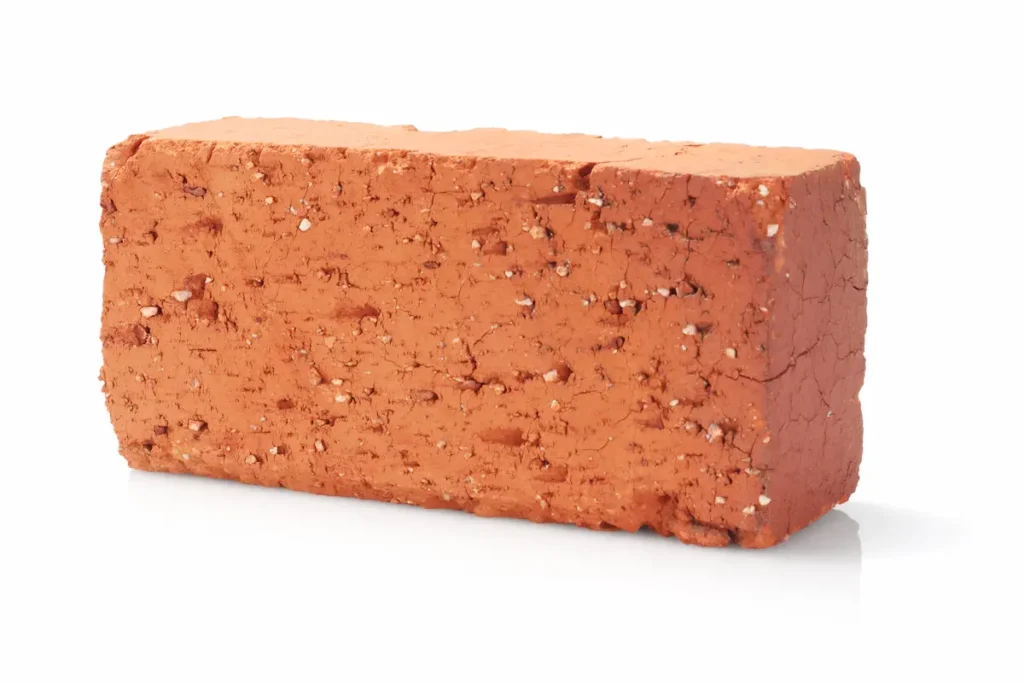
The circular economy reduces emissions by avoiding the primary production of energy intensive materials. This includes products with recycled content and, even better, reclaimed materials for direct reuse without having to melt or fire them again. The two main ones are:
- Recycled steel. Producing it in electric arc furnaces from scrap significantly reduces its footprint compared with primary steel made in a blast furnace. Its main applications are structures, reinforcement, sections, joinery and railings. Ask for the percentage of recycled content and the Environmental Product Declaration. Design bolted and accessible joints to make future disassembly and reuse easier.
- Recycled clay bricks and reclaimed brick. There are two routes:
- Recycled content in ceramic mixes, for example ceramic powder or fine inert waste.
- Reuse of old brick, which is the lowest footprint option if no refiring is involved.
Innovative and low emission
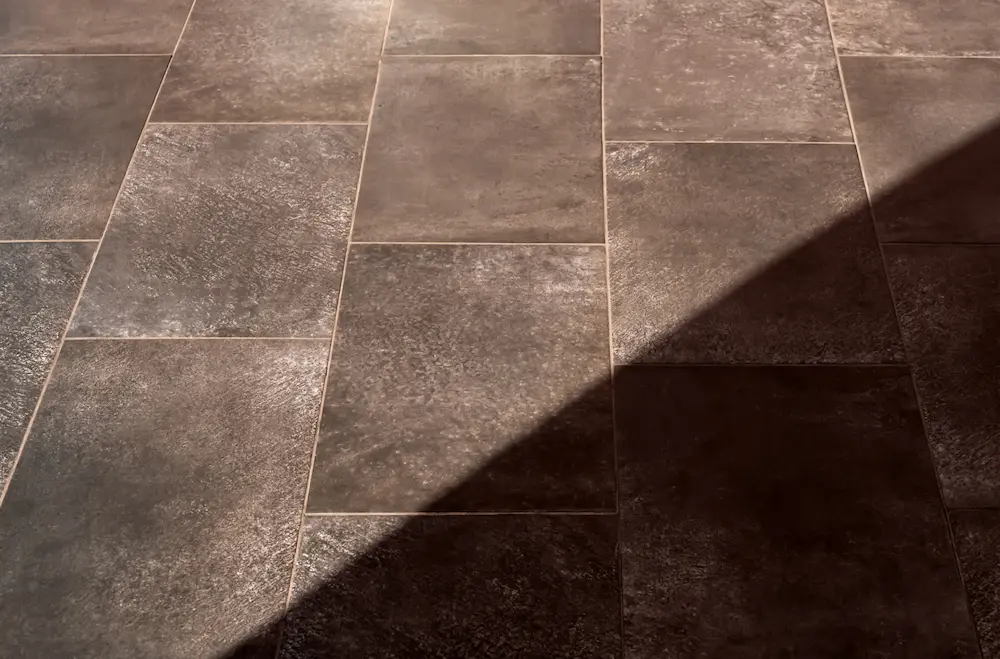
This category includes materials and technologies that reduce process energy or replace carbon intensive components such as clinker in cements, or else avoid high temperature thermal processes. We are going to highlight these 4:
- Low emission concrete. This involves partial replacement of clinker with additions such as ground granulated blast furnace slag, fly ash, natural or calcined pozzolans and limestone filler, together with new binders, CO2 curing and optimised structural design.
- Natural slate. It is extracted, split cold and mechanically worked. There are no firing kilns as with ceramic tiles, nor high temperature batches as with other materials. It has a very long service life and low maintenance, a unique aesthetic and it is also recyclable as aggregate at the end.
- Raw earth and compressed earth blocks. This type of earth is not fired, it is compacted and in some cases stabilised with lime or small amounts of cement. It has high thermal inertia, hygrothermal regulation and good acoustic performance. In terms of design, it is important to protect it from liquid water through plinths, eaves and suitable renders, and to carry out a thermal calculation so that insulation can be added where needed.
Which material has the lowest carbon footprint?
The material that usually has the lowest carbon footprint is natural slate. Even so, this does not always have to be the case, because it depends on the function, service life, construction system and logistics.
If we focus on typical uses such as roofs and façades, natural slate usually ranks among the options with the lowest carbon footprint per installed m2. This is because:
- Its processes involve no firing. Unlike ceramics or materials that require kilns at 900 to 1200ºC, slate is extracted and worked using cold mechanical processes. Less energy means lower manufacturing emissions.
- If it is installed properly, it can last more than 60 to 100 years.
- There is little need for repainting or treatments, and it offers good fire resistance, stability against UV rays and weather in general.
- Circular end of life.
- Compatibility with other ventilated systems.
That said, it should be remembered that slate is heavy and is not produced everywhere, so if it is not made near you, transport can penalise it quite a lot. That is why you should compare the Environmental Product Declaration and Life Cycle Assessment, which we mentioned earlier, for complete solutions with a clear functional unit. The design also needs to be optimised so that all the years of durability are properly used.
Best materials to build a high quality and sustainable home
Now that we are clear about all the materials with a low carbon footprint, it is important to know how to implement them in construction so that the result remains a high quality and efficient home.
- Structure.
- Certified timber. Quick to assemble and, even when prefabricated in many cases, very precise.
- If what you have nearby is low emission concrete, that also works well, with an optimised design for a lower volume.
- Recycled steel for reinforcements or bolted joints that make future disassembly easier.
- Roof.
- Natural slate because of its durability and performance against possible fire or weather. With a good ventilated substructure, it will last for decades.
- If you do not have any supplier nearby, compare high efficiency ceramic tiles with Environmental Product Declarations and green roof systems for better waterproofing.
- Façade.
- Ventilated façade with natural slate or treated and certified timber.
- Lime and clay on raw earth walls.
- Insulation.
- Plant fibres or sheep wool.
- If you need inorganic insulation, look for high recycled content and Environmental Product Declarations, for example mineral wool with recycled glass.
- Finishes.
- Natural hydraulic lime or air lime mortars in finishes, because of their lower footprint and their ability to carbonate over time.
- Certified timber or bamboo flooring.
- Mineral paints and varnishes or low VOC options, with clear technical data sheets.
- Joinery and glazing.
- Timber with optimised sections or aluminium with high recycled content and a thermal break.
- Double or triple glazing depending on the climate.
- Services, renewable integration and control. Do not forget that material system synergy is very important: a building envelope with very low energy demand thanks to good materials makes it possible to reduce equipment and commit to renewable energy, which is a better investment.
- Remember to favour local or regional suppliers, because the amount of packaging will be lower and transport will be optimised with full loads and short routes.


