
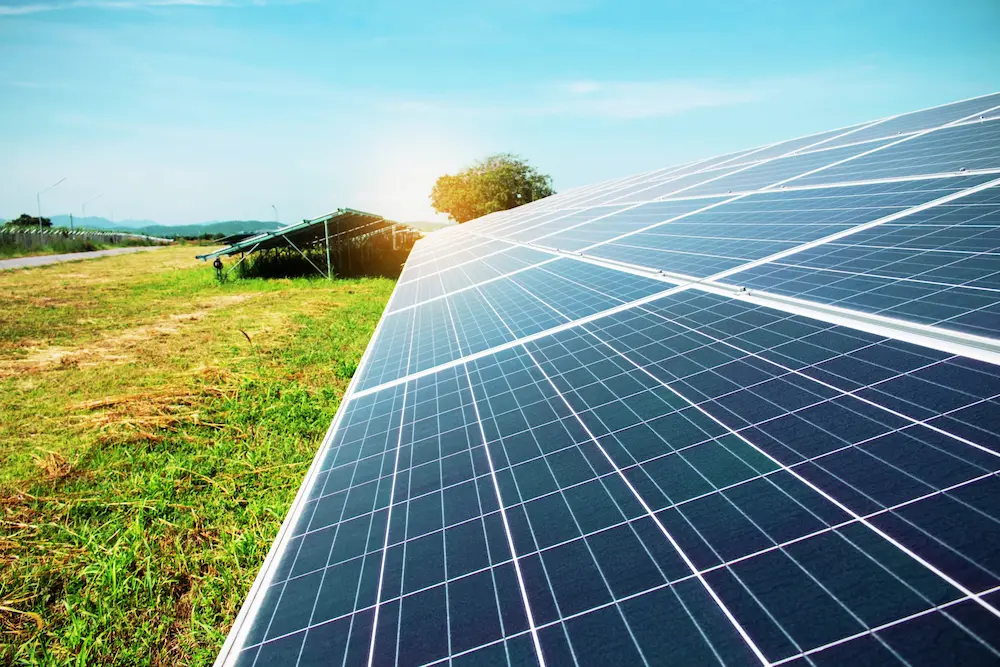
Solar panels have established themselves as one of the most popular solutions for generating clean energy and reducing electricity costs. However, a key aspect that determines their effectiveness is their efficiency and the factors that affect their performance. This article breaks down everything you need to know to understand and optimise the functioning of your solar panels.
What is solar panel efficiency?
The efficiency of solar panels measures the percentage of solar energy hitting a panel that is converted into usable electricity. For example, if a solar panel has an efficiency of 20%, it means it converts 20% of the solar energy it receives into electrical energy.
Efficiency vs Performance
Although often confused, efficiency and performance are not the same. While efficiency refers to the conversion of sunlight into electricity, performance evaluates how a panel operates under real-world conditions, taking into account external solar performance factors such as temperature, dirt, or orientation.
How is solar panel efficiency measured?
Efficiency is calculated under Standard Test Conditions (STC), which consider:
- Solar irradiation of 1000 W/m².
- Cell temperature of 25ºC.
- Solar light spectrum AM 1.5G.
Basic formula
The formula for calculating efficiency is:
Efficiency (%) = (Peak power of the panel / (Irradiation × Panel area)) × 100
For example, a panel generating 400 W with an irradiation of 1000 W/m² and measuring 2 m² has an efficiency of 20%.
Solar performance factors affecting panel efficiency
Several elements can positively or negatively affect the efficiency and performance of your solar panels:
1. Temperature
High temperatures can reduce solar panel efficiency. For every degree above 25ºC, performance can decrease by up to 0.4%. This phenomenon, known as the temperature coefficient, is key to choosing panels that maintain their effectiveness in warm climates.
2. Orientation and tilt
- Orientation: In the northern hemisphere, the best orientation is towards the south to maximise sunlight capture throughout the day.
- Tilt: An angle of 30º is generally ideal to avoid shadows and optimise solar radiation incidence.
3. Panel materials
- Monocrystalline: High efficiency (17-23%) and greater durability, but also more expensive.
- Polycrystalline: Medium efficiency (14-16%), cheaper but less effective in low-light conditions.
- Thin-film: Lower efficiency (7-9%), but lightweight and adaptable.
4. Shading and dirt
Shadows and dirt accumulation can drastically reduce efficiency, even by up to 50% in extreme cases. Regular cleaning and the use of power optimisers help mitigate these issues.
5. Annual degradation
Solar panels lose between 0.5% and 1% of efficiency per year due to wear and tear. It’s crucial to select panels with low degradation rates to maximize long-term production.
6. Installation quality
Professional installation ensures panels are correctly oriented and tilted, optimizing their performance and durability.
Technologies improving efficiency and performance
Innovations in solar technologies have enabled the development of more efficient and durable panels, improving solar performance factors. Some of the most notable include:
- HJT (Heterojunction): Combines amorphous and crystalline silicon layers to improve efficiency.
- Bifacial cells: Capture sunlight on both sides, increasing production.
- IBC (Interdigitated Back Contact): Maximizes capture by eliminating internal shading in the cell.
- Perovskites: Emerging technology with efficiencies over 25%, though not yet commercially available.
Comparison Table: Solar Performance Factors Affecting Efficiency
| Factor | Impact on Efficiency | Proposed Solutions |
|---|---|---|
| Temperature | 0.4% reduction per degree | Select panels with a low thermal coefficient |
| Dirt | Up to 50% reduction | Regular cleaning |
| Tilt | Losses due to incorrect angle | Adjust to 30º and south orientation |
| Annual degradation | 0.5%-1% less per year | Select panels with low degradation |
| Material quality | Higher or lower efficiency | Opt for high-quality monocrystalline panels |
Why is efficiency important in Spain?
In Spain, a country with high average solar irradiation, maximizing solar panel efficiency can result in significant savings on electricity bills and a notable contribution to environmental sustainability. Additionally, choosing efficient panels is especially relevant for rooftops with limited space.
Real case: Panel comparison
A study in Portugal compared two solar panel systems:
- System A: Lower quality polycrystalline panels.
- System B: High-end monocrystalline panels.
The results showed that System B generated 22% more energy over a month. This superior performance justifies the higher initial investment in higher-quality panels.
Frequently Asked Questions About Solar Panel Efficiency
Are solar panels less efficient in winter?
Not necessarily. Although days are shorter and sunlight is reduced, cooler temperatures can improve panel performance.
How does rain affect efficiency?
While it reduces direct sunlight, rain can clean panels, improving their efficiency by removing accumulated dust.
How long does a solar panel remain efficient?
The average lifespan is 25-30 years, with an annual degradation of 0.5%-1%.
Which type of panel is most efficient?
Monocrystalline panels offer the highest efficiency and are ideal for limited spaces.
Optimizing the efficiency and performance of your solar panels not only ensures greater savings but also contributes to a more sustainable future. Analyse your needs and trust advanced technologies to make the most of solar energy.


