
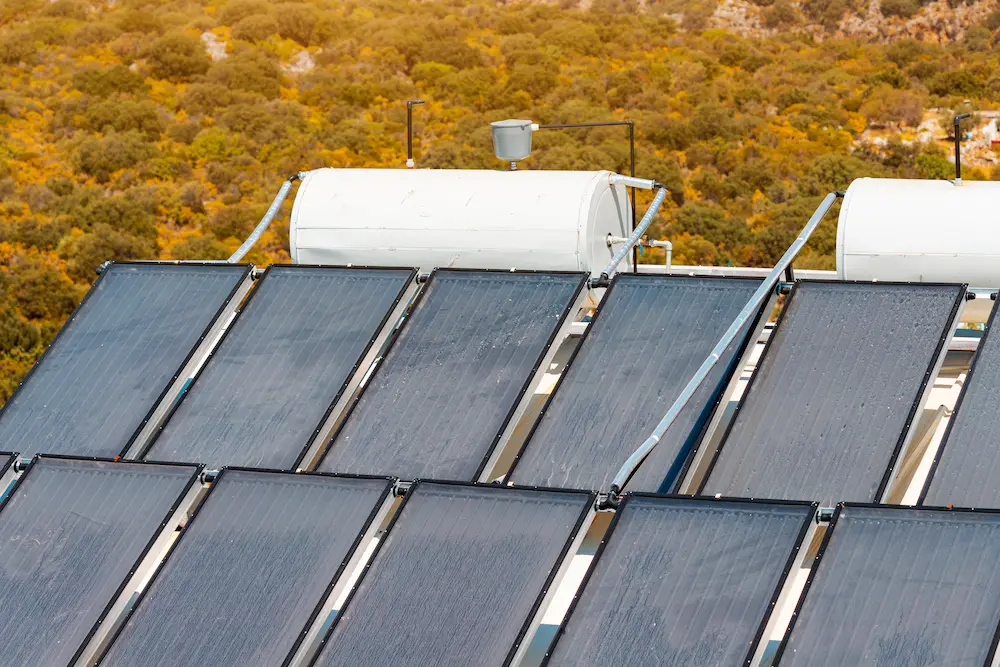
Solar panels for hot water are one of the most efficient and sustainable solutions to reduce energy consumption in your home. This system allows you to take advantage of solar energy to heat water in an economical and ecological way. In this article, we will explore in depth how they work, the types of systems available, their advantages and disadvantages, and much more. In addition, we will answer the most common questions about their operation and application, so that you can have hot water with solar panels knowing everything.
How do solar panels for hot water work?
A solar thermal panel system transforms solar energy into thermal energy to heat water. This is achieved through three main components:
Primary Circuit
This circuit collects solar energy through collectors or solar panels to heat water. These collectors contain a heat-carrying fluid that absorbs the sun’s heat and transports it to the accumulator. Its installation must guarantee:
- Good orientation towards the south to maximize solar radiation.
- Adequate dimensions, calculated based on the household’s consumption.
The fluid in this circuit can reach very high temperatures, thanks to the concentration of solar energy. This ensures that the heat is efficiently transmitted to the secondary circuit.
Secondary Circuit
The heat collected by the primary circuit is transferred to the water in the thermal accumulator. This accumulator is insulated to retain heat for several hours, allowing hot water to be available even in the absence of direct sunlight.
In case the water does not reach the desired temperature (for example, on cloudy days), an auxiliary system such as a boiler or electric heater can supplement the process. This ensures that you always have hot water available, regardless of the weather conditions.
Consumption Circuit
The hot water is distributed from the accumulator to the taps and showers in the home through conventional pipes. This circuit completes the process by bringing the water to the points of use, such as showers, sinks and appliances that require hot water.
Types of Solar Thermal Collectors
Choosing the right collector is crucial to optimizing the efficiency of your solar panel system for hot water. Below, we show you the most common types and their applications:
Flat Collectors with Glass
These are the most commonly used in homes. They are protected by a resistant glass that reduces heat loss and improves their efficiency. These collectors are ideal for moderate climates and represent an economical and functional option for heating domestic water.
Vacuum Tube Collectors
They consist of vacuum glass tubes that maximize heat capture. Although they are more expensive, their performance is superior, making them an excellent choice for cold areas or areas with less solar radiation. Their advanced design allows efficiency to be maintained even in adverse weather conditions.
Polypropylene Collectors
Made of plastic, they are cheaper but less efficient. Their main use is to heat water in swimming pools, as they do not generate enough energy to cover the hot water needs of a home.
Flat Collectors without Glass
These are more basic and economical, similar to the polypropylene ones in performance. They are also used in swimming pools, but are not recommended for domestic applications due to their thermal limitations.
Advantages of Using Solar Panels to Heat Water
Savings on Energy Bills
Sunlight is free, which significantly reduces your expenses on electricity or gas to heat water. Depending on the location and size of the system, the savings can be significant in the long run.
Sustainability
By using renewable energy, you reduce your carbon footprint and contribute to caring for the environment. Solar thermal systems are a great way to reduce your home’s CO2 emissions.
Energy Independence
By relying less on conventional energy sources, you can protect yourself from fluctuations in gas or electricity prices.
Hot Water All Year Round
Although the system may need auxiliary support in winter, during the summer it can cover up to 90% of your home’s hot water needs.
Increased Property Value
Installing solar panels increases the value of your home, making it more attractive to buyers interested in sustainable technologies.
Disadvantages to Consider
Upfront Price
Installing a solar thermal system requires a significant initial investment. However, many governments offer grants and incentives that help offset the expense.
Sunlight Dependence
The efficiency of the system depends on solar radiation. Although technology has advanced a lot, and as we already discussed in our articles on how solar energy works on cloudy days and how solar panels work in winter on cloudy or low-light days, performance may decrease.
Space Required
You will need enough space to install the solar collectors and the accumulator. This can be a problem in homes with limited space.
Maintenance
Although low, the system requires periodic cleaning of the collectors and technical inspections to ensure its optimal operation.
Comparative Table: Types of Solar Heating Systems
| System | Efficiency | Initial cost | Maintenance | Main applications |
|---|---|---|---|---|
| Flat Collectors | Average | Low | Low | Homes with moderate climate |
| Vacuum Tube Collectors | High | High | Average | Cold areas or with low solar radiation |
| Polypropylene collectors | Low | Very low | Low | Pool heating |
| Flat collectors without glass | Low | Very low | Low | Use in warm climates for swimming pools |
Installation and Maintenance of Solar Panels
The installation of a solar thermal system must be carried out by qualified professionals. They will evaluate:
- The ideal location to maximize solar gain.
- The size of the system, according to your needs and consumption.
- Compatibility with existing systems, such as boilers or electric heaters.
As for maintenance, it is important to:
- Clean the collectors every 6 months to remove dust and dirt.
- Check the condition of the heat transfer fluid and replace it if necessary.
- Check the insulation of the accumulator to avoid heat loss.
Is it worth installing a solar panel system for hot water?
The answer depends on your needs and location. In Spain, where solar radiation is abundant, these systems are highly profitable in the medium and long term. In addition, they can increase the value of your property.
However, please note that:
- The initial price can be high.
- You need adequate space for the collectors and accumulator.
- Performance decreases on cloudy or rainy days.
Despite these limitations, most users report significant savings and high satisfaction with their investment.
Frequently Asked Questions
What are solar panels for heating water called?
They are called solar thermal collectors or solar thermal panels. They are different from photovoltaic panels, which generate electricity.
How many solar panels are needed for a water heater?
It depends on the household consumption and the available solar radiation. As a reference, for a family of four people, between 2 and 3 flat collectors are usually required.
How does a solar panel work for heating water?
It collects solar energy using a heat-transfer fluid that transfers heat to the water stored in an accumulator. This system can be complemented with a boiler to guarantee hot water on days with little sun.
Is it worth heating water with solar energy?
Yes, especially in sunny areas such as Spain. Although the initial investment is high, the savings on energy bills and the reduction in CO2 emissions more than make up for its initial price.
How long does hot water from a solar heater last?
The thermal accumulator can keep water hot for several hours, depending on the quality of the insulation and the initial temperature of the water.
What additional benefits do these systems offer?
In addition to savings and sustainability, a solar thermal system can be integrated with other technologies such as underfloor heating, maximizing its efficiency and utility.
Request Personalized Information
At PROT Energía, we are experts in the installation of solar panels for hot water in Spain. Our team will help you size and install the perfect system for your home, guaranteeing efficiency and savings from day one.
Contact us today! Take advantage of the sun’s energy and start enjoying its benefits today.


