
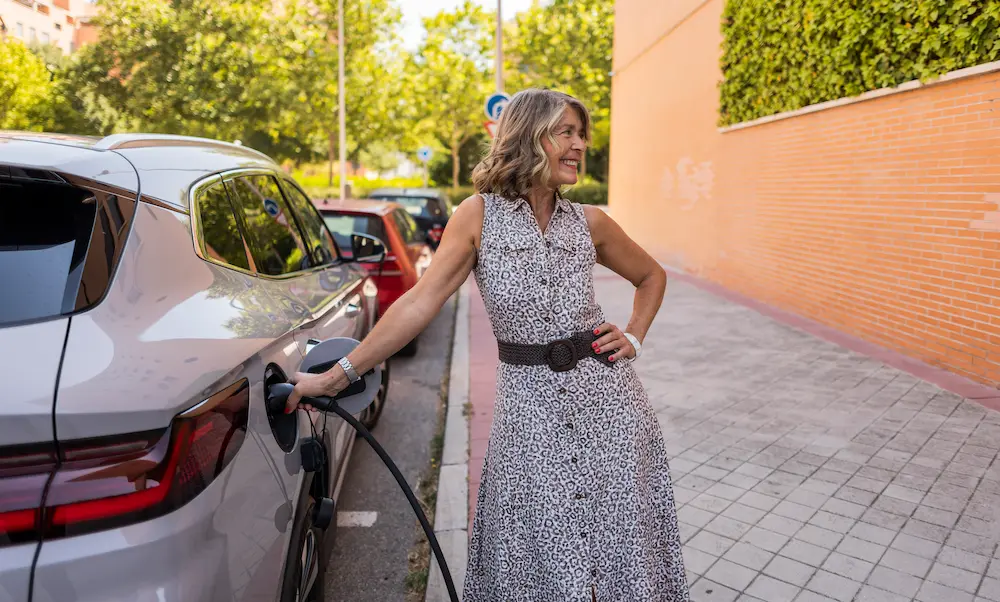
How much does it cost to charge an electric car
For years we have been accustomed to comparing cars by fuel consumption, liters per 100 kilometers and the price of diesel or gasoline. With electric vehicles, the approach changes, but the economic interest remains the same.
In most cases, recharging an electric car is considerably cheaper than refueling a combustion vehicle. On the other hand, the cost is not fixed or universal, since it depends on multiple factors: where you charge, how you charge, the contracted power, the type of charger, the time of day and, of course, the vehicle itself. Therefore, we are going to see in detail how much it costs to recharge the electric car.
Factors of the charging cost of an electric car
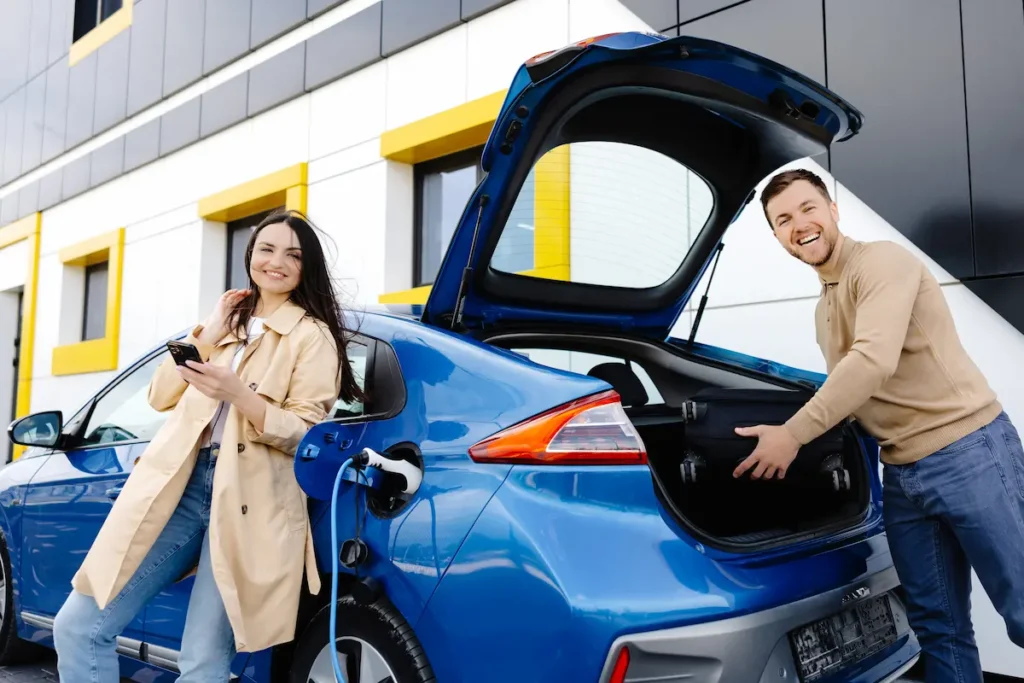
Before going into specific figures, it is important to understand what variables influence the charging cost. Unlike traditional refueling, where the price depends almost exclusively on the fuel, more elements come into play in the electric car.
Recharge power
The power at which you charge your electric car is one of the most determining factors in the final cost, although not always in the way people think. Power is measured in kilowatts (kW) and determines the speed at which energy is transferred to the battery. The higher the power, the lower the charging time, but that does not always mean a lower cost. Generally you will have three types of charges:
- Slow charge (2.3 to 3.7 kW). It is common in conventional domestic plugs or basic wallboxes. It is the most energy efficient option and the one that best cares for the battery, although it requires more hours.
- Semi fast charge (7.4 to 11 kW). Very common in homes with a dedicated wallbox and in some public points. It offers a good balance between time and efficiency.
- Fast and ultra fast charge (50 kW onwards). Present in public chargers, especially on highways and service stations. It allows charging a large part of the battery in a few minutes, but it is usually much more expensive per kWh.
In terms of pure energy cost, power does not change the kWh price, but it does indirectly influence the applied rate and the efficiency of the process, especially in fast charges.
Time to perform it
The charging time is directly related to the power, but also to the battery capacity and the initial charge level. The longer the car is connected, the more energy it will consume, and therefore, the higher the total cost will be. However, charging more slowly usually allows taking advantage of cheaper electricity rates, such as night time discrimination.
In addition, some public charging points apply rates by time, not only by energy consumed, which can significantly increase the price of a slow charge at a fast point if the car does not support high powers. We recommend this article on how to charge an electric car, where we also tell you where to do it depending on what you need.
How much does it cost me to charge the electric car at home?
Domestic charging is, by far, the cheapest and most efficient option for most users. In fact, much of the savings associated with the electric car is based on being able to charge it at home.
In power and time
Let us assume an average electric car with a 50 kWh useful battery.
- With a 3.7 kW domestic charger, a full charge can take between 13 and 15 hours.
- With a 7.4 kW wallbox, the time is reduced to about 7 or 8 hours, ideal for charging overnight.
This type of charging is progressive, stable and respectful with the battery, which also has a positive impact on its long term durability.
In money
This is where the electric car begins to make a clear difference compared to combustion vehicles. The kWh price at home depends on the contracted rate, but taking average values:
- Standard rate: between 0.18 and 0.25 €/kWh
- Rate with time discrimination (off peak hours): between 0.10 and 0.15 €/kWh
If we charge those 50 kWh in off peak hours at 0.12 €/kWh, the total cost of a full charge would be about 6 euros.
With that charge, many electric vehicles can travel between 300 and 350 kilometers, which implies an approximate cost of 1.7 to 2 euros every 100 km. A figure difficult to match by any combustion car. Therefore, when analyzing how much it costs to charge an electric car, charging at home is the great economic argument in favor of this technology.
How much does it cost to charge the electric car on the street?
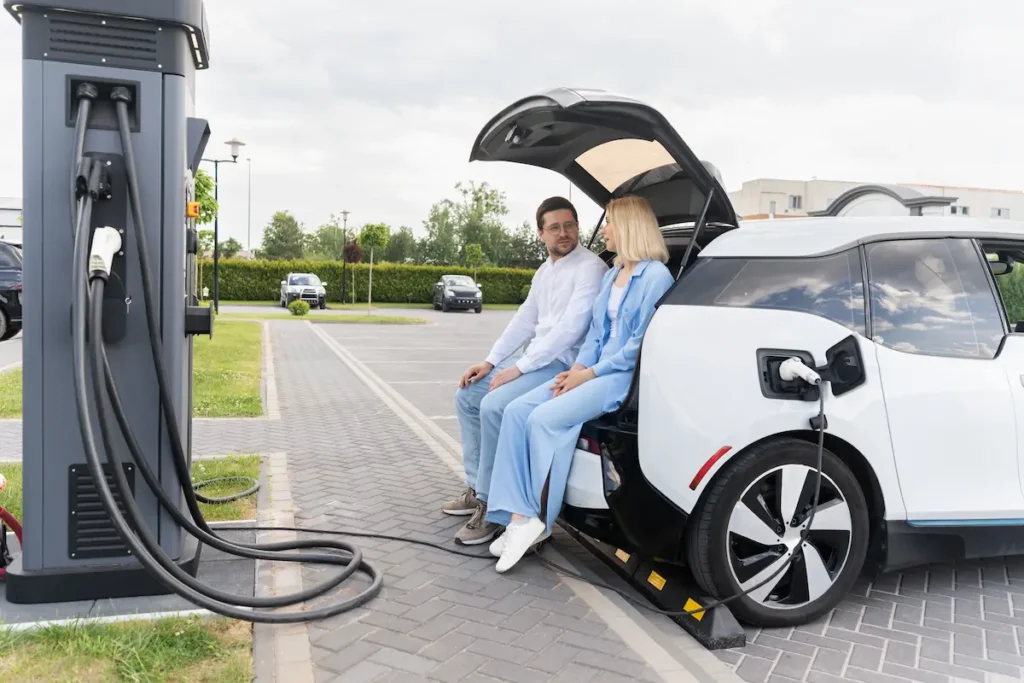
Public charging is more variable in price and, in general, more expensive than domestic. Even so, it is essential for long trips, for something more specific or if you do not have a garage.
In power and time
On public roads we mainly find two types of charging:
- Semi fast charge (11 to 22 kW). It can take between 2 and 4 hours to charge an average battery, depending on the car.
- Fast charge (50 kW) and ultra fast (100 to 350 kW). It allows charging from 20% to 80% of the battery in 20 to 40 minutes, ideal for long trips.
Not all vehicles support the highest powers, and even if the charging point is very powerful, the car will limit the speed if its system does not allow it.
In money
This is where the price can vary considerably:
- Public semi fast charge: between 0.30 and 0.45 €/kWh
- Fast charge: between 0.45 and 0.65 €/kWh
- Ultra fast charge: can exceed 0.70 €/kWh
Continuing with the example of a 50 kWh battery:
- In semi fast charge at 0.35 €/kWh: 17.5 €
- In fast charge at 0.55 €/kWh: 27.5 €
- In ultra fast charge at 0.70 €/kWh: 35 €
Importance of choosing a good charger for your electric vehicle
Do not underestimate the importance of the charger, you must choose a good charging system because it not only influences the time, but also the cost and health of the battery. A suitable charger:
- Optimizes energy efficiency.
- Avoids unnecessary losses.
- Allows programming the charge at cheaper hours.
- Protects the electrical installation.
- Extends the useful life of the battery.
Investing in a good domestic wallbox may seem like a high initial expense, but you will quickly amortize it thanks to the energy savings it entails, the comfort and the peace of mind it offers in the long term. We also advise you to read this article on how to save when recharging the electric car.
Our advice is not to abuse the fast charging of the electric car
Finally, we advise you that, although fast charging is quite useful on long trips or something more specific, it should not be your usual option if you want to maintain a balance between cost, efficiency and durability of the vehicle (or its battery at least).
Abusing fast charging has several consequences, for example, it is more expensive per kWh, generates more thermal stress on the battery, can accelerate its degradation and reduces system efficiency. Therefore, whenever possible, use slow charging at home taking advantage of off peak rates, using public charging only when strictly necessary, especially on the road. In this way, you not only reduce monthly expenses, but also maximize the useful life of one of the most expensive components of the electric car.
You already know how much it costs to charge an electric car which, although it does not have a single figure, in most cases is cheaper, more efficient and more sustainable than a traditional vehicle. Therefore, bet on domestic charging, generally slow and using fast charging only with your head so that it lasts as long as possible and is a good economic advantage.


