
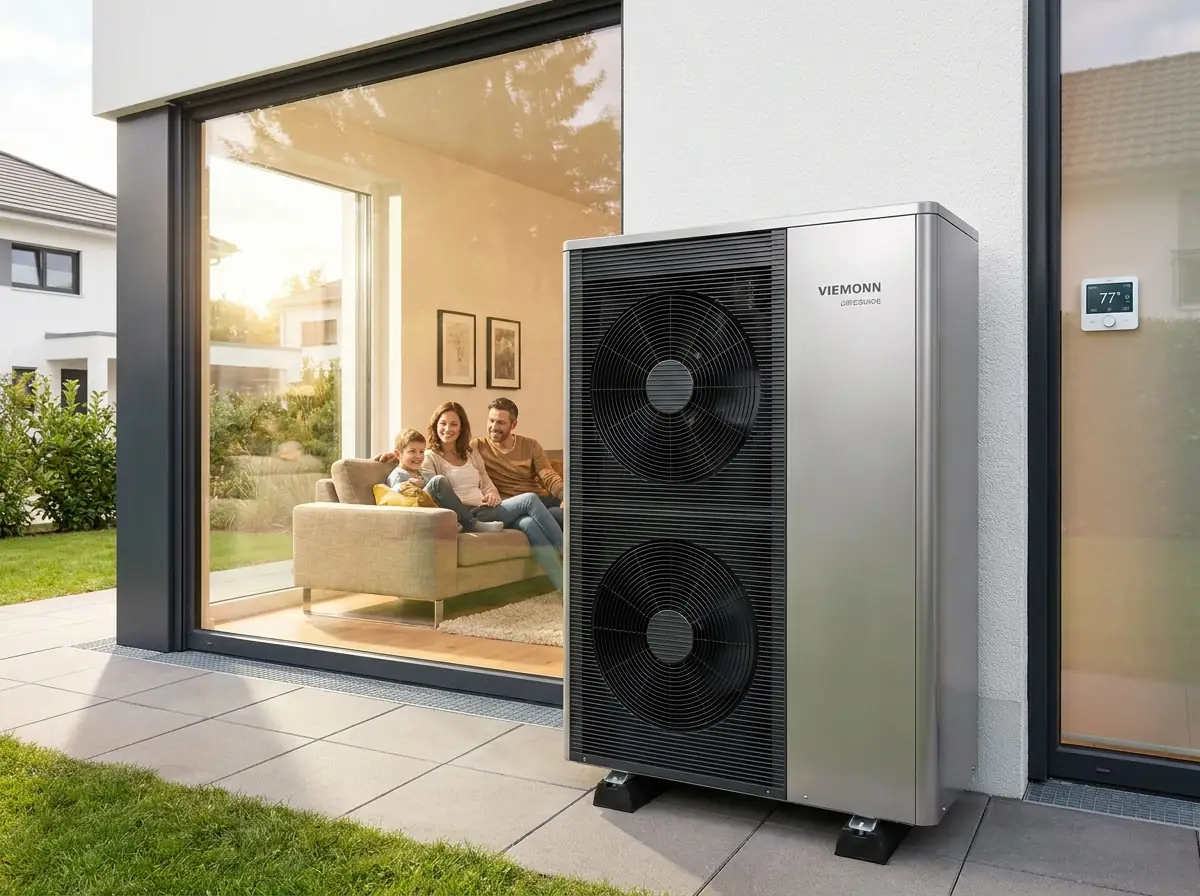
In the constant pursuit of energy efficiency and maximum comfort at home, air source heat pumps for heating and cooling have established themselves as the ultimate solution. Nowadays, maintaining the perfect temperature in your home, regardless of the season, no longer has to involve excessive costs or harm the environment. Air source heat pump technology is designed to transform the way we understand heating and cooling, harnessing the energy contained in the outside air to deliver performance unmatched by other technologies while remaining sustainable.
What is air source heat pump technology?
Air source heat pump technology is a clean and highly efficient technology that extracts up to 75% of the energy it uses from the outside air to heat and cool indoor spaces.
Unlike most traditional systems based on fossil fuel combustion, this technology can operate as a heat pump in winter and an air conditioning system in summer, while also producing domestic hot water (DHW) suitable for everyday household use.
By combining so many functions in a single unit, choosing an air source heat pump for heating and cooling automatically becomes one of the smartest options for anyone seeking an energy transition, whether for residential properties or businesses.
How air source heat pumps work
The basic principle behind this technology lies in thermodynamics, which, in simple terms, explains how heat can be used to produce energy that, in turn, generates movement or force.
In the case of air source heat pumps, this principle is applied through a state of the art heat pump that captures thermal energy from the outside air, even when temperatures approach 0 °C. This thermal energy is transformed into electricity and transferred to a closed circuit containing refrigerant gas. Through a process of compression and expansion, the temperature is adjusted according to our needs, providing either warmer or cooler conditions.
In winter, the cycle absorbs heat from outside and pumps it indoors, while in summer the cycle is reversed, expelling heat from the interior to the outside. This allows the air source heat pump to provide both heating and cooling consistently.
Of the entire air source heat pump system, the compressor motor is the only component that requires electricity, which explains its extremely high level of efficiency.
What is the best type of air source heat pump system?
Determining the ideal equipment depends directly on the technical characteristics of the property, its level of insulation and the heating and cooling distribution systems that will be used. There is no single solution suitable for every situation, which is why we always recommend contacting an expert who can assess each project and integrate the most appropriate solution. However, below we explain the main options:
Air source heat pumps with radiators
Air source heat pumps with radiators are among the most popular options when homeowners want to make use of an existing heating installation. There are two possible approaches:
- Conventional radiators with high temperature heat pumps.
- Low temperature radiators, which are considerably more efficient.
Although this is a traditional heating system, modern configurations allow the heat pump to distribute warmth evenly and comfortably throughout the winter.
Air source heat pumps with fan coil units and split units
This option is the most suitable for people who need to heat or cool a space as quickly as possible.
These devices operate using water coils and an integrated fan that forces air to circulate. The main difference between them lies in their installation. While fan coil units can be installed at height or positioned on the floor, a split unit must be mounted high on a wall, similar to a conventional air conditioning unit.
Both systems are excellent at distributing heating and cooling from an air source heat pump, providing almost instant comfort through temperature controlled water, while keeping electricity consumption to a minimum thanks to the efficiency of the heat pump.
Air source heat pumps with solar panels
Taking efficiency to the highest level means integrating solar panels with an air source heat pump system. By supplying our heat pump with photovoltaic electricity, electricity consumption from the grid can be reduced to almost zero. This combination transforms your home into a self sufficient ecosystem, maximising savings and eliminating your carbon footprint.
Ducted air source heat pump systems
If your property already has ductwork installed or a suspended ceiling, a ducted air source heat pump system is one of the most discreet and quietest solutions.
Conditioned air is distributed through grilles integrated into the property, providing one of the most efficient ways to deliver both heating and cooling. It also allows you to control the temperatures of different rooms independently.
Air source heat pumps with underfloor heating
We should remain impartial, but for us, this is the standout option. Air source heat pumps with underfloor heating offer the highest levels of efficiency and thermal comfort on the market.
The system operates at low temperatures, which keeps heat pump electricity consumption to a minimum. In winter, warm water circulates beneath the floor and distributes heat evenly. In summer, cool water circulates beneath your feet, absorbing excess heat from the surrounding environment without draughts or discomfort.
| System | Ideal for | Key advantage |
| Radiators | Renovations with an existing heating installation. | Makes use of the existing system while improving efficiency. |
| Fan coil units and split units | Fast, direct heating and cooling in individual rooms. | Low consumption and versatility. |
| With solar panels | Maximum self sufficiency and energy savings. | Self sufficient and sustainable. |
| Ducted systems | Homes with suspended ceilings or existing ductwork. | Discreet, quiet and zoned. |
| Underfloor heating | Maximum thermal comfort and the highest efficiency. | Even heating and cooling without draughts. |
Frequently asked questions about air source heat pumps for heating and cooling
As you learn more about a subject, more and more questions naturally arise. That is why we have created a short list of the questions we hear most frequently about air source heat pumps, their installation and their applications:
What type of flooring is best for an air source heat pump system with underfloor heating and cooling?
Although these systems can now be installed beneath practically any type of flooring, some materials are more suitable than others.
Among the best options are ceramic and porcelain tiles. Thanks to their high thermal conductivity, heat is distributed almost evenly. Wood flooring, on the other hand, can act as thermal insulation if it is not chosen carefully, potentially reducing the effectiveness of the installation.
Can air source heat pumps provide heating and cooling in any climate?
Absolutely. Modern heat pumps are designed with inverter technology and vapour injection compressors that maintain high performance in both high temperatures and conditions below freezing. However, they will always be more efficient in temperate climates, where heating and cooling requirements are lower.
How can you improve the performance of an air source heat pump for heating and cooling?
The first step towards improving the performance of any heating and cooling project is to ensure adequate thermal insulation.
From a more technical perspective, operating with low water flow temperatures, correctly configuring the controller’s weather compensation curves and carrying out annual preventive maintenance on the filters and circuit pressures are the keys to maximising air source heat pump efficiency.
How much can you save by installing an air source heat pump in a flat?
After installing an air source heat pump system, savings are guaranteed. But how much can you save? Every situation is different, as operating times and usage patterns vary from one property to another. Nevertheless, making the switch can transform your regular energy costs.
When replacing an electric radiator system or traditional electric heating, electricity savings can reach up to 75%. If you are replacing an oil or natural gas boiler, savings can range from 40% to 60%.
Although the initial investment is higher than that of a conventional boiler, the payback period for an air source heat pump installation in a standard flat is between 4 and 6 years. From that point onwards, all the money no longer spent on fossil fuels becomes a net financial benefit for the household. The installation can also increase the property’s value and significantly improve its Energy Performance Certificate rating.
Are you still unsure whether an air source heat pump is the best option for your property, or are you looking for a reliable partner for your project? At Protenergía, we assess your requirements free of charge and with no obligation. Get in touch with us and discover the potential savings your installation could offer.


