
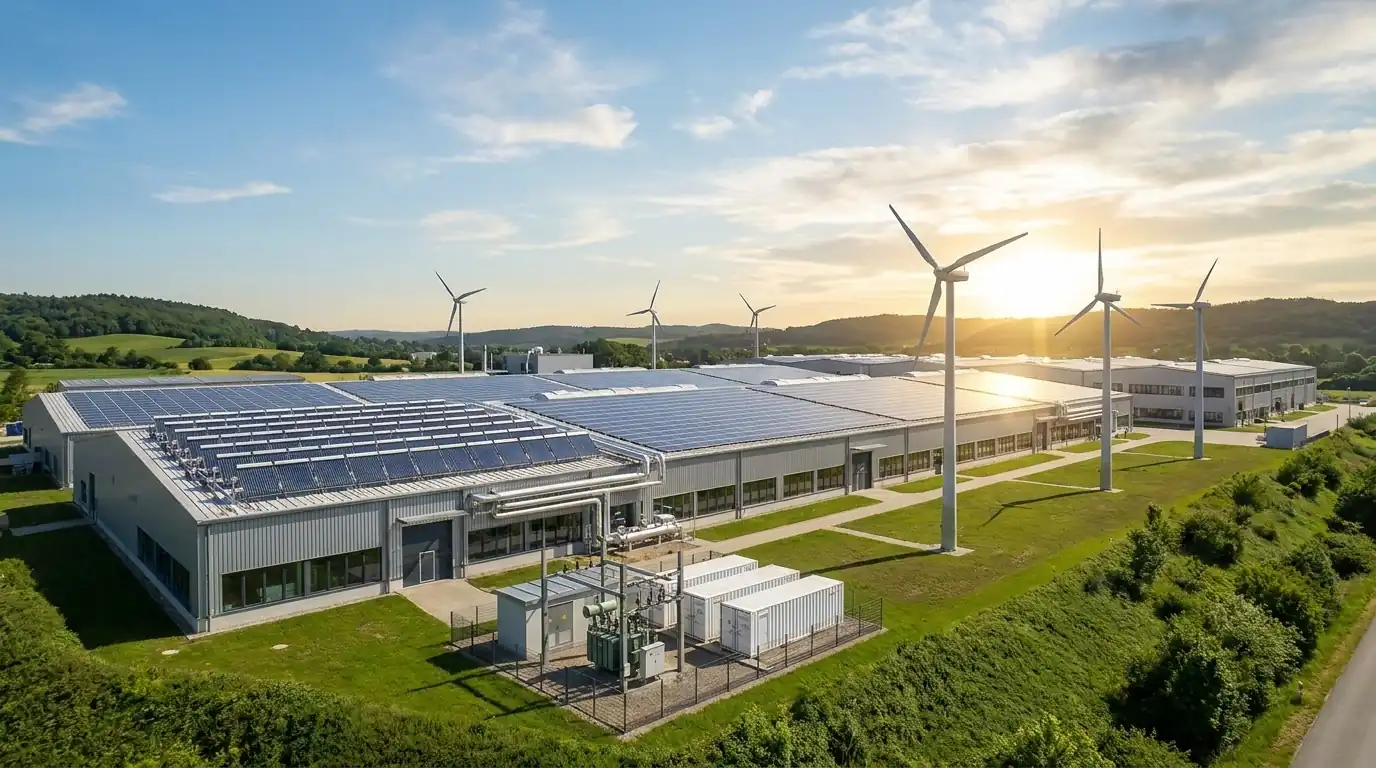
In today’s economic climate, where any additional expense can have a significant impact on a company’s finances, reducing consumption and optimising energy use is essential for keeping budgets under control. As optimising electricity expenditure is vital for business profitability, industrial solar self consumption has emerged as a key strategic solution for improving financial performance. Adopting an industrial self consumption model allows companies and smaller businesses to radically reduce their dependence on the traditional electricity grid, protect themselves against volatile national electricity prices and begin the transition towards a more sustainable and environmentally responsible industry.
What is renewable energy?
Nowadays, there are many terms such as sustainable, renewable, green and environmentally friendly. They all have something in common: helping to protect the environment, whether by avoiding atmospheric emissions, reducing waste released into the environment, preventing the depletion of non renewable resources or minimising their environmental impact as much as possible.
Renewable energy refers to energy obtained from naturally replenished sources, such as the sun, wind or biomass, which have the ability to regenerate continuously and naturally. Unlike fossil fuels, harnessing these resources and converting them into electricity does not produce harmful greenhouse gas emissions during generation. This characteristic makes renewable energy a fundamental pillar for any company seeking to comply with current environmental regulations, minimise its carbon footprint and adopt efficient operations over the long term.
What are the best renewable energy sources for industry?
When we talk about industry, we are referring to a productive sector that requires powerful, reliable energy sources capable of sustaining energy intensive processes. For this reason, the transition towards industrial self consumption mainly relies on mature technologies that guarantee a stable energy supply without compromising the operation of the facility.
Solar energy for industrial use
Without a doubt, solar energy for industrial use is the leading technology when it comes to renewable energy for self consumption. Solar energy offers both excellent profitability and versatility, as it allows solar radiation to be harnessed in two completely different ways, adapting perfectly to both the electrical and thermal requirements of industrial manufacturing processes.
Photovoltaic installation
Photovoltaic modules convert sunlight directly into electricity. There are several types of photovoltaic installations designed for industrial self consumption:
- Grid connected systems with surplus energy export and compensation.
- Zero export systems that prevent surplus energy from being fed into the grid.
- Hybrid systems incorporating battery storage to guarantee electricity supply during peaks in demand or for night time use.
Solar thermal energy installation
Installing a solar thermal energy system is another way of harnessing renewable solar energy for industrial use. Although it also relies on the sun, it works in a completely different way. This technology focuses on capturing and making use of the heat produced by solar radiation. Through solar thermal collectors, it provides the ideal solution for industries requiring large volumes of domestic hot water (DHW) or the preheating of fluids to high temperatures for food processing, chemical or textile manufacturing processes, drastically reducing the consumption of natural gas and other fossil fuels.
Is wind energy viable in the industrial sector?
This is one of the most frequently asked questions when discussing renewable energy. We are all familiar with the enormous wind farms generating electricity across Spain, but the question is whether these large turbines can be adapted to a smaller scale for industrial use. The answer is yes. There are realistic alternatives for factories, particularly small scale wind power technology. Installing small and medium capacity wind turbines in geographical areas with consistent wind conditions is entirely feasible.
In addition to being viable as an independent energy source, wind power is the ideal night time complement to photovoltaic solar systems, maximising the energy independence of industrial facilities throughout the 24 hours of the day.
Benefits of green electricity for businesses
Generating your own clean energy directly on the roof or land surrounding your factory can completely transform your business model. The benefits of self generated green electricity for businesses have a direct impact on both corporate reputation and the financial viability of the organisation, thanks to the savings achieved.
Reducing environmental impact
One of the main characteristics of green energy is that it is clean and emissions free during generation. Therefore, if you produce your own green energy, that electricity can drastically reduce the carbon footprint of your facilities. Large corporations can align their production operations with sustainable development goals, eliminating CO2 emissions associated with their processes.
Supporting the development of renewable energy
By installing clean energy generation systems in their own industrial buildings, businesses become active participants rather than simply consumers. This directly encourages the expansion of national renewable energy capacity, driving technological innovation and the ecological transition through the private sector.
Transparency and energy certifications
Producing 100% clean energy makes it considerably easier to obtain environmental quality certifications. This self generation is an important factor in achieving certifications such as ISO 14001, as well as sustainable building certifications such as LEED and BREEAM.
Improving ESG criteria (Environmental, Social and Governance) is an increasingly important requirement for accessing public tenders, attracting investors and securing commercial agreements.
Fixed savings on energy expenditure
The main financial motivation for making this transition is the transformation of a variable and uncertain expense into a fixed and minimal cost. Through industrial self consumption, a company can generate a large proportion of the electricity it consumes at a stable price for at least the next 25 years, protecting the business or industrial facility against sudden increases in electricity prices.
Frequently asked questions: Green energy for businesses
Making the definitive transition towards green energy for businesses is a structural decision that is usually accompanied by technical and financial questions at management level. Below, we answer the most common questions about implementing green and self sufficient energy systems.
Is sustainable energy profitable?
Absolutely and unquestionably profitable. Thanks to the technological maturity of modern solar panels, the available European grants, including Next Generation funds and similar programmes, and local tax incentives, such as reductions in IBI property tax and IAE business activity tax, the investment in industrial self consumption achieves payback, on average, within 3 to 5 years. Considering that these installations have a service life of more than 25 years, the long term net savings generated are enormous.
Is solar energy stable?
Absolutely. Industrial systems operate in perfect synchronisation with the main electricity grid. If the electricity demand of machinery exceeds solar production at any point, such as on rainy days or during the night, the installation automatically draws the additional energy required from the grid immediately, preventing interruptions or disruptions to normal operations.
How are solar panels installed?
The solar panel installation process for an industrial self consumption project consists of five main stages:
- Energy audit and feasibility study: Analysis of electricity consumption, roof surfaces and load profiles.
- Design and engineering: Preparation of a technical project tailored to the specific requirements of the industrial facility.
- Administrative procedures: Management of planning permissions, environmental permits and grid connection authorisations.
- Installation and assembly: Installation of mounting structures, solar modules, inverters and electrical protection systems.
- Legal registration and commissioning: Technical verification and registration with the relevant authority.
Do solar panels require maintenance?
As with any installation, the answer is yes, although they require only minimal preventive maintenance. To guarantee maximum efficiency, solar panels need periodic visual inspections, checks of electrical distribution boards and inverters, and scheduled cleaning of the modules. Removing accumulated dust and dirt helps prevent hot spots and ensures that the panels’ ability to absorb sunlight does not decrease over the years.
The transition towards a self sufficient energy model is no longer a distant dream, but has become one of the greatest competitive advantages for the near future. Investing in industrial self consumption means taking control of a large proportion of your company’s operating costs, protecting your profit margins and building a corporate image committed to the environment and clear values.
Analysing your energy consumption profile is the first step towards correctly sizing a project and making the most of every square centimetre of available space. Are you ready to transform your company’s financial future?


