
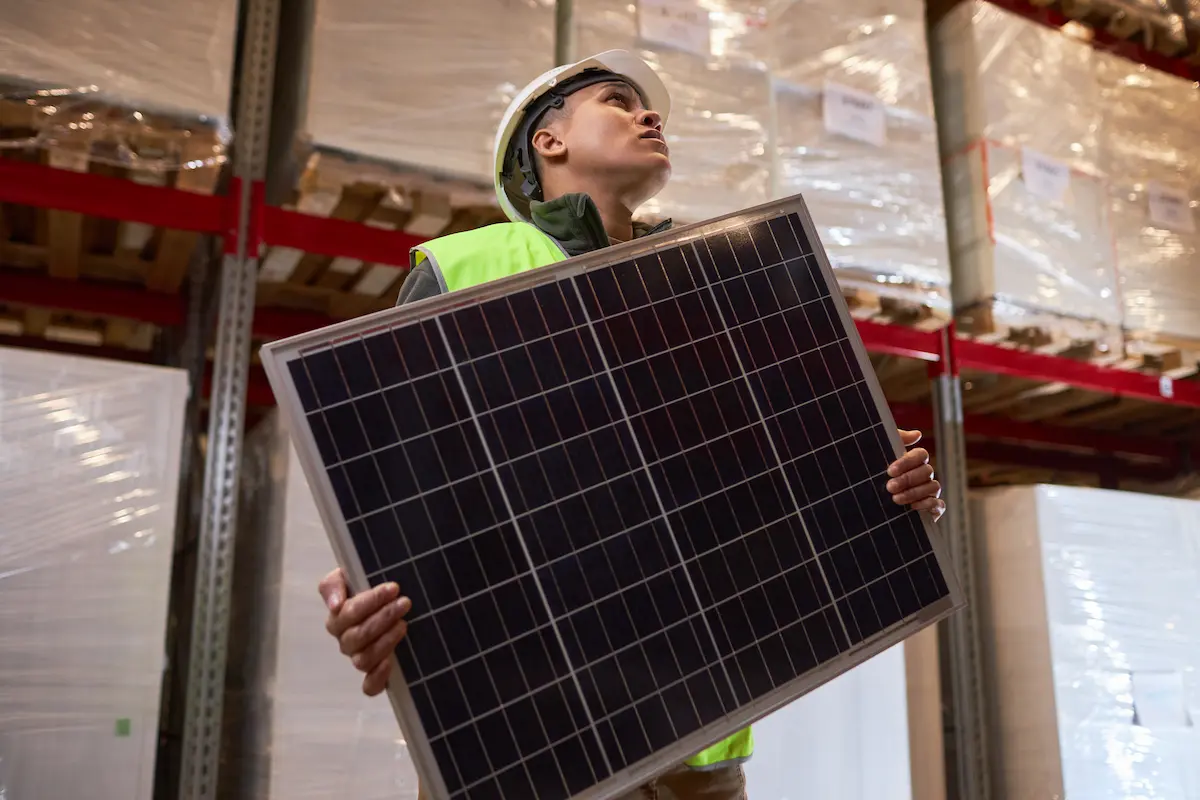
Not sure what type of solar panel you have? Today we explain the difference between monocrystalline and polycrystalline solar panels and, of course, which one may suit you best.
If you are at the decision stage or simply want to understand it properly, here you will find the main characteristics, advantages and disadvantages of each type. Let us begin.
Characteristics of Monocrystalline Solar Panels
Monocrystalline solar panels are made from high purity silicon. You can recognise them by their uniform dark colour, almost black, and their rounded cell edges.
This type of panel is manufactured from a single silicon crystal, which gives it a more ordered molecular structure. In simple terms, this means higher energy efficiency.
Here are their main characteristics:
- Silicon made from a single crystal
- Efficiency typically between 18 percent and 22 percent
- Black colour with a uniform and elegant appearance
- Higher price compared to polycrystalline panels
- Greater energy production per square metre
- Better performance in low light conditions
Advantages of Monocrystalline Solar Panels
- Higher energy efficiency, producing more electricity per square metre
- Ideal for smaller roofs where space is limited
- Long lifespan, often exceeding 25 years
- Better performance on cloudy days or in low solar radiation
- More aesthetically integrated in modern homes
Disadvantages
- Higher upfront cost in both manufacturing and purchase
- Slightly lower tolerance to extreme high temperatures, depending on the model
- Manufacturing process is more expensive and can be less sustainable compared to polycrystalline panels
Applications of Monocrystalline Solar Panels
- Urban homes with limited roof space
- Installations with high energy demand but reduced surface area
- Projects where long term efficiency and appearance are priorities
Characteristics of Polycrystalline Solar Panels
Polycrystalline solar panels, also known as multicrystalline panels, are manufactured from multiple silicon fragments melted together. This gives them a blue appearance with a visible crystalline pattern.
Because their structure is less ordered, their efficiency is slightly lower. However, they are more affordable and their production process generally requires less energy. Key characteristics include:
- Silicon formed from multiple crystals
- Efficiency between 15 percent and 17 percent
- Lower performance in low light compared to monocrystalline panels
- Blue colour with a mottled, less uniform look
- More affordable price
- Lower environmental impact during manufacturing
Advantages
- More affordable, offering good value for money
- More sustainable and less costly manufacturing process
- Suitable for large installations with ample space
- Reliable lifespan, often exceeding 20 years
Disadvantages
- Lower efficiency per square metre
- Reduced performance in shade or low solar radiation
- Require more surface area to generate the same amount of energy
- Less discreet or modern in appearance
Applications of Polycrystalline Solar Panels
- Properties with large available roof or land area
- Rural, agricultural or industrial projects
- Installations where the initial budget is limited
- Off grid self consumption systems where faster payback is prioritised
Difference Between Monocrystalline and Polycrystalline Solar Panels
Here is a clear comparison of monocrystalline vs polycrystalline solar panels:
| Characteristic | Monocrystalline | Polycrystalline |
|---|---|---|
| Base material | Single crystal silicon | Silicon made from multiple crystals |
| Efficiency | High (18-22%) | Moderate (15-17%) |
| Appearance | Uniform black | Blue with visible crystal patterns |
| Price | More expensive | More affordable |
| Performance in shade | Better | Slightly lower |
| Space required | Less surface area | Greater surface area |
| Recommended use | Roofs with limited space | Large spaces and lower budgets |
Which Is Better: Monocrystalline or Polycrystalline Solar Panels?
The answer depends on what you are looking for.
If you have limited roof space, want maximum efficiency and are prepared to invest slightly more, monocrystalline solar panels are usually the best choice.
If you have more space available and want a more affordable option with a quicker initial return on investment, polycrystalline panels can work very well.
You should also consider additional factors such as local climate, aesthetic preferences and whether you plan to expand your solar installation in the future.
Now that you understand the difference between monocrystalline and polycrystalline solar panels, you can make a more informed decision. Both options are effective, both produce clean energy, both reduce electricity bills and both lower your carbon footprint.
The most important step is to assess your specific situation:
- How much space do you have?
- What is your budget?
- How much electricity do you need?
- Do you prioritise aesthetics or cost efficiency?
Whichever option you choose, you are investing in renewable energy and contributing to a more sustainable future. And that is already a significant step forward.


