
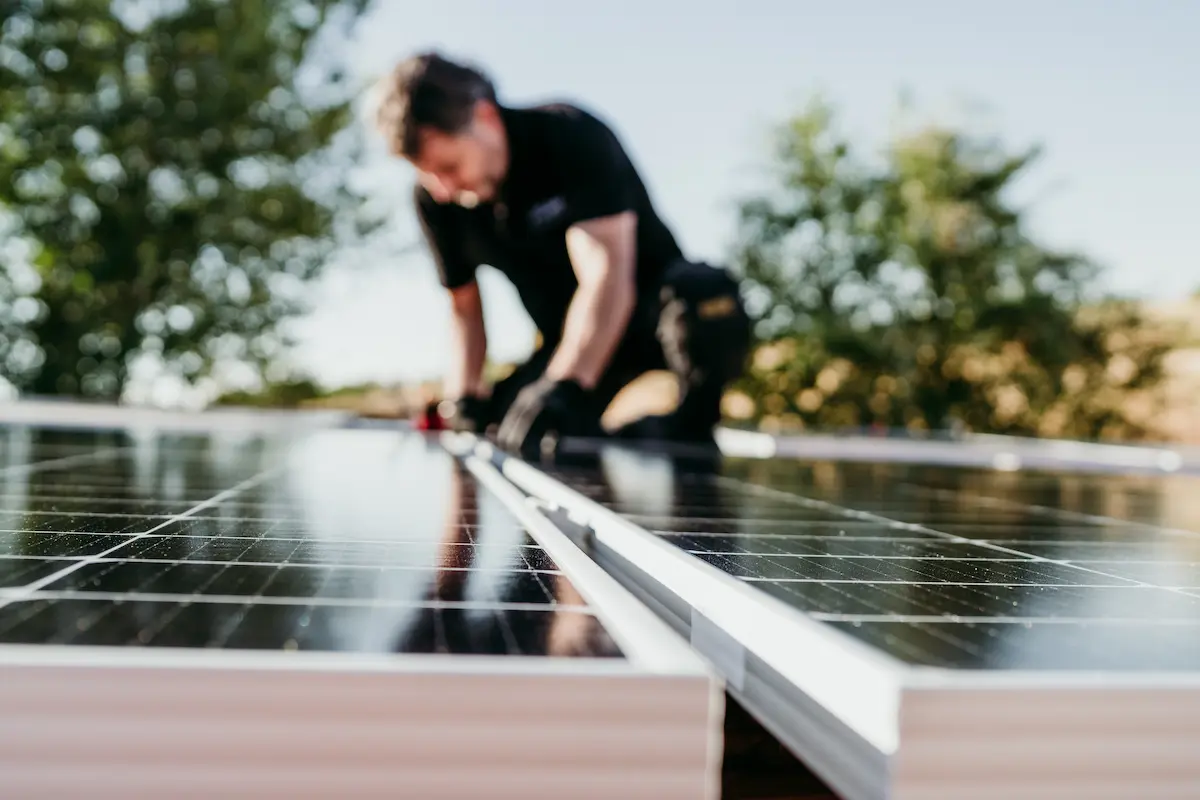
Energy self-consumption is becoming an increasingly popular option, both for homes and businesses looking to generate their own electricity from a renewable source. This model allows you to reduce your dependence on the electricity grid while saving significantly. However, there are different types of self-consumption, each with specific characteristics and requirements. Today, we will explore the two existing types, with a special focus on surplus systems and how they are compensated. Let’s get started!
The two types of self-consumption
There are two main categories of self-consumption, depending on how you choose to manage the energy generated and its relationship with the electricity grid. These are self-consumption with or without surplus.
1. Self-consumption without surplus
This type is characterized by the fact that all the energy generated is consumed on-site, meaning no excess energy is fed into the electricity grid. To achieve this, an anti-feed-in system is installed to prevent surplus electricity from flowing into the general grid. This option has its advantages and disadvantages:
Advantages of self-consumption without surplus
- Greater control over the energy produced and consumed.
- No need for agreements with electricity companies.
- Ideal for those who want to make the most of their own energy without relying on the grid.
Disadvantages
- No financial benefits from surplus energy.
- The system must be carefully sized to avoid energy wastage.
2. Self-consumption with surplus
With this model, any excess energy that is not immediately consumed is fed into the electricity grid, making the most of your photovoltaic production while also allowing you to obtain financial compensation for the unused energy. Like self-consumption without surplus, it has its pros and cons:
Advantages of self-consumption with surplus
- Possibility of receiving financial compensation for the energy fed into the grid.
- Higher long-term profitability of the photovoltaic system.
- Contribution to global energy sustainability.
Disadvantages
- Compliance with regulations and administrative procedures is required.
- Dependence on the electricity company for surplus compensation.
Types of self-consumption with surplus

Within self-consumption with surplus, there are two main types depending on how surplus energy compensation is managed: with or without compensation.
Self-consumption with surplus without compensation
In this type of self-consumption, surplus energy that is not used is fed into the grid, but without receiving any financial compensation. This model is usually applied in large installations, such as solar farms, where energy sales are managed differently from standard compensation. Its characteristics can be summarised as follows:
- Surplus energy is fed into the grid without direct financial remuneration.
- Agreements with electricity suppliers are required.
- It is commonly used in industrial or large-scale installations.
Self-consumption with surplus and compensation
Among the types of self-consumption, this is the most common in homes and businesses. It allows users to receive financial compensation for surplus energy, which is deducted from the electricity bill, reducing the cost of energy purchased from the grid. The key features can be summarised as follows:
- Surplus energy is financially compensated within the same bill.
- The maximum compensation amount cannot exceed the value of the energy consumed from the grid.
- A specific supply contract with the electricity provider is required.
How is surplus energy compensated?
Remembering that the amount cannot exceed the value of the consumed energy, surplus compensation is a process in which the energy fed into the grid is deducted from the user’s electricity bill. To take advantage of this system, it is necessary to sign a contract with the electricity company under the “simplified surplus compensation” scheme. The compensation process works as follows:
- Surplus calculation: The amount of energy generated but not consumed is measured.
- Energy valuation: Your electricity provider sets a price per kWh fed into the grid.
- Bill discount: The amount of surplus energy is deducted from the grid energy costs, up to a zero balance (negative compensation is not allowed).
Frequently asked questions about self-consumption
What is self-consumption type 41?
The self-consumption type 41 is a classification within the Spanish regulatory framework that refers to grid-connected installations with surplus and compensation. This means that excess energy is fed into the grid and financially compensated in the electricity bill.
Key characteristics of self-consumption type 41 include:
- It applies to small or medium-scale installations, generally in homes and small businesses.
- It allows significant reductions in electricity bills through surplus compensation.
- It is subject to specific connection regulations established by the electricity company.
What is self-consumption type 1? And type 2?
Self-consumption type 1 and self-consumption type 2 refer to modalities under Spanish regulations based on the installation’s relationship with the electricity grid:
Self-consumption type 1:
- Refers to installations without surplus, meaning they do not inject energy into the grid.
- Requires the installation of an anti-feed-in system to prevent energy export.
- Ideal for those seeking energy independence and less bureaucracy.
Self-consumption type 2:
- Applies to installations with surplus, both with and without compensation.
- Allows surplus energy to be injected into the grid and receive compensation.
- It is a more flexible option but involves greater technical and administrative requirements.
Conclusion
Choosing between the different types of self-consumption depends on your energy needs as a user, the level of independence you want to achieve, and the profitability you aim for, especially in the long term. Both self-consumption without surplus and self-consumption with surplus have their advantages, so carefully evaluate everything, from your budget to energy demand. Optimize your investment wisely!


