
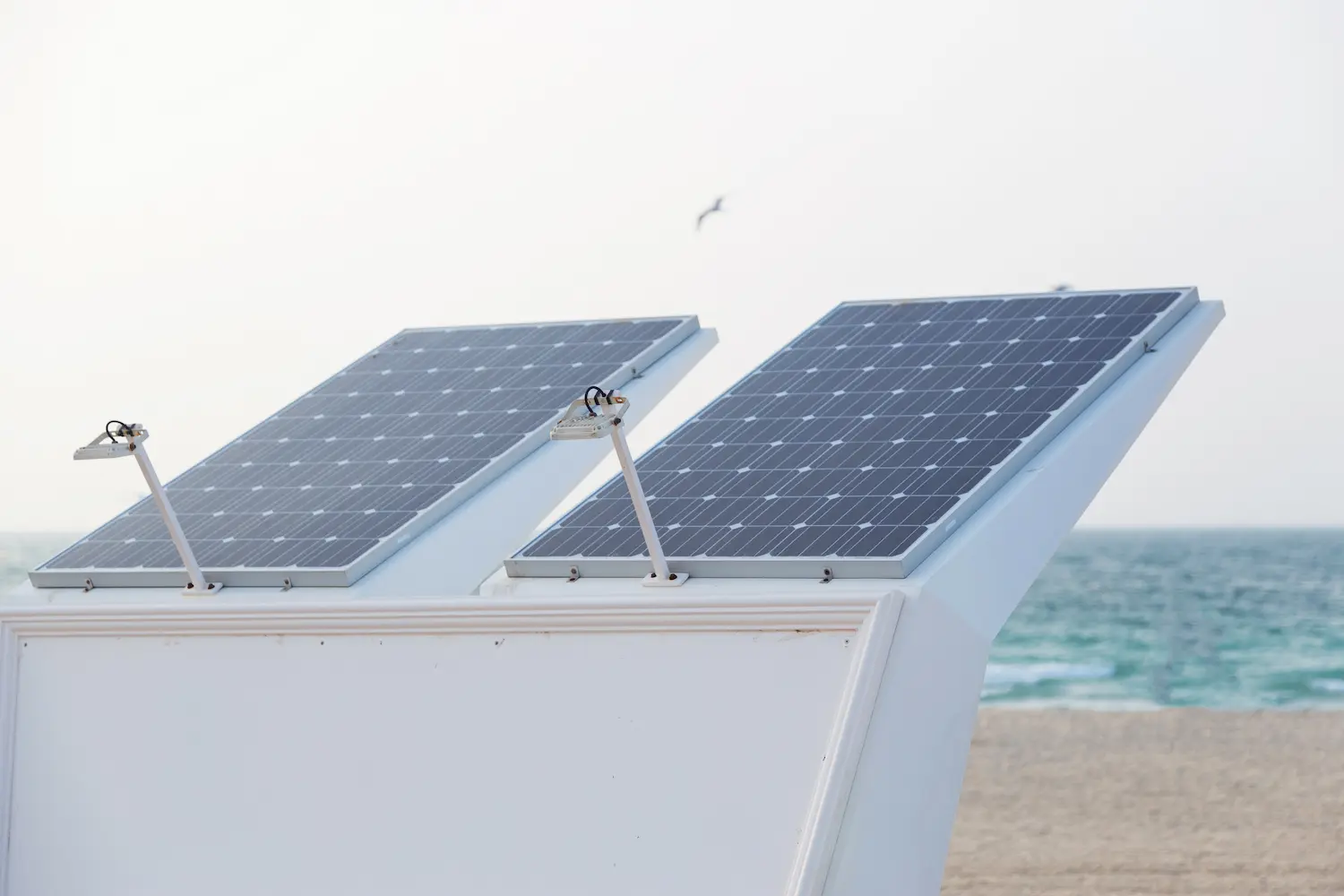
The proper installation of solar panels is essential to maximise their efficiency and ensure durability. Depending on your roof type or preference for ground-mounted systems, there are different mounting options suited to each situation. In this article, discover the most common types of solar panel mounts, their features, and how to choose the best option for your solar system.
Mounting systems for flat roofs
1. Rail-based mounting system
Rail-based systems are a popular option for flat roofs. This type of mount uses rails secured to the roof with bolts or screws, allowing each solar panel to be safely installed on these rails. This type of mounting offers:
- Rigidity and stability, minimising the weight required to secure the system.
- Flexibility in panel orientation, enabling adjustment of the angle and spacing between rows to optimise solar capture.
- Easy installation, which reduces costs and assembly time.
2. Ballasted mounting system
This system, also known as a non-penetrating mounting system, is ideal for flat roofs where drilling into the surface is undesirable. It uses weights (ballasts) to keep the solar panels in place. Its advantages include:
- Quick and easy installation.
- No drilling required, reducing the risk of leaks.
- Suitable for roofs with structural limitations that cannot support penetrations.
3. Anchored mounting system
The anchored system is another option for flat roofs, particularly useful when weight restrictions apply. Specific screws are used to penetrate the roof and secure the solar panels. This system provides:
- Maximum resistance to strong winds.
- Long-term stability, especially in areas with adverse weather conditions.
Mounting systems for sloped roofs
1. Tiled roof
For residential roofs, mounting on tiled roofs is common but requires special attention due to the fragility of tiles. It is crucial to use high-quality flashings to prevent leaks and ensure the system’s durability. This type of mounting may involve:
- Removing and replacing tiles for precise installation.
- Ensuring penetrations are well-sealed to prevent leaks.
2. Standing seam metal roof
Standing seam metal roofs are ideal for solar installations as they do not require drilling. Instead, clamps are attached to the metal seams, offering:
- Easy installation without the need to drill into the roof material.
- Increased longevity of the mounting system.
- Perfect for areas with strong winds, thanks to its resistance.
3. Corrugated metal roof
Corrugated metal roofs present a challenge for solar panel installation as they require specific accessories to secure the mounts without compromising the structure. It is important to consider:
- Additional mounting accessories to avoid damaging the roof.
- Using leak-proof materials to prevent water ingress.
Ground-mounted systems
1. Fixed mounts
Fixed ground mounts are a practical option when there is insufficient roof space or when optimal orientation is desired. These mounts are installed directly on the ground, offering:
- Greater control over the orientation of the panels.
- Increased ease of cleaning and maintenance.
- Stability in adverse weather conditions.
2. Ballasted mounts
For those who prefer not to drill into the ground, ballasted mounts are a great option. They use the weight of the solar panels themselves to maintain system stability. Benefits include:
- Simple installation without the need for excavation or drilling.
- Ideal for terrains where anchor-based mounts are not feasible.
Special mounting systems
1. Rail-less mounting system
The rail-less mounting system allows solar panels to be attached directly to roof fixtures, eliminating the need for traditional rails. This system:
- Reduces costs associated with manufacturing and shipping by having fewer components.
- Simplifies installation by requiring fewer tools and parts.
2. Recessed mounting system
This system integrates the panels into the roof, providing a discreet and aesthetically pleasing appearance. Additionally:
- Protects both the panels and the roof by reducing exposure to wind.
- Allows for adequate airflow beneath the panels, maintaining good energy efficiency.
Which is the best mounting system for you?
Choosing the right mounting system depends on factors such as roof type, local weather conditions, energy needs, and terrain characteristics. Consult with specialised professionals to determine the best option for your specific situation.
FAQs about types of solar panel mounts
What is the most suitable mount for a sloped roof?
For sloped roofs, rail-based systems and clamps for standing seam metal roofs are often recommended for their ease of installation and durability.
What are the benefits of a ballasted system on flat roofs?
The ballasted system requires no drilling, minimising the risk of leaks, and is easy to install, especially on roofs with structural limitations.
Can I install solar panels on the ground if my roof is unsuitable?
Yes, ground-mounted systems are an excellent option when the roof lacks adequate orientation or space. They allow for angle adjustments to maximise efficiency.
Which mounting system is best for areas with strong winds?
Anchored systems and standing seam metal roofs are excellent for areas with strong winds, as they offer high resistance and stability.
Is a rail-less system more expensive?
In general, a rail-less system tends to be more economical in terms of components and shipping costs, but careful installation is required to ensure durability.
Conclusion
Choosing the right mount for solar panels is a crucial step to ensure the efficiency and longevity of the photovoltaic system. Analyse the characteristics of your roof or terrain, consult with solar energy experts, and select the option that best suits your needs. With the right choice, you can ensure that your investment in solar energy is cost-effective and sustainable in the long term.


