
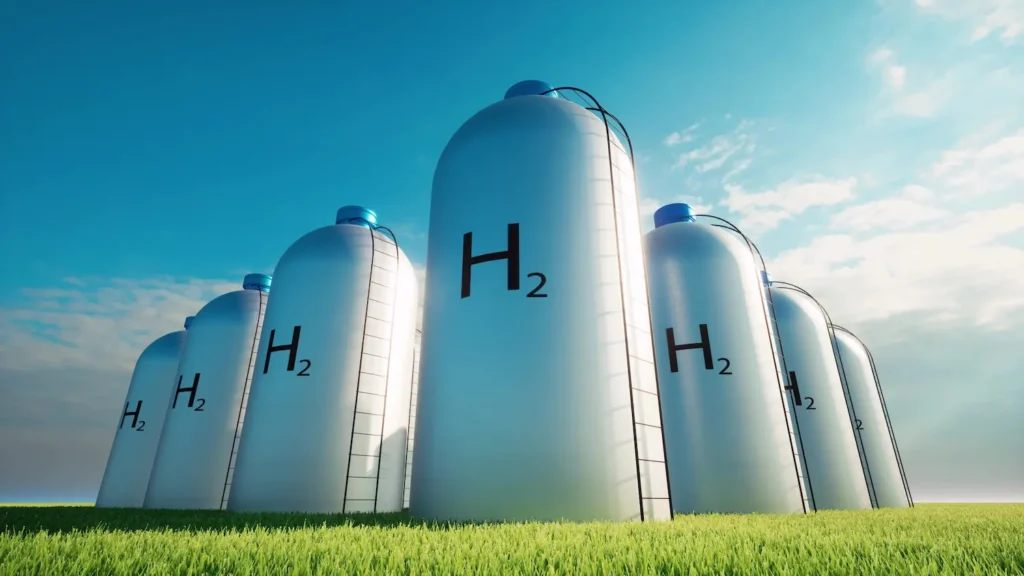
In a context where growing concerns about issues like climate change have driven the need for sustainable alternatives, one of the major goals is to decarbonize the planet, though there is still a long way to go (we have until 2050 to achieve this). For this reason, it is essential to decarbonize one of the main contributors to CO2 emissions.
Today, we’ll explain what green hydrogen is, how it’s produced, and exactly what it’s used for. Keep reading!
What is Green Hydrogen
Green hydrogen is an alternative energy source that is entirely renewable and is gaining popularity due to the goal we’ve set for 2050. Essentially, green hydrogen refers to hydrogen produced through processes that do not generate carbon emissions, unlike conventional production, which often depends on fossil fuels.
Unlike traditional hydrogen, which is generated through natural gas reforming, a process that releases large amounts of CO2, green hydrogen does not emit greenhouse gases during production. This makes it a top energy source in the fight against climate change and in reducing the carbon footprint of many companies (and even some homes, of course).
How is Green Hydrogen Produced?
The production process of green hydrogen mainly relies on water electrolysis. Electrolysis is a method that uses electricity generated exclusively from renewable energy sources to break water down into its basic components: hydrogen and oxygen. This process is carried out in electrolyzers, devices specifically designed for this purpose.
In water electrolysis, water is decomposed into hydrogen and oxygen through the application of an electric current. Inside an electrolyzer, two electrodes submerged in water conduct the electricity. Let’s get a bit technical: the positive electrode, called the anode, attracts negative ions (anions) and releases oxygen. Meanwhile, the negative electrode, known as the cathode, attracts positive ions (cations) and releases hydrogen.
The energy sources used for this process are generally solar and wind power. This ensures that the hydrogen produced is completely clean and free of carbon emissions. Using green hydrogen could potentially save over 800 million tons of CO2 per year. However, there are still doubts about its viability due to production costs.
What is Green Hydrogen Used For?
Green hydrogen is mainly intended for fuel, but it is a versatile energy source that can be used in many settings. Let’s look at some examples:
- Sustainable transportation: One of the most prominent applications of green hydrogen is its use in fuel production, both synthetic and conventional. Essentially, it provides an emissions-free alternative that also helps reduce dependence on fossil fuels in transportation.
- Electricity generation: Green hydrogen can be used in electricity generation systems, such as fuel cells or combustion turbines. This electricity can be used to supply conventional power grids or serve as an independent energy source in remote or isolated areas.
- Energy storage: Green hydrogen can be efficiently stored and used as a large-scale energy storage solution. This is especially useful for managing the intermittency of renewable energy sources like solar and wind, ensuring a constant energy supply.
- Chemical industry: Green hydrogen is a key component in producing a wide variety of chemicals, including fertilizers, ammonia, methanol, and many others. By using green hydrogen instead of conventionally obtained hydrogen from fossil fuels, the carbon footprint of these processes is significantly reduced.
- Heating and cooling: Green hydrogen can also be used as fuel in heating and cooling systems, both for homes and businesses. In this way, it offers an alternative to reduce carbon emissions associated with conventional fossil fuels for these purposes.
Advantages and Disadvantages of Green Hydrogen
Like anything, it has its pros and cons. Here are the main advantages and disadvantages of green hydrogen.
Advantages of Green Hydrogen
Green hydrogen has several advantages that make it an attractive and highly promising energy alternative. Here are the main benefits:
- Low environmental impact: Being 100% sustainable, since it is produced from renewable energy sources, it barely emits greenhouse gases or other toxines.
- Versatile energy source: After seeing what green hydrogen is used for, it’s clear that it is highly versatile and can be applied in a wide range of uses: transportation, electricity generation, chemical industry, heating and cooling, etc.
- Energy storage: As mentioned, it can be used as a large-scale energy storage method, which is especially important for a constant energy supply.
Disadvantages of Green Hydrogen
Although green hydrogen offers many advantages, it also presents some drawbacks, primarily these two:
- High costs: This type of renewable energy is quite expensive to produce. Not only it’s that expensive to produce, but to maintain too. This is because hydrogen is highly volatile and flammable, requiring extra safety measures to prevent explosions or leaks.
- Energy efficiency: The process of producing green hydrogen through water electrolysis can be less efficient in terms of energy conversion compared to other forms of energy generation.


