
What’s the main difference between aerothermal and geothermal? Primarily, it’s the medium from which each system extracts heat for temperature exchange. Both are based on using heat pumps, but they use different energy sources: aerothermal uses heat from the air, while geothermal extracts heat from the ground.
Before starting this comparison, you might be interested in reading:
Have you read them? Let’s get started!
Components of Aerothermal and Geothermal Installations
Aerothermal
An aerothermal system installation includes several key components:
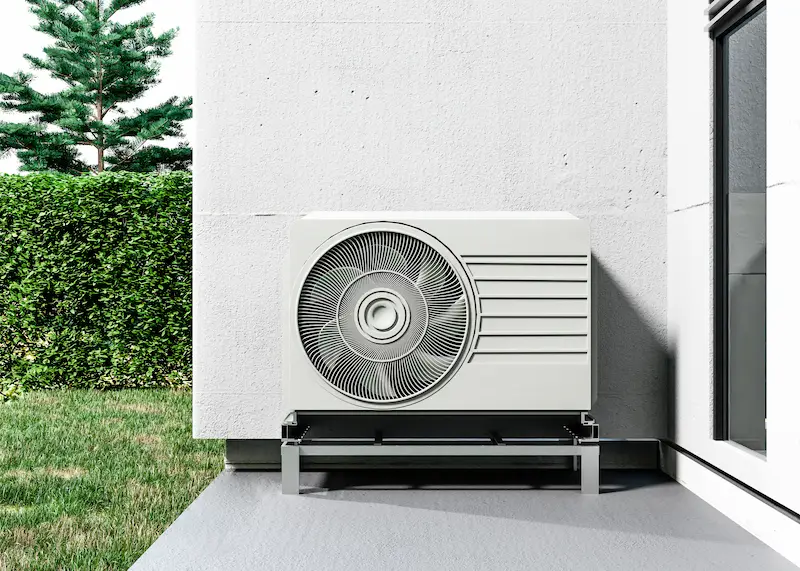
- Outdoor unit: This unit extracts heat from the outside air using an evaporator and fan. Even in low temperatures, it can capture thermal energy from the air.
- Indoor unit: The indoor unit houses the compressor and heat exchanger, transferring the captured heat to the home’s heating circuit.
- Distribution system: This system, made up of pipes, radiators, or underfloor heating, distributes the generated heat throughout the home.
- Hot water tank: In many cases, aerothermal systems also provide hot water, stored in a specific tank.
Are you interested in an aerothermal installation?
Geothermal
A geothermal system installation is more complex and usually requires a higher initial investment due to the need for ground drilling. The main components are:
- Geothermal collectors: These collectors can be horizontal (buried at shallow depths) or vertical (deep boreholes). Their function is to extract heat from the ground.
- Geothermal heat pump: This device transfers the heat extracted from the ground to the home’s heating system.
- Distribution system: Similar to aerothermal, it includes pipes, radiators, or underfloor heating.
- Hot water tank: Geothermal systems can also provide hot water, using a tank for storage.
Features and Consumption of Aerothermal Heat Pumps
Aerothermal heat pumps are known for their energy efficiency and ability to provide heating and cooling sustainably. Key features include:
- Energy efficiency: Aerothermal heat pumps have a high coefficient of performance (COP), meaning they can produce more thermal energy than the electricity they consume. Under optimal conditions, they can reach a COP of 3 to 4. To calculate seasonal performance (measuring system performance over time for a specific application), we also need:
- Weighting factor, related to the emission temperature.
- Correction factor, depending on the outside temperature.
- Versatility: Even in cold weather, you can still have heating in your home.
- Easy installation: Installing an aerothermal system is less invasive and costly than geothermal, as it doesn’t require drilling.
- Maintenance: Regular maintenance is needed to ensure efficiency, such as cleaning filters and routine checks on components.
Features and Consumption of Geothermal Heat Pumps
Geothermal heat pumps stand out for their high efficiency and stable performance, regardless of outside weather conditions. Main features include:
- Energy efficiency: Geothermal heat pumps generally have a higher COP than aerothermal ones, typically between 4 and 5, due to the relatively constant ground temperature year-round. Like aerothermal, both the correction and weighting factors need to be considered.
- Stability: Geothermal offers consistent and predictable performance, unaffected by weather fluctuations.
- Requires drilling: Installation is more complex and costly due to the need for drilling to place geothermal collectors.
- Longevity: Geothermal systems generally have a longer lifespan due to durable components and stable operating conditions.
In general, both aerothermal and geothermal systems rely on weighting (WP) and correction (CP) factors. For geothermal, WP will depend on whether the system is closed or open circuit and whether the heat exchanger is horizontal or vertical. For aerothermal, it depends on whether the system is centralized or individual split. CP depends on the condensation rate.
Differences Between Aerothermal and Geothermal
To determine which is better, we need to look at energy, efficiency, investment, and installation differences.
While both energy sources are renewable, they’re obtained differently. Aerothermal uses energy from the air, while geothermal harnesses ground heat to generate electricity.
Their efficiency also varies, as geothermal doesn’t depend on outside temperatures, making it very stable and constant. Aerothermal, however, is climate-dependent. In climates with minimal fluctuations, aerothermal efficiency can increase significantly.
The initial investment is much higher for geothermal. Why? Aerothermal equipment is much easier to install. To install it, you simply need to place an outdoor unit where there’s space, while geothermal requires a well to be drilled, complicating the process.
Both technologies are environmentally friendly and help reduce carbon emissions. However, geothermal has a greater environmental impact due to the drilling required for installation.
Conclusion: Which one should I Choose?
So, which is better, aerothermal or geothermal? It depends on your time, space, and budget:
- Geothermal requires more land for installation, while aerothermal can be installed in any home.
- For a single-family home with ample space, geothermal may be more appealing. For a typical city apartment, aerothermal is more suitable.
- Budget: Aerothermal is more economical.
- Intended use: If you only need heating and hot water, aerothermal is enough.
Aerothermal is ideal for those seeking a faster and more affordable installation, with the advantage of operating efficiently in moderate climates. Geothermal, on the other hand, offers superior efficiency and stable performance year-round, being a more significant investment but with long-term savings benefits.
In short, the answer to which system is better, aerothermal or geothermal, isn’t universal and depends on these factors. Once you’ve gone through thinking about all your options, contact a professional to install the system of your choice. If you’re interested in aerothermal, feel free to contact us!


